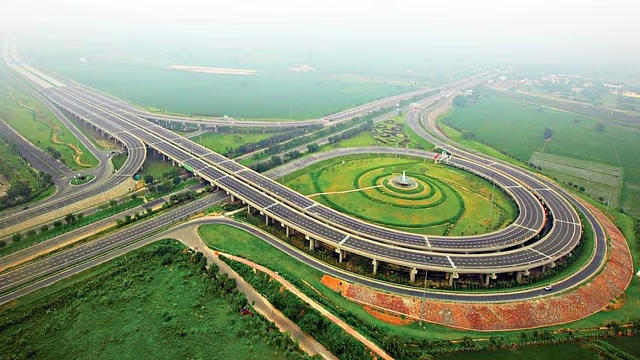
The Dwarka tunnel project is a new road tunnel plan for Delhi. It is part of a bigger Cabinet push worth ₹14,115 crore. The government says the Dwarka tunnel project should cut travel time and ease traffic. It also cleared work on the Kanpur-Kabrai highway.
Key takeaways
- The Union Cabinet cleared road projects worth ₹14,115 crore.
- The package includes the Dwarka tunnel project in Delhi and the Kanpur-Kabrai highway in Uttar Pradesh.
- The Delhi tunnel aims to reduce traffic jams and improve airport-side road links.
- The highway project is meant to speed up travel and freight movement in Bundelkhand.
What did the Cabinet approve in the Dwarka tunnel project?
The Cabinet approved two major road works in one go. One is the Dwarka tunnel project in Delhi. The other is the Kanpur-Kabrai highway project in Uttar Pradesh. Together, they add up to ₹14,115 crore.
A Cabinet approval means the top government decision-making group has said yes. That matters because big transport projects need money, land, and many clearances. Once that happens, agencies can move faster on tendering and construction.
Delhi’s tunnel plan stands out because the city already struggles with packed roads. Anyone who has sat in traffic near the airport or Dwarka knows the problem. A tunnel won’t fix every jam, but it can remove one messy bottleneck.
The Centre has not pitched this as a small repair job. It is a large transport upgrade. In simple terms, that means new road capacity, better links, and less stop-and-go driving for many commuters.
Why does the Dwarka tunnel project matter for Delhi?
The Dwarka tunnel project matters because west Delhi is crowded and growing fast. Dwarka has homes, offices, schools, and airport traffic nearby. So, when one stretch slows down, many other roads feel it too.
Tunnels help by moving cars below the busiest surface roads. That can shorten some trips and cut signal delays. It can also make routes more direct, which saves fuel and time.
Think of it like making a second layer of road. Instead of every vehicle fighting for the same space, some move underneath. As a result, the top road may also breathe a little easier.
For Delhi, travel time matters more than it sounds. If a route saves even 10 or 15 minutes each way, that adds up quickly. Over a month, regular commuters could save hours.
What is the Kanpur-Kabrai highway project?
The second project is the Kanpur-Kabrai highway in Uttar Pradesh. This road link matters for people, trucks, and small businesses. It connects important parts of the state, including the Bundelkhand region.
A highway upgrade usually means wider lanes, safer design, and smoother movement. Freight means goods carried by trucks. Faster freight can help farms, factories, and shops because products reach markets sooner.
Bundelkhand has long needed better roads and stronger links. So this project is not only about speed. It is also about access, jobs, and lower transport pain for a region that often gets left behind.
Road building can change local economies in simple ways. A better highway can bring more buses, easier deliveries, and lower wear on vehicles. That may sound dull, but it affects daily life and business costs.
How big is the ₹14,115 crore road package?
₹14,115 crore is a very large number. It equals ₹141.15 billion. If you imagine ₹1 crore as 10 million rupees, the total becomes easier to picture.
Here is the key number in a quick visual:
Cabinet-cleared road packageTotal package₹14,115 crIllustrative split2 projects
The chart shows the total package size and the fact that it covers two projects. The government highlighted both the Delhi tunnel and the Uttar Pradesh highway. More project-level cost details should become clearer in official papers and tender documents.
| Project | Location | Why it matters |
|---|---|---|
| Dwarka tunnel project | Delhi | Could reduce congestion and improve road links |
| Kanpur-Kabrai highway | Uttar Pradesh | Could speed up freight and regional travel |
| Total approved package | India | ₹14,115 crore infrastructure push |
Numbers like these also matter for builders and suppliers. Big projects need cement, steel, machines, and workers. So road approvals often ripple into jobs and local business demand.
What could change next for commuters and businesses?
The biggest change will not happen tomorrow. First comes detailed planning, bidding, and construction work. Bidding means firms compete to win the contract. Then the hard part starts on the ground.
Still, the signal is important right now. The Centre is showing that roads remain a major spending priority. That fits with its wider push on transport, industry, and logistics.
Logistics means moving goods from one place to another. Better logistics can cut costs. In fact, even small savings in trucking time can matter when thousands of vehicles use a route.
For Delhi families, the benefit is easier to understand. Less choking traffic means less wasted time. For companies, the gain is more about reliability, because predictable travel helps workers and deliveries stay on schedule.
The core takeaway is simple: the Dwarka tunnel project is part of a ₹14,115 crore Cabinet-approved road package aimed at cutting congestion in Delhi and improving highway movement in Uttar Pradesh.
How does this fit with other India infrastructure moves?
This decision lands at a time when India is spending heavily on transport and industry. You can see the same push in areas beyond roads. For example, the India Semiconductor Mission 2.0 shows how the government is also backing manufacturing capacity.
Finance rules are shifting too, because large projects need easier funding and deal-making. Our earlier report on how the RBI allowed banks to finance takeover up to 75% shows how policy can affect big business moves.
Foreign money is also watching India closely. We recently covered how foreign investors bought Indian bonds worth ₹41,800 crore in June. Bond investors lend money by buying debt. Strong infrastructure spending can shape how they view growth.
For primary details, readers can track updates from the Press Information Bureau and the Ministry of Road Transport and Highways. Those are official government sources.
What should readers watch now?
Watch for three things next. First, look for the final project documents and route details. Second, check whether timelines and land work stay on track. Third, see if the cost changes after tendering.
The Dwarka tunnel project will face the usual big-city challenges. Land, traffic diversion, and execution can slow any urban build. But if work moves well, the payoff could be real for a city that loses hours to congestion.
The same goes for the Uttar Pradesh road link. If the Kanpur-Kabrai stretch gets built on time, it could improve both daily travel and goods movement. That is why this ₹14,115 crore decision matters beyond just one headline.
For now, the message is clear. The government has put money behind two transport links that could change how people and goods move. And the Dwarka tunnel project is the part many city readers will watch most closely.
FAQs
What is the Dwarka tunnel project?
The Dwarka tunnel project is a planned road tunnel in Delhi. The government says it should improve connectivity and reduce congestion.
How much money did the Cabinet approve?
The Cabinet cleared road projects worth ₹14,115 crore. That package includes the Delhi tunnel plan and the Kanpur-Kabrai highway project.
Why does the Kanpur-Kabrai highway matter?
It could make travel and truck movement faster in Uttar Pradesh. That can help businesses, workers, and towns in the region.