In a major talent defection that reshapes the AI hardware race, Paul Meade, Apple’s Vice President of Hardware Engineering for the Vision Products Group, is leaving the company to join OpenAI.
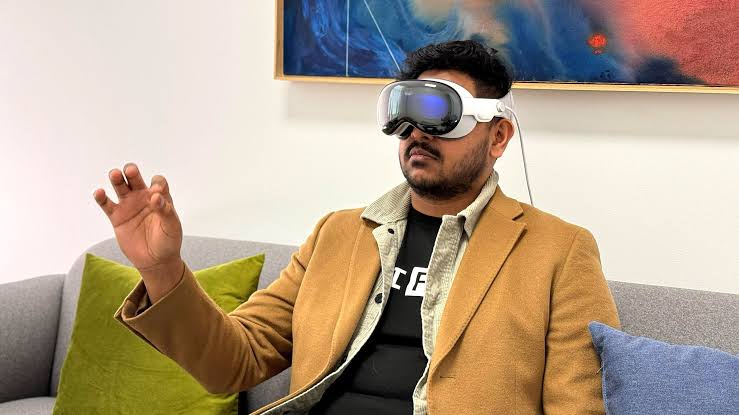
Meade, a 15-year Apple veteran who spearheaded the engineering of the Apple Vision Pro and led Cupertino’s upcoming smart glasses initiatives, is slated to exit the iPhone maker by next week. He will transition directly into OpenAI’s specialized hardware unit to oversee a new family of AI-powered consumer devices.
1. The Poaching Wave: Turning OpenAI into “Apple Alumni”
Meade’s arrival significantly expands OpenAI’s hardware ambitions. Rather than operating purely as a software and API engine, OpenAI is aggressively building a physical ecosystem. At the startup, Meade joins a powerhouse contingent of legendary former Apple design and engineering veterans:
- The Jony Ive Connection: In 2025, OpenAI closed a massive $6.5 billion deal to absorb I/O, the AI hardware startup founded by Apple’s former legendary chief designer Jony Ive, alongside former Apple executives Tang Tan and Evans Hankey.
- The Division of Labor: While Jony Ive’s independent studio continues to co-develop hardware forms with OpenAI (including a rumored smart speaker slated for 2027), Meade will directly head OpenAI’s internal, in-house hardware division to scale and industrialize production.
 [ Apple Vision Products Group ] ──► Paul Meade Exits (Led Vision Pro for 7 Years)
                                                    │
                                                    ▼
 [ OpenAI Hardware Unit ]        ──► Joins Jony Ive, Tang Tan, & Evans Hankey
                                 ──► Tasked with building an in-house family of AI-first devices
2. Why Meade Left: The Apple Palace Intrigue
According to corporate insiders, Meade’s decision to jump ship was heavily triggered by an aggressive internal restructuring within Apple’s hardware engineering ecosystem:
- The Ternus Succession: The movement follows the high-profile appointment of John Ternus to succeed Tim Cook as Apple’s CEO.
- The Srouji Shake-up: With Ternus vacating his position as Senior VP of Hardware Engineering, Apple’s elite silicon chip boss, Johny Srouji, stepped up as the company’s new Chief Hardware Officer. Srouji immediately launched a controversial, sweeping overhaul of the hardware units.
- The Layering Effect: Under Srouji’s new blueprint, Meade and several other hardware vice presidents were layered under Tom Marieb (the newly appointed VP of Hardware Engineering). This organizational demotion, coupled with growing corporate skepticism surrounding the Vision Pro’s commercial traction, prompted Meade to seek an exit.
3. The Wearables Fallout for Apple
Meade’s sudden departure delivers a serious structural blow to Apple’s immediate spatial computing and wearable roadmaps. For the last seven years, he was the foundational anchor for the Vision Pro’s physical architecture. More critically, he was the lead driver behind Apple’s secret, display-free smart glasses initiative—expressly designed to combat the surging market popularity of the Meta Ray-Bans.
| Disrupted Apple Project | Current Operational Status | Succession Mitigation Plan |
| Apple Smart Glasses | In active development; slated for a highly anticipated late 2027 launch window. | Fletcher Rothkopf, Meade’s long-standing deputy and the head of product design for the Vision Products Group, will instantly absorb Meade’s portfolio to keep the project on schedule. |
| Future Vision Headsets | Apple has reportedly paused several cheaper lightweight iterations, pivoting focus toward an enclosed, high-end M5-powered model targeted for 2028 or 2029. | Former overall unit chief Mike Rockwell recently left the group to spearhead Apple’s massive Siri AI overhaul, effectively splitting the legacy spatial group’s hardware and software structures. |
Meade’s transition serves as a stark reminder of the shifting tide in Silicon Valley. Armed with massive war chests from its recent multi-billion-dollar funding rounds, OpenAI is successfully weaponizing its capital to aggressively pull top-tier hardware operators away from mature, legacy tech titans as it moves to define what an AI-first piece of consumer technology looks like.