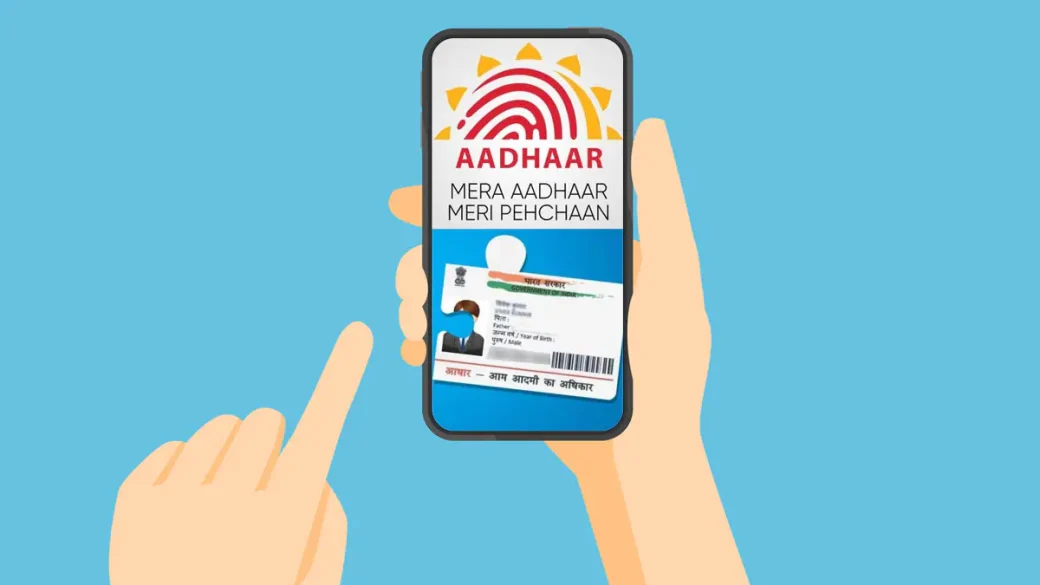
The Aadhaar app update changes how people can prove their identity with their phones. Aadhaar is India’s digital ID system. The new UIDAI app lets users share only the needed details, so they may not need to hand over paper copies so often.
Key takeaways
- The new UIDAI app lets users show Aadhaar details from a phone.
- It adds face authentication. That means your face helps confirm it’s really you.
- Users can share data through a QR code, so the process can be faster.
- The aim is to cut photocopies, fake edits, and extra data sharing.
What is the Aadhaar app update?
The Aadhaar app update is UIDAI’s push to make Aadhaar checks more digital and more private. UIDAI stands for Unique Identification Authority of India. It is the government body that runs Aadhaar.
Instead of carrying printouts, users can use the app to verify who they are. That matters because many people still submit photocopies at hotels, shops, offices, and travel desks. Those copies can be lost, misused, or changed.
UIDAI says the app supports digital sharing with user consent. Consent means you say yes before your data is shared. That sounds simple, but it’s a big shift from handing over a full paper copy every time.
How does the new UIDAI app work?
The new app is built around phone-based identity checks. A user opens the app, logs in, and can then choose what to share. In many cases, the other party can scan a QR code to receive the needed details.
It also uses face authentication. Authentication means checking that you are the real person. So, instead of only relying on a number or a paper card, the app can match your live face with official records.
That can help at places where quick ID checks matter. For example, a hotel or service counter may only need your name and photo. They may not need your full Aadhaar number or home address.
The Aadhaar app update also tries to lower fraud risk. Fraud means cheating for money or access. A digital check is harder to fake than a blurry photocopy with edited text.
What exactly changes for users?
The biggest change is control. Users may be able to share less data, not more. That is useful because many places ask for full copies even when they only need a basic identity check.
Another change is convenience. If the app works as planned, people won’t need to keep folders of printed Aadhaar sheets. They also may not need to email scans or send images on chat apps.
Here’s the simple before-and-after picture:
| Old way | New way | Why it matters |
|---|---|---|
| Paper photocopy | App-based QR sharing | Less paper and less copying |
| Manual visual check | Face authentication | Harder to fake |
| Full document shared | Need-based data sharing | Better privacy |
| Stored in files | Shared on demand | Lower misuse risk |
That does not mean every office will switch on day one. Many businesses still use old habits. But if the app is widely accepted, the Aadhaar app update could slowly change routine ID checks across India.
Why is UIDAI pushing this now?
India already uses Aadhaar at huge scale, so even a small process change affects millions of people. A digital-first app can reduce paper use and cut the chances of leaked copies. It can also make checks faster for both users and businesses.
Privacy is another reason. Privacy means control over your personal information. If users share only what is needed, fewer extra details sit in office drawers, hotel folders, or random phone galleries.
This fits a wider digital trend in India. Payments moved from cash to apps for many people. You can see that in our report on UPI hitting 22.72 billion transactions in June.
The move also comes as India keeps building digital public systems. That bigger push includes finance and technology rules, like our coverage of India Semiconductor Mission 2.0 and what HiWiPay’s GIFT City nod means.
What numbers help explain the change?
UIDAI has not framed this update as a small tweak. Aadhaar covers well over 1 billion residents, so even a tiny reduction in paper copying matters. If just 1% of users avoid one photocopy, that could mean more than 10 million fewer copies.
India’s digital habits also show why phone-based ID can work. UPI processed 22.72 billion transactions in June 2026 worth Rs 28.92 lakh crore. Those are huge numbers, and they show that people are already comfortable using apps for sensitive tasks.
Here is a quick visual of the shift the app is trying to create:
ID check shiftPaper copy: old methodQR share: faster digital methodManual check: weakerFace auth: stronger check
Think of it like this: a paper copy is like giving someone a whole notebook page when they only asked to see your name tag. The app tries to turn that into a smaller, cleaner, safer exchange.
What are the limits and questions?
The Aadhaar app update sounds useful, but rollout is the real test. A rollout is the process of putting a new system into use. If shops, hotels, and offices do not accept the app, users may still get asked for paper.
Phone access is another issue. Not everyone has a modern smartphone, enough storage, or stable internet. So paper Aadhaar and physical cards will likely remain important for many people.
There is also the question of trust. People will want to know what data is stored, what gets shared, and how long it stays with the receiving business. UIDAI’s official updates and app instructions will matter here, so users should check the UIDAI website and official notices from the app listing when available.
The core idea is simple: the new Aadhaar app is meant to let a user prove identity from a phone, share less personal data, and avoid handing over full paper copies in everyday situations.
How could this affect daily life?
If the system works well, it could make simple tasks smoother. Checking into a hotel might take less time. A service visit, office entry, or local verification could also become quicker because scanning a code is faster than reading a photocopy.
For families, it may mean less document hunting. No more digging through files for one crumpled sheet. For businesses, it may mean cleaner records and fewer piles of paper.
The Aadhaar app update may also reduce one common worry: oversharing. Many people hand out full ID copies because they feel they have no choice. A more selective system could change that habit over time.
What should users do next?
First, make sure any Aadhaar app you use is the official one from UIDAI. Fake apps can copy names and logos, so always verify the publisher. Then read what permissions the app asks for before you install it.
Next, learn what details you are sharing in each use case. If a counter only needs a basic ID check, ask whether a QR-based share will work. That one question can help protect your data.
And keep expectations realistic. The Aadhaar app update is a useful move, but habits do not change overnight. Still, it points in a clear direction: less paper, less oversharing, and more control in the user’s hands.
FAQs
What is the new Aadhaar app?
It is an updated UIDAI app for digital identity checks. It lets users verify identity from a phone and share details through QR-based methods.
How is the Aadhaar app update different from a photocopy?
A photocopy shows a full document. The app is meant to share only needed details, so it can protect privacy better.
Why does face authentication matter?
It helps confirm that the person using the app is the real Aadhaar holder. That can make fake or edited document use harder.
Who should use the new UIDAI app?
Anyone who often uses Aadhaar for ID checks may find it useful. It may be especially handy for travel, hotels, offices, and service visits.