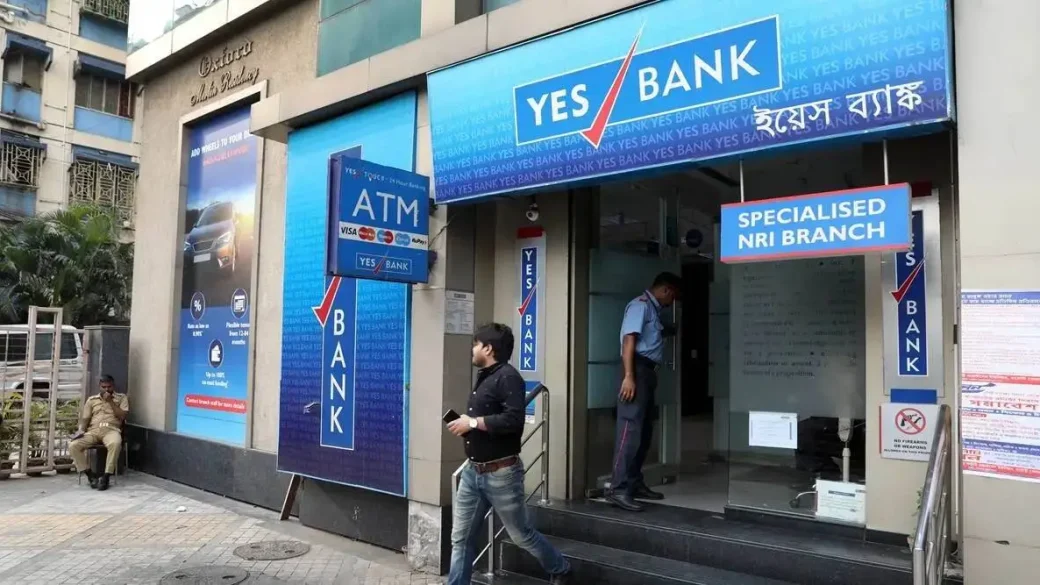
Moving officially from its recovery phase into a structural growth chapter, the board of Yes Bank has approved enabling resolutions to raise up to ₹16,000 crore through a strategic combination of equity and debt.
The decisions, finalized during a board meeting on June 29, 2026, give the private-sector lender a massive capital war chest right as Indian banking experiences a prolonged credit demand upcycle. The proposals will now move to shareholders for a formal vote at the bank’s upcoming 22nd Annual General Meeting (AGM) scheduled for August 19, 2026.
1. The Capital Split & The 10% Dilution Cap
To minimize initial shock to its existing retail and institutional shareholder base, Yes Bank’s management has structured the capital call with a clear mathematical safety boundary:
- The Equity Tranche (Up to ₹7,500 Crore): Permitted via diverse routes, including Qualified Institutional Placements (QIPs), Follow-on Public Offers (FPOs), or Rights Issues.
- The Debt Tranche (Up to ₹8,500 Crore): To be raised in one or more series across domestic or international markets via eligible debt securities, bonds, or Non-Convertible Debentures (NCDs) denominated in Indian or foreign currencies.
- The Dilution Iron Wall: The board explicitly mandated that the aggregate equity issuance cannot result in a total dilution exceeding 10% of the bank’s existing share capital. This 10% ceiling strictly includes any eventual share conversions originating from the debt tranche.
 [ Total Capital Authorization: ₹16,000 Crore ]
                        │
      ┌─────────────────┴─────────────────┐
      ▼                                   ▼
 [ Equity Segment: Max ₹7,500 Cr ]   [ Debt Segment: Max ₹8,500 Cr ]
 • Mode: QIP, FPO, or Rights Issue   • Mode: Bonds, NCDs, or Foreign Debt
      │                                   │
      └─────────────────┬─────────────────┘
                        ▼
          [ STRICT REGULATORY CAP ]
  Total shareholder dilution cannot cross 10%
2. Strong Fundamentals Support the Capital Call
Unlike historical, emergency capital infusions required to save the franchise during its 2020 restructuring, this fundraise comes at a time when the bank’s underlying operational metrics are genuinely improving.
According to its latest financial disclosures, Yes Bank has successfully repaired its balance sheet:
| Financial Metric | Reported Status (FY26 Cycle) | Strategic Direction / Impact |
| Net Interest Margin (NIM) | 2.7% (Up 20 bps YoY) | Boosted by lower deposit acquisition costs and reduced balances of legacy PSL shortfall deposits. |
| Quarterly Net Profit | ₹1,068 crore (Up 44.7% YoY) | Driven by consistent retail granularity and improved asset quality. |
| Capital Adequacy Ratio | 15.3% | Lowered slightly from 15.6% last year, highlighting the clear need for this fresh Tier-1 capital injection to fuel future loan expansions. |
3. The New Shareholding Baseline: Post-Turnaround Pivot
The ₹16,000 crore capital blueprint is designed to build on a series of major ownership overhauls that occurred over the last year.
Following a sweeping clean-up of legacy stressed assets, Japan’s Sumitomo Mitsui Banking Corporation (SMBC) completed a massive cross-border investment, acquiring a 24.2% stake in Yes Bank from State Bank of India (SBI) and other domestic consortium lenders.
With SMBC anchored as the single largest institutional shareholder, and global private equity players like Carlyle trimming down remaining chunks (including a recent 2.6% open-market exit to lock in profits), CEO Vinay Tonse noted that the bank finally has the operational stability to look forward.
The primary goal for this multi-billion-rupee buffer is to shift the bank into an aggressive mid-market lender over the next three years—targeting high-granularity retail loan books, MSME technology suites, and digitized supply chain financing to win back long-term market share.