Key takeaways
- Titagarh Rail passenger business could become bigger than its freight business by FY28.
- The shift is being driven by metro coaches, train sets, and other passenger rolling stock.
- FY28 means the financial year ending in March 2028.
- The change matters because it could reshape where the company earns money and invests next.
Titagarh Rail passenger business is the part of the company that makes coaches and trains for people, not wagons for goods. The company now expects that side to overtake freight by FY28. That would be a big change, because freight has long been the stronger part of its business.
Titagarh Rail’s management said the company sees faster growth in passenger orders over the next few years. That includes metro cars and modern train sets. A train set means coaches built to run together as one unit, like many newer fast trains.
Why is Titagarh Rail passenger business growing so fast?
The simple answer is demand. Cities need more metro trains, and India is also pushing newer intercity rail systems. So companies that can build passenger coaches have a bigger chance to win long-term work.
Managing Director Umesh Chowdhary said the company expects the passenger side to move ahead of freight by FY28. That forecast matters because it points to a real change in Titagarh Rail’s order mix. Order mix means the share of business coming from different products.
For years, freight wagons were the main engine. Those are the rail vehicles that carry coal, cement, steel, grain, and other goods. But passenger products often bring a different kind of growth, since they can include long contracts, maintenance work, and higher-tech systems.
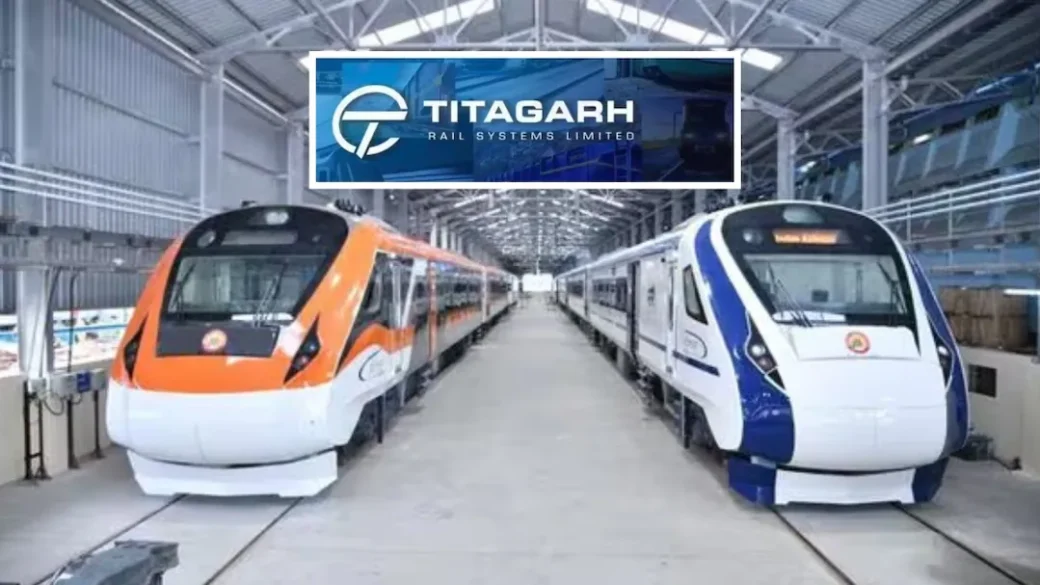
India’s railway market is also changing. Metro networks are spreading across more cities, while premium trains like Vande Bharat have raised focus on faster and more modern rolling stock. Rolling stock means the trains, coaches, and wagons that run on tracks.
What does this mean for Titagarh Rail’s freight business?
It does not mean freight is disappearing. Freight still matters a lot for Titagarh Rail, and India still needs huge numbers of wagons. Coal, power, ports, and factories all depend on them every day.
But the balance may change. If Titagarh Rail passenger business becomes the larger segment by FY28, investors may start judging the company less like a wagon maker and more like a broader railway manufacturer. That can affect how people view its future growth.
Freight demand can also move in cycles. A cycle is a pattern that rises and falls over time. Passenger contracts, by contrast, may stretch across several years, so they can give companies better revenue visibility. Revenue visibility means a clearer idea of future sales.
How big is the shift by FY28?
The headline number is the year: FY28. That gives Titagarh Rail about three financial years to make passenger revenue larger than freight revenue. In business terms, that is a short timeline for such a major shift.
India’s railway and metro market is huge. The country has more than 68,000 route kilometres of rail network, according to Indian Railways. Metro systems are active or under construction in many cities, according to the Ministry of Housing and Urban Affairs.
That broad demand helps explain the company’s confidence. One large metro order can involve dozens of trainsets. Even a single fleet deal can run into hundreds of coaches and years of delivery work.
Business mix trendNowFY28FreightPassengerDashed = possible FY28 mix
The chart above is not a company forecast in rupees. It shows the direction of travel. Right now, freight is bigger, but by FY28 the passenger side could move ahead.
Which products could drive Titagarh Rail passenger business?
Metro coaches are a key piece. These are the train cars used in city transit systems. They matter because many cities need more capacity as ridership grows.
Another driver is premium intercity rail. Vande Bharat has become a symbol of India’s push for faster trains, and that has lifted interest in modern passenger manufacturing. You can see the wider industrial policy angle in our report on the REPM scheme for rare-earth magnets, which shows how transport manufacturing links to bigger supply chains.
The company may also benefit from a wider shift in Indian industry toward scale and specialisation. We have seen similar expansion logic in sectors beyond rail, for example in our piece on how Indian IT is using mergers and acquisitions for growth. Different industry, same basic idea: firms chase the segments with the strongest future demand.
What numbers should readers watch next?
Three things matter most. First, watch new order wins. Second, check how much of the order book comes from passenger work. An order book is the value of confirmed work a company still has to deliver.
Third, follow margins. Margin means how much profit a company keeps from each rupee of sales. Passenger work can be more complex, so margins may improve in some contracts, but execution also becomes harder.
| What to watch | Why it matters |
|---|---|
| FY28 target | Shows the timeline for passenger to overtake freight |
| Metro and train-set orders | These could drive the biggest jump in passenger revenue |
| Order book mix | Shows whether passenger work is truly becoming dominant |
| Margins | Reveals if growth is turning into stronger profit |
There is another reason to watch carefully. Rail manufacturing can be lumpy. Lumpy means sales do not arrive in a smooth line. A big order may lift one year, while delays can push revenue into the next.
Why does this matter for India’s rail story?
This is bigger than one company. If Titagarh Rail passenger business keeps rising, it signals that India’s rail market is moving beyond wagons and into more advanced passenger systems. That includes metros, train sets, electronics, and support services.
It also shows how public spending shapes private industry. When governments build metros or back new train projects, manufacturers respond by adding capacity, skills, and supplier networks. Supplier networks mean the chain of firms providing parts, materials, and systems.
We have seen how policy changes can ripple through connected industries before. For example, our report on India’s tighter tea export rules and Nepal jobs showed how one rule can affect workers, trade, and factories beyond the main headline.
Here is the clearest way to say it:
Titagarh Rail’s message is that passenger trains, not just freight wagons, may drive its next phase of growth. If that happens by FY28, it would mark a major business shift for the company and a wider sign of India’s growing demand for modern rail travel.
Is there any risk to the FY28 plan?
Yes. Big manufacturing plans rarely move in a straight line. Delays in tenders, approvals, testing, or deliveries can slow the passenger ramp-up. A tender is a formal bidding process for a contract.
Costs are another risk. Steel prices, imported parts, and financing costs can all change. Financing cost means the money a company pays to borrow.
Competition matters too. More companies want a piece of India’s passenger rail boom, so winning orders may get tougher. That said, experience and execution still count, especially in projects with strict safety and delivery rules.
FAQs
What is Titagarh Rail passenger business?
It is the part of Titagarh Rail that makes trains and coaches for people, such as metro cars and other passenger rail products.
Why could it overtake freight by FY28?
Because demand for metro coaches and modern train sets is rising fast, while freight may grow at a steadier pace.
Why does FY28 matter?
FY28 is the financial year ending March 2028. It is the company’s target point for passenger revenue to become larger than freight revenue.