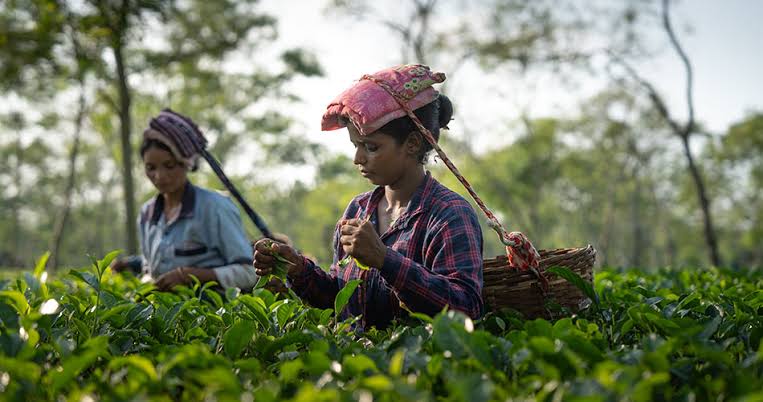
A severe crisis in Nepal’s tea industry has escalated rapidly after stricter import regulations enforced by the Tea Board of India forced the absolute shutdown of 86 processing factories across eastern Nepal, putting the livelihoods of nearly 60,000 workers, plickers, and farmers at risk.
The disruption hit during peak harvesting season, stranding over 1.1 million kilograms of high-value tea on borders and filling warehouses to maximum capacity. However, following intense emergency diplomatic friction, India implemented a sudden regulatory rollback to avert a full-scale trade collapse.
1. The Trigger: How the 100% Blanket Policy Halted Trade
The freefall began when India implemented a strict new Standard Operating Procedure (SOP). The policy replaced a long-standing selective clearance framework with an aggressive blanket protocol:
- The Consignment Bottleneck: Under the previous arrangement, testing a single truck sample sufficed to clear up to ten vehicles from the same agricultural lot. The revised rule reclassified every single truck as an independent consignment, demanding individual sampling and clearance.
- The 20-Day Warehouse Trap: Samples from the primary Kakarvitta border crossing had to be physically couriered to a central food laboratory in Kolkata. Due to severe lab backlogs, returning results took upwards of 15 to 20 days.
- The Multiplier Penalties: Exporters were slapped with an upfront testing fee of ₹11,120 (INR) plus GST per truck. If a vehicle was held waiting for a report, the tea routinely spoiled under weather exposure, and any consignment failing a secondary check faced immediate confiscation or destruction by Indian authorities.
 [ Old Export Regime  ] ──► Test 1 truck ──► Instantly clears up to 10 trucks in the same lot
                                        │
                                        ▼ (The 100% Inspection Pivot)
 [ New Strict Rule    ] ──► Test *every* truck individually ──► Pay ₹11,120+ fee per vehicle
                                        │
                                        ▼
 [ Downstream Crisis ] ──► 20-day Kolkata lab delay -> Warehouses overflow -> 86 factories shut down
2. Industry Paralyzed: The Freefall Phase
Because Nepal relies on India to purchase 86% of its annual 15,600-tonne tea export volume (generating over $27 million in pivotal foreign reserves), the sudden border stall choked off the entire domestic supply chain.
By mid-June, all 56 orthodox factories under the Suryodaya Orthodox Tea Producers Association in Ilam, alongside 30 major crushing units in Jhapa, completely suspended operations. Processing halted because factories could no longer pay farmers for green leaves while carrying millions of kilograms of unpaid, stranded inventory.
3. The Diplomatic Resolution: A Shift to Risk-Based Testing
Faced with the near-total structural collapse of one of Nepal’s core agricultural sectors, Nepal’s Ministry of Industry, Commerce and Supplies initiated high-level diplomatic interventions with New Delhi.
The pressure resulted in immediate relief. The Food Safety and Standards Authority of India (FSSAI) issued an emergency revision, softening the border rules:
| Regulatory Transition | The 100% Blanket Policy | The New Inspection Regime |
| Testing Footprint | Required mandatory testing for 100% of all incoming vehicles independently. | Transformed into a targeted, risk-based testing system. |
| Interception Rate | 5 out of 5 trucks systematically halted at customs points. | Only 20% (1 in 5) of incoming consignments are randomly intercepted for testing. |
| Clearance Speed | 15 to 20-day operational delays while awaiting Kolkata lab reports. | The remaining 80% receive expedited food-safety clearance via standard customs papers. |
Moving Forward
While the transition to a 20% random sampling rate effectively removes the immediate export bottleneck and allows the 86 shuttered factories to resume operations, deep skepticism remains among local estate owners.
Regional industry heads warn that repetitive, abrupt policy shifts at the border continue to make Nepal’s tea trade volatile. They are urging Kathmandu to establish a permanent diplomatic agreement with New Delhi that formally recognizes Nepal’s own domestic food laboratory certifications to ensure permanent market access.