The Ministry of Petroleum and Natural Gas has rolled back its emergency restrictions on the sale of petrol and diesel, allowing industrial, institutional, and commercial consumers to fully resume purchasing fuel from public retail stations starting July 1, 2026.
The order officially ends the short-lived emergency measures introduced under the Motor Spirit and High Speed Diesel (Temporary Regulation of Supply through Retail Outlets) Order, 2026, which was enacted on June 12 to shield the public from localized fuel runs.
1. Why Were the Curbs Imposed in June?
The temporary rules were triggered by extreme market volatility stemming from the West Asia crisis (the U.S.-Israeli war on Iran and the temporary closure of the Strait of Hormuz).
During the height of the supply chain disruption, the Indian government froze public pump rates to insulate daily commuters from global crude oil spikes. However, bulk fuel prices—which are directly linked to volatile international market rates—shot up dramatically.
- The ₹40 Arbitrage Gap: In cities like Delhi, bulk diesel was priced nearly ₹40 per litre higher than the retail rate at public sector petrol pumps.
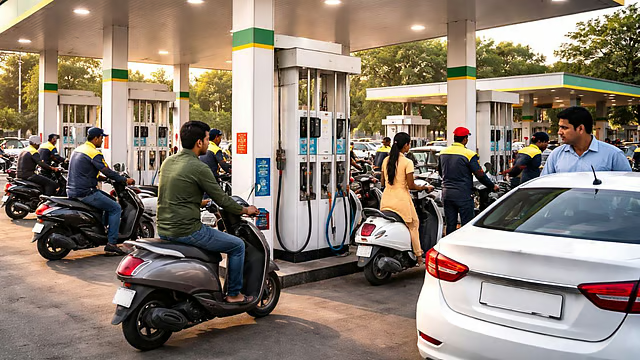
- The Station Stampede: Fleet owners, logistics operators, manufacturing units, and telecom firms abandoned their private bulk consumer pumps and flooded local retail gas stations to take advantage of the cheaper prices.
- The Regulatory Slam: To stop widespread hoarding, black marketing in jerry cans, and fuel diversion, the government banned commercial buyers from retail pumps and capped single-day retail diesel purchases at 200 litres per vehicle.
 [ Mid-East War Shock ] ──► International crude oil prices skyrocket
                                         │
        ┌────────────────────────────────┴────────────────────────────────┐
        ▼ (Sovereign Price Split)                                         ▼ (Market-Linked)
  [ Public Retail Rates ] ──► Frozen by Govt                       [ Bulk Corporate Rates ] ──► Soars
  (Diesel: ~₹95 / Litre)                                            (Diesel: ~₹135 / Litre)
        │                                                                 │
        └───────────────────────────────┬─────────────────────────────────┘
                                        ▼ (The Massive Price Arbitrage)
 [ The Retail Run (June 12) ] ──► Bulk buyers crowd public gas stations -> Govt enforces emergency 200L daily cap
                                        │
                                        ▼ (Stabilization & Rollback)
 [ Normalcy Restored (July 1) ] ──► Crude supply lines stabilize -> Price gaps close -> All purchase restrictions lifted
2. The Back-to-Normal Blueprint
Following a comprehensive review of the national petroleum reserve and domestic supply channels on June 29, the government concluded that the intervention was no longer necessary in the public interest.
The rollback clears away the primary operational bottlenecks for the commercial sector:
| Regulatory Metric | The June 12 Emergency Order | The July 1 Normalization |
| Retail Procurement | Prohibited. Commercial and industrial buyers were barred from regular retail pumps. | Fully Permitted. Commercial fleets can source fuel from any station. |
| Daily Volume Caps | Strictly limited to a maximum of 200 litres of diesel per day per customer/vehicle. | Completely Lifted. Unrestricted fuel tank and approved container filling. |
| Sourcing Mandate | Fleet operators were forced back onto high-priced, dedicated bulk-supply channels. | Businesses have full freedom to optimize logistics and buy from the cheapest channel available. |
3. Relief for the Logistics & Transport Sector
The lifting of the 200-litre restriction delivers immediate, vital breathing room to India’s transport corridors. A standard multi-axle long-haul commercial truck requires between 300 to 500 litres of diesel to fill its primary tanks for a single interstate run.
Under the June restrictions, fleet operators were forced into severe logistical gymnastics—either paying the steep premium for bulk commercial delivery or forcing their drivers to stop at multiple retail pumps across state borders to bypass the 200-litre cap.
With global energy trade routes tentatively stabilizing and oil marketing companies tracking a return to typical demand metrics, the elimination of these emergency caps restores standard supply chain flow right at the turn of the fiscal quarter.