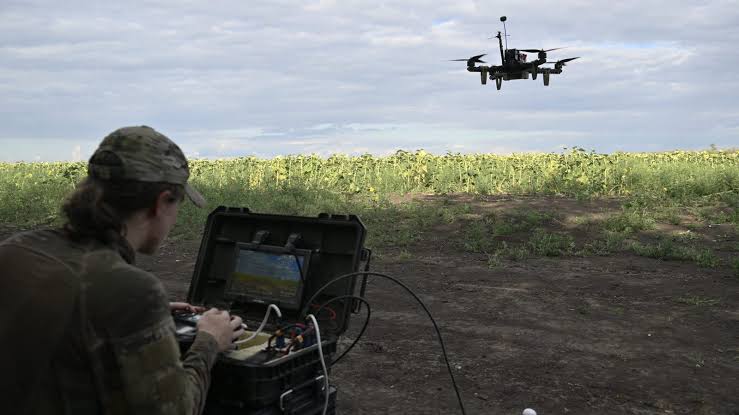
Ukraine drone production is Ukraine’s plan to build huge numbers of small flying war machines at home. Ukraine drone production is now heading for 10 million units in 2026. Officials also say that figure could rise to 20 million later, helped by a new $1.1 billion deal with the European Union.
Key takeaways
- Ukraine says it plans to make 10 million drones in 2026.
- Officials say output could later rise to 20 million drones.
- The EU has backed the effort with a deal worth about $1.1 billion.
- The move aims to give Ukraine more local supply during a long war.
- Cheap drones now matter as much as some big weapons on the battlefield.
Why is Ukraine drone production growing so fast?
Ukraine wants more drones because drones have changed this war. They can scout, film, guide attacks, and strike targets. They also cost far less than many missiles or tanks, so armies can use them in huge numbers.
That matters because war burns through equipment fast. A drone can be lost in minutes. So leaders don’t just need a few smart machines. They need millions of simple ones that can be built, fixed, and replaced quickly.
The new EU support gives that push more money. According to the European Commission and Ukrainian officials, the package is worth about $1.1 billion. That is a lot, but it still shows how cheap many drones are compared with older weapons.
For example, one modern fighter jet can cost tens of millions of dollars. By contrast, many smaller drones cost hundreds or a few thousand dollars each, depending on their job. That’s one reason Ukraine drone production has become a national priority.
What did the new EU drone deal actually do?
The deal links European money with Ukrainian factories. In simple terms, it helps pay for more drone making inside Ukraine. That can include parts, assembly lines, and orders that give companies confidence to expand.
The European Union is a group of 27 countries that work together on trade and policy. In this case, it is helping fund defense output. You can read more from the European Commission and from Ukraine’s presidential office.
Officials said the target is 10 million drones in 2026. They also said capacity could reach 20 million later. Capacity means the most a country could make if factories, workers, and parts all keep flowing.
That jump is huge. If Ukraine made 10 million drones in one year, that would average about 833,333 each month. Broken down again, that is roughly 27,400 drones every single day.
Ukraine drone production targets2026Later10M20M010M20M
What kinds of drones are part of Ukraine drone production?
Not every drone is the same. Some are first-person-view drones, often called FPV drones. FPV means the pilot sees through the drone’s camera, almost like sitting inside it.
Others watch from above and send back video. Some carry explosives. Others help find targets for artillery. Artillery means big guns that fire shells over long distances.
Ukraine has become known for using cheap, fast FPV drones in large numbers. Russia has done the same. As a result, the war has become a race not just for land, but for factories, batteries, chips, motors, and radio links.
That wider supply chain matters a lot. A supply chain is the path parts take from maker to factory to battlefield. If one key part runs short, the whole production line can slow down.
How big is this plan in numbers?
The headline numbers are striking on their own, but they make more sense side by side. Here’s a simple look at the plan and what it means.
| Measure | Figure | What it means |
|---|---|---|
| EU-backed deal | $1.1 billion | Fresh funding for Ukraine’s drone industry |
| 2026 target | 10 million | Planned drone output next year |
| Later capacity | 20 million | Possible future output if expansion continues |
| Monthly pace at 10 million | 833,333 | Average number per month |
| Daily pace at 10 million | 27,400 | Average number per day |
These are not tiny workshop figures. They point to industrial scale. Industrial scale means factory-level production, with large orders, trained workers, and steady part supplies.
In fact, the shift mirrors how modern wars are changing. A country still needs tanks and air defense, but it also needs vast numbers of low-cost flying machines. That’s why Ukraine drone production now gets so much attention.
What does this mean for Europe and the wider war?
For Ukraine, the main gain is simple. More local production means less waiting for foreign deliveries. It also means faster changes, because drone makers can update designs quickly after soldiers report what works.
For Europe, the deal is about security too. If Ukraine can hold the line better, European leaders believe the whole region is safer. So this is not just aid. It is also a bet on a new defense model built around speed and volume.
That model may influence other countries. Many governments now study how cheap drones can damage expensive systems. A drone worth a few hundred dollars can threaten equipment worth millions, which changes military math in a big way.
We’ve seen similar big industry questions in other sectors too, from faster chip production breakthroughs to AI-led chip design tools. The lesson is the same: whoever can build faster often gains an edge.
Can Ukraine really make 10 million drones?
It is an ambitious goal, and that means hard problems remain. Factories need power, workers, safe transport, and a constant flow of electronics. Since Ukraine is at war, every one of those needs can come under pressure.
Still, ambition matters because it shapes buying and planning now. If companies believe orders will keep coming, they invest in tools and people. Then output can rise faster than many outsiders expect.
A clear way to say it is this: Ukraine drone production is no longer a side story of the war. It is one of the war’s central engines, because the side that can replace drones fastest may keep its forces alive longer.
That doesn’t mean drones replace everything. They don’t. But they now sit beside shells, missiles, and armored vehicles as one of the tools that can decide what happens next.
How does this compare with other defense trends?
Countries around the world are watching closely. Some are boosting local factories. Others are trying to secure key parts, especially chips and sensors. Sensors are devices that help machines detect movement, heat, or direction.
Ukraine’s case stands out because the numbers are so large and the need is so urgent. A plan for 10 million drones in 2026 is not a normal peacetime project. It is a wartime push built around speed, survival, and constant replacement.
Meanwhile, the rise of unmanned systems may reshape defense budgets for years. Unmanned means no pilot sits inside the machine. Governments may spend more on software, parts, and electronic warfare, and less on some older tools.
Electronic warfare means jamming or blocking signals. That matters because a drone is only useful if it can still talk to its pilot or follow its route. So the contest is not just about making more drones, but also about making them harder to stop.
FAQs
What is Ukraine drone production?
Ukraine drone production is the country’s drive to build large numbers of drones at home for military use. It now aims for 10 million drones in 2026.
Why is the EU funding Ukraine drone production?
The EU wants to help Ukraine defend itself and expand local manufacturing. The new support package is worth about $1.1 billion.
How many drones could Ukraine make later?
Officials said output could rise beyond the 2026 goal to 20 million. That would depend on factory growth, parts supply, and funding.
Get the day’s top stories in your inbox
One concise email. No spam, unsubscribe anytime.