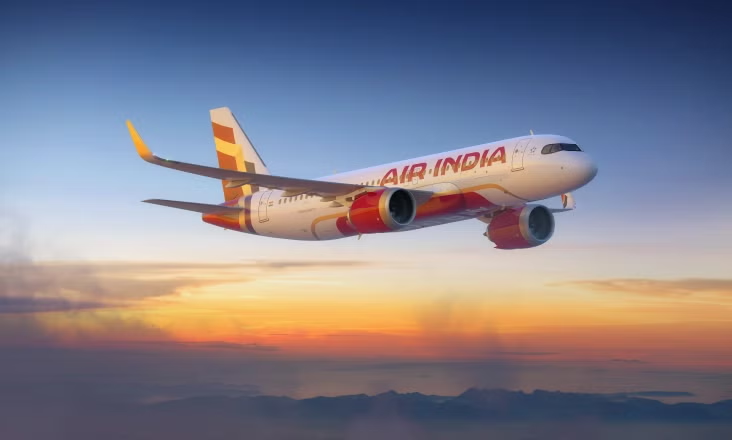
Air India plans to induct around 60 additional aircraft over the next 18 months, reinforcing the Tata Group-owned airline’s aggressive expansion strategy despite ongoing supply chain disruptions and aircraft delivery delays affecting the global aviation industry. The fleet additions will support the carrier’s efforts to increase domestic and international capacity, improve connectivity, and strengthen its position against market leader IndiGo.
The planned expansion is part of Air India’s broader transformation program following its return to Tata Group ownership in 2022. The airline has already placed orders for 570 new Airbus and Boeing aircraft, one of the largest aircraft procurement programs in aviation history, and continues to modernize both its fleet and customer experience.
Air India to Add 60 Aircraft by Early 2028
Air India Chief Commercial Officer Nipun Aggarwal said the airline expects to receive approximately 60 aircraft over the next 18 months, enabling it to continue expanding despite short-term operational challenges.
The additional aircraft will help the airline:
- Increase frequencies on high-demand domestic routes.
- Launch services to new destinations.
- Expand international connectivity.
- Replace older aircraft with newer, more fuel-efficient models.
- Support its goal of significantly increasing market share.
Fleet Expansion at a Glance
| Metric | Details |
|---|---|
| Aircraft to be added | Around 60 |
| Delivery timeline | Next 18 months |
| Purpose | Domestic and international expansion |
| Long-term order book | 570 Airbus and Boeing aircraft |
| Ownership | Tata Group |
Expansion Continues Despite Industry Headwinds
Like many global airlines, Air India continues to face aircraft delivery delays caused by supply chain bottlenecks, engine shortages, and production constraints at major manufacturers.
Despite these challenges, the airline says it remains committed to its long-term expansion roadmap rather than slowing growth.
According to Aggarwal, Air India intends to continue:
- Doubling capacity on key routes over the next five years.
- Adding new domestic and international destinations.
- Investing in premium products and customer experience.
- Expanding its integrated network alongside Air India Express.
Key Growth Priorities
| Focus Area | Objective |
|---|---|
| Fleet induction | Increase available capacity |
| Route expansion | Serve more domestic and overseas destinations |
| Customer experience | Upgrade cabins, products and services |
| Operational efficiency | Improve aircraft utilization and reliability |
Fleet Modernization Remains a Priority
The new aircraft form part of Air India’s comprehensive fleet renewal strategy.
In addition to new deliveries, the airline is:
- Retrofitting legacy Boeing 787 and Boeing 777 aircraft with upgraded cabins.
- Inducting new Airbus A350 and Boeing 787-9 widebody aircraft.
- Retiring or selling older aircraft as part of fleet rationalization.
- Standardizing operations to improve efficiency.
Fleet Transformation
| Initiative | Status |
|---|---|
| New aircraft deliveries | Ongoing |
| Boeing 787 retrofits | In progress |
| Airbus A350 induction | Underway |
| Older aircraft disposal | Continuing |
| Fleet standardization | Ongoing |
Supporting Domestic and International Growth
The additional aircraft are expected to play a central role in Air India’s ambition to strengthen its presence in both domestic and overseas markets.
On the domestic front, the airline is aiming to substantially increase its market share through greater capacity and improved connectivity. Internationally, Air India continues to expand long-haul operations while deploying refurbished aircraft with upgraded cabins and onboard Wi-Fi on key routes.
Challenges Remain
While the expansion plan is ambitious, several factors could influence its execution:
- Aircraft manufacturing delays at Airbus and Boeing.
- Engine supply constraints.
- Rising operating and fuel costs.
- Integration of new aircraft into existing operations.
- Competitive pressure from IndiGo, Akasa Air, and other carriers.
Nevertheless, Air India says its long-term transformation strategy remains unchanged despite these headwinds.
Looking Ahead
Air India’s plan to induct around 60 aircraft over the next 18 months marks another significant milestone in its multi-year transformation under the Tata Group. Backed by one of the world’s largest aircraft order books and continued investments in fleet modernization, network expansion, and customer experience, the airline is positioning itself for sustained growth in both domestic and international markets.
While delivery delays and industry-wide supply chain challenges may affect the pace of expansion, Air India’s leadership remains committed to its long-term strategy. The successful induction of these aircraft will be crucial in helping the carrier expand capacity, improve operational efficiency, and strengthen its competitiveness in one of the world’s fastest-growing aviation markets.
Get the day’s top stories in your inbox
One concise email. No spam, unsubscribe anytime.