Key takeaways
- IT hiring stabilisation means job demand is no longer falling as fast.
- Big software firms still look careful, but fresher hiring is slowly coming back.
- Attrition, or staff leaving jobs, has stayed lower than the boom years.
- AI work, cloud projects, and deal wins could shape the next hiring cycle.
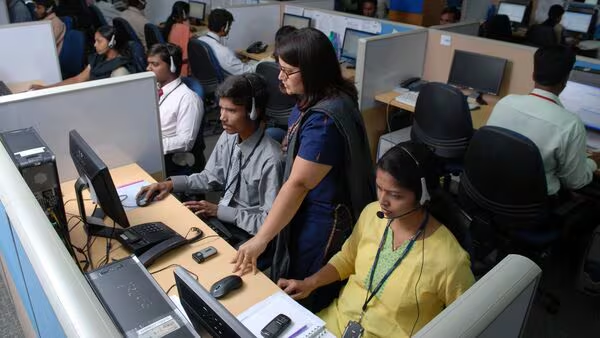
IT hiring stabilisation is starting to show in India’s software industry. IT hiring stabilisation means companies are no longer cutting jobs as sharply, even if they are not hiring fast yet. The mood is calmer than last year. That matters because India’s tech sector employs millions of people.
For students, job seekers, and families, this is a simple story. The worst hiring slowdown may be easing. But this is not a full jobs boom. Companies still want to save money, and they are hiring more carefully than before.
Why are people talking about IT hiring stabilisation now?
India’s top IT services firms had a rough stretch after the post-Covid boom cooled. Clients cut spending on many tech projects. Clients are the companies that pay IT firms to build or run software. So hiring slowed, bench sizes came under focus, and some firms reduced headcount.
Now the signals look less harsh. Several firms have said demand has stopped getting worse in many areas. Some are talking about fresher intake again. Freshers are new graduates starting their first full-time jobs. That doesn’t mean every company is growing, but it does suggest IT hiring stabilisation.
A key clue is attrition. Attrition means the share of workers who leave in a given period. During the hiring frenzy, attrition at some top firms had shot above 20%. Now, at many large firms, it has fallen into the low teens or even single digits. That makes planning easier, because companies don’t need to replace so many people at once.
What are the numbers saying?
The picture is mixed, but clearer than before. India’s IT and business process sector employed more than 5.4 million people in recent industry estimates from Nasscom. Even a small shift in hiring plans can affect a huge number of homes.
In the boom period, some major firms added tens of thousands of workers in a year. Then the trend flipped. A few large companies reported lower employee counts year on year, while others added only modest numbers. This year, the drop in hiring looks smaller, which is why people see IT hiring stabilisation.
Here is a simple view of the trend:
India IT hiring trend: boom, slowdown, stabilisationBoomSlowdownStabilisingHighLowBetter
The chart is not a stock chart. It is a simple visual summary of direction. The point is that hiring fell from a high level, then started to steady.
| Signal | What it shows | Why it matters |
|---|---|---|
| Lower attrition | Fewer workers quitting | Firms can plan hiring better |
| Fresher intake | New graduates may get more openings | Entry jobs often return first |
| AI and cloud demand | New kinds of tech work are growing | Skills may matter more than headcount |
| Careful client budgets | Deals still face delays | Hiring may recover slowly |
What is changing inside IT companies?
Firms are shifting from blanket hiring to targeted hiring. Blanket hiring means taking in lots of people across many teams at once. Now companies want specific skills. For example, they may seek workers in AI, cybersecurity, cloud, data, and engineering services.
That matters because not all tech jobs are moving the same way. A basic support role may face pressure, while an AI tools role may grow. In fact, many companies are trying to retrain current staff instead of hiring large batches. Retraining means teaching workers new skills for newer jobs.
Managers also care about utilisation. Utilisation means how much of an employee’s work time is billed to a client. If utilisation is low, firms may not rush to hire. So even with IT hiring stabilisation, hiring can stay selective for months.
Does this mean freshers will get more jobs?
Maybe, but don’t expect the old hiring frenzy. Some IT firms have started talking about campus hiring again. Campus hiring is when companies recruit from colleges. That is a good sign because freshers were hit hard during the slowdown.
Still, companies may stagger offers and joining dates. Stagger means spreading them over time instead of all at once. So a student with coding, data, cloud, or AI skills could have a better chance than someone waiting for any role at all.
If you want a clue about the wider economy, look at related sectors too. Stronger growth can support tech spending, as we explained in our report on India GDP growth. Export-linked businesses also matter, because many IT clients are overseas, much like the trends covered in our story on container traffic growth at Indian ports.
What could still go wrong?
Plenty. Clients in the US and Europe still watch costs very closely. If interest rates stay high, or growth slows, some companies may delay tech projects again. That would hurt demand for outsourced work from India.
AI could also cut some routine work even as it creates new tasks. Routine work means simple, repeat jobs that software can automate. So IT hiring stabilisation does not mean every old role will return. It may mean the mix of jobs changes first, and total hiring improves later.
There is also pressure on pricing. Pricing means what IT firms can charge clients. If clients ask for more work at lower rates, margins can tighten. Margins are the share of revenue left after costs. When margins feel tight, companies get cautious about headcount.
What should job seekers watch next?
Watch three things. First, listen for fresher hiring targets during earnings calls. Second, track attrition and headcount numbers every quarter. Third, notice what skills companies mention most often in job posts.
The most useful way to read this moment is simple. IT hiring stabilisation means the sector may be moving from fear to caution, not from caution to celebration. That is still progress. A steady market beats a falling one, especially for students waiting to start.
For official industry background, readers can check Nasscom industry publications and company filings on BSE. Those are primary sources. They help you see what firms say in their own numbers, not just in headlines.
India’s software job market is not booming again yet, but the sharp slide appears to be easing. That is what IT hiring stabilisation really means: fewer signs of panic, slower cuts, and a careful return of demand in selected roles.
FAQs
What does IT hiring stabilisation mean?
It means job demand in the IT sector has stopped getting worse as quickly. Hiring is still careful, but the steep slowdown seems to be easing.
Why are IT companies still cautious?
Clients are watching budgets, and some projects are delayed. Companies also want people with exact skills, so broad hiring has not returned yet.
How can freshers improve their chances?
Learn practical skills in coding, cloud, data, AI, and testing. Build small projects, because proof of skill often helps more than just a degree.
Get the day’s top stories in your inbox
One concise email. No spam, unsubscribe anytime.