Key takeaways
- Tata Motors Iveco deal is the planned purchase of Iveco’s commercial vehicle business by Tata Motors.
- Chairman N Chandrasekaran said the company is on track to finish it by Q2 FY27.
- The timeline still depends on approvals from regulators, which are watchdogs that check big deals.
- If it closes on time, Tata Motors could gain more scale in trucks and buses across regions.
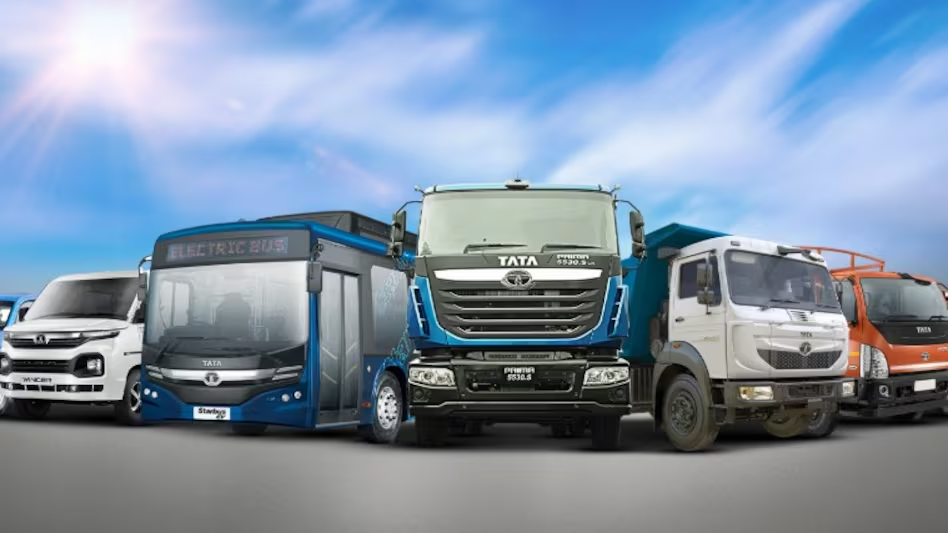
Tata Motors Iveco deal is a planned buyout of Iveco’s commercial vehicle business by Tata Motors. That means Tata wants to add Iveco’s truck and bus operations to its own. Chairman N Chandrasekaran says the company still expects to complete the move by Q2 FY27. So the deal appears to be moving on schedule.
That matters because this is not a small purchase. It could reshape Tata Motors’ place in the global truck and bus market. A market is where companies compete to sell goods. In this case, the goods are heavy vehicles used for cargo, city buses, and long road trips.
Why is the Tata Motors Iveco deal important?
Tata Motors is already a major name in India for commercial vehicles. Commercial vehicles are trucks, buses, and vans used for work. Iveco is a well-known European maker of trucks, buses, and transport systems. So bringing the two together could give Tata a bigger footprint in Europe, Latin America, and other regions.
The big idea is scale. Scale means being bigger so you can spread costs across more products. For example, a company that buys steel, chips, and engines in larger amounts may get better prices. That can help margins, which is the money left after costs.
The planned timeline also gives investors a rough clock. Investors are people or funds that put money into a company. Q2 FY27 means the second quarter of the financial year 2026-27. For Indian companies, that usually points to July to September 2026.
What did Chandrasekaran say about the timeline?
According to the report, N Chandrasekaran said the company is on track to complete the Tata Motors Iveco deal by Q2 FY27. He did not present it as done yet. That is because large cross-border deals often need many checks first.
Those checks include regulatory approval. A regulator is a public body that reviews whether a deal could hurt competition or break rules. In a transaction of this size, reviews can come from more than one country. So even when both companies agree, the finish line can still take months.
This kind of process is normal. For example, antitrust reviews look at whether one company would become too dominant. Antitrust is just the law that tries to keep markets fair. Companies also need to plan how teams, factories, and product lines will fit together after the deal closes.
What could Tata Motors gain if the deal closes?
The clearest gain is reach. Tata is strong in India, while Iveco has a long history in Europe and other overseas markets. Together, they could sell into more countries and share technology across more vehicle types.
Another gain is product spread. One company may be stronger in light trucks, while the other may do better in heavier long-haul models. Long-haul means vehicles built for very long trips. By combining ranges, Tata Motors could offer more options to fleet buyers, who are firms that buy many vehicles at once.
There may also be savings. These are often called synergies. Synergies means two businesses working together to save money or sell more than they could alone. For instance, shared buying, common parts, and joint research can reduce costs over time.
Still, mergers can be hard. A merger is when businesses combine. Different work cultures, factory systems, dealer networks, and local rules can slow progress. So getting the deal done is only the first test. Making it work well is the bigger one.
How big is the timeline, in simple numbers?
The timeline can sound fuzzy, so here is a simple way to see it. FY27 is the financial year that runs from April 2026 to March 2027. Q2 is the second quarter. So Q2 FY27 usually means a three-month window from July to September 2026.
That gives the company roughly one target window of 3 months. It also places the expected close in 2026, not 2027. And because a financial year has 4 quarters, Q2 sits around the first half of that year.
Expected closing window: Q2 FY27Q4 FY26Q1 FY27Q2 FY27Q3 FY27Target
Here is the same idea in a quick table.
| Term | Plain meaning | Key number |
|---|---|---|
| FY27 | Financial year from April 2026 to March 2027 | 12 months |
| Q2 FY27 | Second quarter of that year | 3 months |
| Expected close | Window mentioned by Tata chairman | Jul-Sep 2026 |
What should investors and buyers watch next?
The next thing to watch is approvals. Until regulators sign off, the Tata Motors Iveco deal remains a planned transaction, not a completed one. Readers should also watch for management updates on financing. Financing means how a company pays for a deal.
Another big issue is integration. Integration means joining two businesses so they can run as one. Investors will want details on factories, product overlap, and leadership roles. Buyers of trucks and buses will care about service, spare parts, and dealer support.
There is also the bigger industry backdrop. Truck makers face pressure from cleaner fuel rules, software upgrades, and electric vehicle investment. Electric vehicles use battery power instead of petrol or diesel. So bigger global size can help a company spread those costs more easily.
That is one reason this move stands out. While some news has focused on weak auto demand, such as our report on Toyota sales falling for a fourth month, Tata is trying a different path. It is using a deal to build scale and widen its map.
The company is also moving at a time when many firms are rethinking size and cost. We have seen similar pressure in tech and cloud, for example in our coverage of Amazon hiking AWS prices by 20%. Different sector, same lesson: big companies want stronger margins and wider reach.
What does the Tata Motors Iveco deal mean in one clear line?
Here is the simplest answer:
Tata Motors says its planned Iveco transaction is still on schedule for Q2 FY27, which means the company expects to finish the approvals and closing steps by around July to September 2026.
That short line matters because it tells readers two things at once. First, the deal is not delayed right now. Second, the real work ahead is less about headlines and more about approvals, funding, and joining two large vehicle businesses.
For primary details, readers can track Tata Motors updates through the BSE filing system and company announcements on Tata Motors’ official site. Those are useful because they carry formal disclosures, not market chatter.
If the deal closes on time, Tata could come out with a stronger hand in trucks and buses worldwide. But the calendar is only one part of the story. The harder part comes after the signing, when plans must turn into working factories, products, and service networks.
FAQs
What is the Tata Motors Iveco deal?
It is Tata Motors’ planned purchase of Iveco’s commercial vehicle business. That would add more truck and bus operations to Tata’s network.
When could the Tata Motors Iveco deal close?
Tata chairman N Chandrasekaran said the target is Q2 FY27. In simple terms, that points to July to September 2026.
Why does this deal matter?
It could help Tata grow outside India, sell more kinds of commercial vehicles, and spread costs across a bigger business. But it still needs approvals and careful integration.