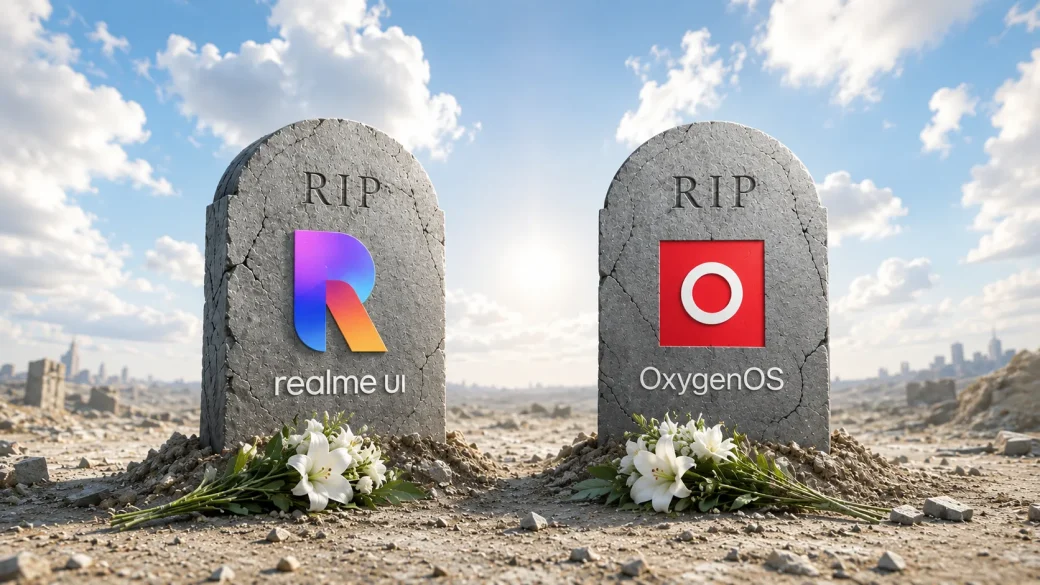
In a massive consolidation move that signals the end of an era for Android enthusiasts, OPPO is reportedly executing a sweeping restructuring plan to permanently discontinue both OxygenOS and Realme UI on future global devices.
According to an explosive leak published by Smartprix on July 3, 2026, citing a highly reliable industry insider, the parent conglomerate (BBK Electronics) is folding both custom software skins entirely into ColorOS to eliminate redundant development costs and streamline its global engineering resources.
1. The Financial Reality: Cutting the “Three-Skin Tax”
The primary catalyst behind the axing of OxygenOS and Realme UI is pure operational efficiency. Currently, maintaining three separate software pipelines requires staggering overhead: three independent developer armies, separate quality assurance (QA) test loops, and fragmented regional deployment schedules.
By standardizing all future OnePlus, Realme, and OPPO hardware on a single ColorOS baseline, the company can aggressively optimize its research and development (R&D) budgets while funneling saved capital directly into advanced AI features and OS stability.
 [ THE BBK SOFTWARE CONSOLIDATION POOL ]

  OLD ECOSYSTEM:     [ OxygenOS ]       [ Realme UI ]       [ ColorOS ]
                           │                  │                  │
                           └──────────────────┴────────┬─────────┘
                                                       ▼ (Restructuring Pivot)
  UNIFIED PIPELINE:                           [ ColorOS Global ]
                                                       │
                                                       └──► 100% Shared R&D, faster patches,
                                                            and unified AI feature integration
2. The Slow Death of Software Identity
While this consolidation represents a major shock to loyal fanbases, supply chain analysts note that the writing has been on the wall for half a decade:
- The Shared Codebase Precedent: Back in 2021, OnePlus formally merged the underlying codebases of OxygenOS and ColorOS. While the company promised the visual interfaces would remain distinctly independent, the design philosophies blurred dramatically over subsequent updates. Modern OxygenOS and Realme UI builds had already effectively become rebranded visual forks of ColorOS.
- The China Blueprint: OnePlus long ago retired its domestic skin (HydrogenOS) in mainland China, replacing it entirely with ColorOS for Chinese consumers. The 2026 decision simply scales this proven regional playbook to the global stage.
3. A Broader Operational Retreat
The elimination of individual software skins is actually the final chapter in a much larger, quiet corporate rollback that has been intensifying over the past few months:
| Brand Track | Observed Retail Footprint Shifts (Mid-2026) | The Strategic Outlook |
| OnePlus | Web storefronts in Europe have actively started directing traffic toward OPPO hardware; UK and US retail inventories have largely dried up. | Reportedly narrowing its focus to its core strongholds in India and China as an online-exclusive gaming and premium branch. |
| Realme | Winding down its domestic mainland China operations entirely to focus solely on budget-friendly international markets. | Rumoured to potentially be transitionally downgraded from a standalone sub-brand into a specialized budget series under the core OPPO banner. |
| After-Sales Support | Independent, standalone service pipelines are beginning to consolidate. | In major regions like India, OnePlus standalone service centers are expected to be systematically absorbed into the broader OPPO service network. |
What This Means For Your Current Device
If you currently own a OnePlus or Realme handset, nothing changes immediately. Existing devices will continue to receive their promised security updates and software maintenance under their native OxygenOS or Realme UI wrappers.
The disruption strictly targets the next generation of hardware. However, for enthusiasts who originally fell in love with OnePlus because of OxygenOS’s lightweight, bloat-free, near-stock Android aesthetic, the consolidation represents a heavy emotional blow—signaling the official end of the independent “flagship killer” software identity.
Get the day’s top stories in your inbox
One concise email. No spam, unsubscribe anytime.