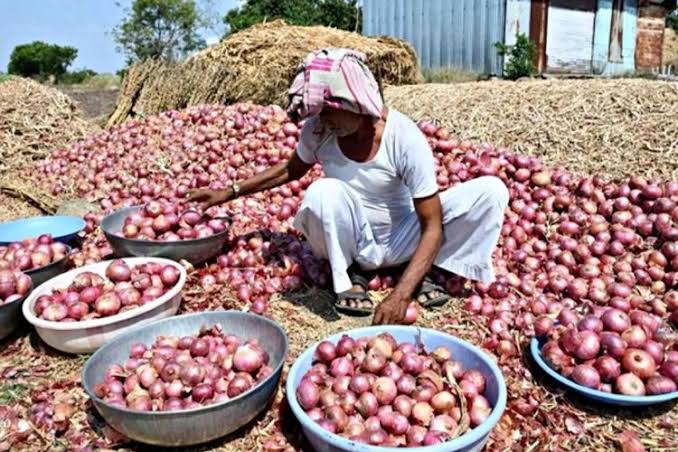
The Government of India has increased the procurement price of onions for the Price Stabilisation Buffer by 13%, raising it from ₹1,875 per quintal to ₹2,125 per quintal.
The revised rate, which came into effect on July 4, 2026, is aimed at improving realisations for farmers and breathing life into sluggish state purchases. This marks the fifth upward price revision this season by the Ministry of Consumer Affairs, Food and Public Distribution, as procurement under the Price Stabilisation Fund (PSF) had slowed significantly.
1. Sluggish Procurement Prompts 5th Price Hike
The aggressive step up in pricing stems directly from a slower-than-expected start to the government’s buffer collection strategy:
- The Sluggish Buffer: Since the current procurement window opened on June 1, the government has managed to pool only about 2,000 tonnes of onions for its 2026 national buffer stock.
- The Rapid Price Staircase: To incentivize farmers facing higher input costs, state procurement agencies have consistently bumped rates. The buying price originally opened at ₹12.70 per kg, climbing systematically to ₹15.80 (May 22), ₹16.50 (June 13), ₹17.30 (June 20), ₹18.75, and now ₹21.25 per kg (₹2,125 per quintal).
- The Core Agencies: Physical procurement remains actively underway across key manufacturing hubs, spearheaded by the National Agricultural Cooperative Marketing Federation of India Limited (NAFED) and the National Cooperative Consumers’ Federation of India Limited (NCCF).
2. Market Dynamics: Adequate Stocks and Speculative Waves
Despite the sluggish buffer accumulation, the Consumer Affairs Ministry clarified that the overall supply health of the domestic consumer market is robust.
- Sufficient Stock Reserves: Total onion output for the 2025-26 cycle is pegged at 307.37 lakh metric tonnes, virtually unchanged from the 307.67 lakh metric tonnes recorded during the previous year. Stock reserves in primary growing states like Maharashtra, Madhya Pradesh, and Gujarat remain entirely adequate.
- Mandi Flow and Prices: Daily wholesale mandi arrivals across India continue to top 50,000 metric tonnes, with Maharashtra alone feeding over 30,000 metric tonnes into the pipeline. While the average modal price at the mandi level is around ₹18 per kg, the all-India average retail price stands steady at ₹31 per kg.
- The Speculative Element: The ministry noted that a delayed monsoon arrival and patchy rainfall have triggered a wave of speculative buying by some traders in major hubs like Nashik. However, this is being driven by anticipation of future price recoveries rather than genuine immediate demand shifts in key consumer centers, where demand remains subdued at current price tags.
3. Delayed Sowing and Global Export Headwinds
As energy and agricultural planners keep tabs on upcoming crops, supply chains are adjusting to external shifts:
- Sowing Delays: The delayed rain has pushed back Kharif onion planting schedules by approximately 15 days in Maharashtra’s Nashik region. Meanwhile, planting progress across the Chitradurga and Challakere belt in Karnataka is tracking at roughly 60% of normal levels.
- The Global Intersect: India exported a stable 1.50 lakh metric tonnes of onions in June 2026. However, domestic traders anticipate a temporary slowdown in export momentum over the short term. Fresh, highly price-competitive crop yields entering the global market from Pakistan and China are undercutting Indian exporters in traditional strongholds like Sri Lanka, the Far East, and the Gulf countries.
Get the day’s top stories in your inbox
One concise email. No spam, unsubscribe anytime.