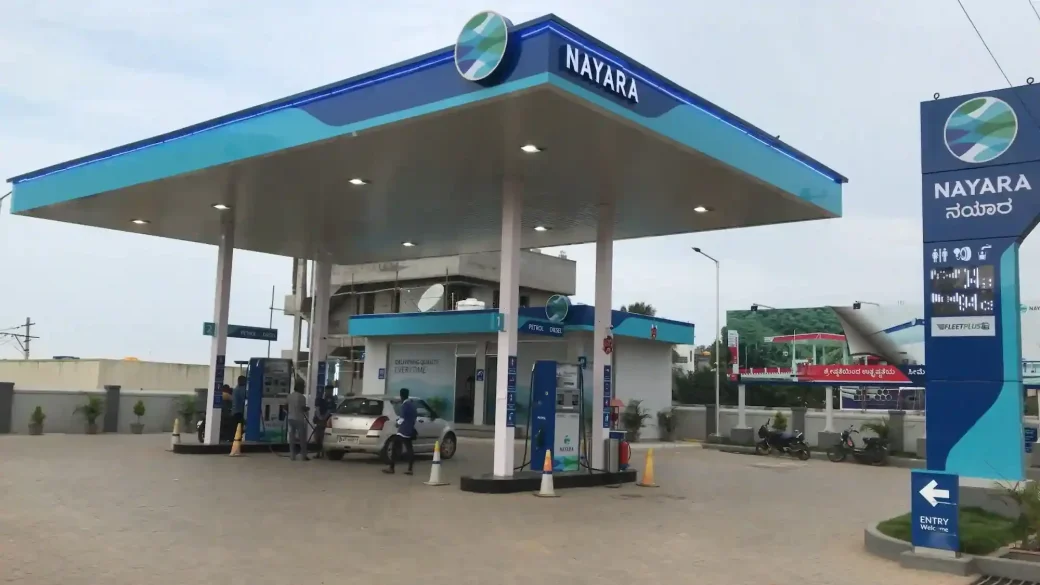
Reflecting a major cooldown in global oil benchmarks, India’s largest private fuel retailer, Nayara Energy, has announced a nationwide reduction in its retail fuel rates, cutting petrol by ₹5 per litre and diesel by ₹3 per litre.
The price revisions, which take effect on July 1, 2026, across Nayara’s extensive network of over 7,000 retail outlets, mark the first downward fuel price correction by any domestic oil marketing company in more than two years.
1. The Global Catalyst: Easing Geopolitical Fractures
The primary driver behind Nayara’s price cut is a significant softening in international crude benchmarks following a breakthrough in West Asian diplomacy:
- The June 17 US-Iran MoU: The signing of a formal Memorandum of Understanding between Washington and Tehran dramatically defused a months-long crisis in the Middle East.
- The Reopening of the Strait of Hormuz: The resolution immediately restored normal container and tanker transit operations through the world’s most critical maritime oil corridor, completely erasing supply bottleneck anxieties.
- Crude Plummets from Four-Year Highs: Back on April 30, international Brent crude peaked at a conflict-driven high of $126.41 per barrel. Following the diplomatic de-escalation, Brent cooled rapidly, trading down near a stable $73.24 per barrel threshold.
2. Reversing the War Premium
The July 1 cut effectively functions as a complete rollback of the “war premium” private retailers had to implement when the conflict originally flared up.
Historically, private players like Nayara adjust their pump prices much faster than public sector undertakings to avoid selling at an absolute loss when import bills spike. On March 26, Nayara had aggressively hiked rates by ₹5 for petrol and ₹3 for diesel to absorb the initial oil shock. This week’s corporate revision completely eliminates that pricing premium.
 [ March 26: Conflict Outbreak ] ──► Nayara hikes Petrol by +₹5/L, Diesel by +₹3/L to counter $126 Brent
                                                    │
                                                    ▼ (June 17: Diplomatic MoU Signs)
 [ June 17-30: Softening Phase   ] ──► Global crude slides down to ~$73 per barrel
                                                    │
                                                    ▼
 [ July 1: The Sovereign Rollback] ──► Nayara cuts Petrol by -₹5/L, Diesel by -₹3/L across 7,000 pumps
3. The Retail Divide: Private vs. State-Run Pumps
While Nayara has chosen to pass its importing savings directly down to the consumer, the broader Indian retail landscape remains sharply split:
| Fuel Retailing Segment | Active July 1 Price Trajectory | Market Footprint & Positioning |
| Nayara Energy (Private) | Petrol: -₹5/L Diesel: -₹3/L | Operates over 7,000 stations fed by its massive 20-million-tonnes-per-annum refinery in Vadinar, Gujarat. |
| State OMCs (IOCL, BPCL, HPCL) | Unchanged / Static | Control over 90% of India’s 1 lakh fuel pumps. Standard retail rates remain pegged at baseline levels (e.g., Petrol in Delhi stays at ₹102.12/L). |
Because state-run companies absorbed major financial hits and delayed raising their own consumer prices during the peak of the West Asia crisis, public-sector oil corporations are expected to hold pump prices steady throughout the quarter to recoup past refining losses and stabilize their corporate balance sheets.
4. A Broader Day of Consumer Relief
The downward correction at the fuel pumps coincides with a broader, coordinated easing of commercial energy costs orchestrated by public oil marketing companies across the country:
- Commercial LPG Slashed: The price of a 19-kg commercial LPG cylinder has been cut by ₹183.50, bringing the New Delhi benchmark down to ₹2,930. This marks the first commercial gas price drop of 2026, rolling back four consecutive tranches of steep hikes imposed since March.
- Aviation Fuel Drops: The price of domestic Aviation Turbine Fuel (ATF) was simultaneously reduced by ₹5 per litre, dropping to ₹110 per litre, providing immediate operational breathing room for domestic commercial airlines facing high post-summer travel volumes.