Key takeaways
- The US has moved ahead of China as the biggest market for Indian spices in FY26.
- Indian spice exports means the spices India sells to other countries, from chilli to cumin.
- The shift matters because it shows demand is changing across big global markets.
- China still buys a lot, but weaker purchases changed the rankings this year.
- For farmers, traders, and food brands, the new pecking order could shape prices and strategy.
Indian spice exports have a new No. 1 buyer. Indian spice exports means the spices India sells to other countries. In FY26, the US moved ahead of China in value. That tells us global demand is shifting, not standing still.
The change may sound small, but it matters. India is one of the world's biggest spice suppliers, so even a small shift can move a lot of money. Think of chilli, cumin, turmeric, pepper, and mint products going into kitchens, factories, and food brands across the world. When one big buyer slows and another speeds up, traders feel it fast.
Why did Indian spice exports see the US overtake China?
The biggest reason seems simple: the US bought more steadily, while China slowed. China had been a huge buyer, especially of some items like chilli. But demand can swing because of stock levels, prices, or local crop output. Stock levels mean goods already sitting in storage. If buyers already have enough, they order less.
The US market works a bit differently. It buys for homes, restaurants, and packaged food brands. That demand is often broad and spread across many products, so it can be more stable. A stable market is one that does not jump up and down too sharply. As a result, the US gained ground in FY26.
This also fits a wider pattern in trade. Buyers are trying to spread risk across markets and suppliers. Spread risk means not depending too much on one source or one customer. We've seen the same thinking in other sectors too, like Bajaj Auto's multi-platform strategy, where companies try not to lean on just one path.
How big are Indian spice exports right now?
India ships out hundreds of spice products every year, both whole and processed. Processed means cleaned, ground, mixed, or turned into oils and extracts. The country's spice trade is watched closely because it links farms, ports, food factories, and foreign supermarkets.
According to the Spices Board of India, the country exported about 1.54 million tonnes of spices and spice products in 2023-24. That was worth around $4.46 billion. A tonne is 1,000 kilograms. So this is a very large business, not a niche one.
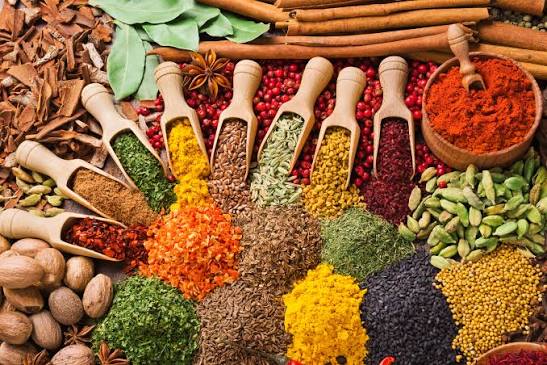
India's spice basket is wide. Chilli, cumin, turmeric, mint products, spice oils, and oleoresins all matter. Oleoresins are thick flavour extracts used by food and fragrance companies. They pack taste and smell into a small amount, a bit like a super-concentrated spice jar.
Indian spice exports: key numbers2023-24 value$4.46b2023-24 volume1.54m t
Those numbers show scale, but rankings matter too. If the US is now the top buyer in FY26, exporters may tweak what they sell and where. They may focus more on quality checks, packaging, and product types that suit US demand. Meanwhile, they will still watch China closely because a rebound there could change the order again.
Which spices are driving Indian spice exports?
Not all spices move the same way. Chilli often leads by volume, while cumin has seen strong global interest in recent years. Volume means the amount sold, not the money earned. A product can sell in big volume but still earn less than a high-value extract.
Turmeric stays important because it is used in cooking, health products, and food processing. Pepper remains a known export, though it faces competition from other producing countries. Competition means other countries also sell the same goods. So India has to win on price, quality, or both.
The US tends to buy a mix of consumer and industrial products. Consumer products are goods sold for home use. Industrial products go into packaged foods, sauces, snacks, and flavour blends. That mix can help Indian spice exports because it spreads demand across more categories.
What does this mean for farmers and spice companies?
For farmers, the first question is price. If export demand stays healthy, it can support better rates for some crops. But farm prices do not move in a straight line. Weather, arrivals, and global supply also matter.
Weather is a real risk this year. Weak rain can hurt sowing, which means planting seeds in fields. Lapaas Voice has already tracked how a rainfall deficit is troubling kharif sowing in West India and how India saw its driest June in 16 years. If spice-growing regions face stress, supply could tighten later.
For exporters, the bigger lesson is balance. No company wants to depend too much on one giant market. If China slows, the US can help. If the US tightens food rules, another market may pick up. So the smartest firms build many doors into the same house.
| Point | What it means |
|---|---|
| US now ranks first | A new top market for Indian spice exports in FY26 |
| China ranks lower | Demand appears softer than before |
| 2023-24 export value | About $4.46 billion, based on Spices Board data |
| 2023-24 export volume | About 1.54 million tonnes |
Could China regain the top spot in Indian spice exports?
Yes, it could. Trade rankings can flip quickly, especially in farm goods. Farm goods are crops and products linked to farming. One strong buying season can change the table.
China remains a major customer, and its buying power is huge. If its domestic supply falls, or if prices turn attractive, imports from India may rise again. Domestic supply means the amount produced inside a country. So this new ranking is important, but it is not final forever.
That is why the smarter view is not "US wins, China loses." The better view is that Indian spice exports are becoming more spread out. A wider customer base makes trade less fragile. Less fragile means one shock does not break the whole system.
Where can readers check the official numbers?
The most useful primary source is the Spices Board of India, which tracks exports, products, and market trends. Readers can also check the Ministry of Commerce and Industry for trade updates. Primary source means the original body that publishes the data first.
The clearest takeaway is this: the US has become the top market for Indian spice exports in FY26, showing that demand for India's spices is shifting across big economies rather than moving in one fixed pattern.
That shift matters beyond trade charts. It affects what farmers grow, what exporters pack, and where companies place their bets. And since spices sit in daily food, the story reaches from Indian farms all the way to dinner tables in New York, Shanghai, and beyond.
FAQs
What are Indian spice exports?
Indian spice exports are the spices and spice products India sells to other countries. They include chilli, cumin, turmeric, pepper, oils, and extracts.
Why did the US become the top buyer?
The US appears to have bought more steadily, while China's demand softened. That changed the ranking in FY26.
Who tracks Indian spice exports?
The Spices Board of India is a key source. It publishes export data, product details, and market information.