Key takeaways
- Delhi has set a yearly smog plan instead of waiting for each winter crisis.
- The Delhi winter pollution plan includes up to 50% work from home in severe periods.
- Petrol and diesel pumps may deny fuel to vehicles without a valid PUC.
- Officials will tie action to pollution stages, so rules can tighten faster.
- The plan matters beyond Delhi because bad air also drifts in from nearby states.
The Delhi winter pollution plan is Delhi’s fixed yearly playbook for dirty winter air. It means the city now has a ready set of steps before smog gets really bad. Those steps include more work from home and a no-fuel rule for some vehicles. The idea is simple: act earlier, so air does not spiral out of control.
Delhi announced the plan as the city prepares for the months when smoke, dust, and cold air trap pollution close to the ground. That trapping effect is called an inversion. It means a layer of cold air acts like a lid. So exhaust, dust, and smoke hang around instead of rising away.
What is in the Delhi winter pollution plan?
The biggest shift is that the Delhi winter pollution plan makes several winter steps permanent. That means officials do not need to invent a new response each year. They can switch measures on as pollution worsens. In fact, that speed matters because air quality can swing sharply in a day or two.
One key step is work from home for up to 50% of staff during severe pollution episodes. Work from home means people do their jobs from their house instead of traveling to an office. Fewer trips can cut traffic fumes, especially during rush hour. The city also plans tighter checks on road dust, waste burning, and construction activity.
Another eye-catching move is the fuel restriction. Petrol pumps and diesel stations may refuse fuel to vehicles that do not have a valid PUC. PUC means Pollution Under Control certificate. It is a test paper that shows a vehicle’s emissions stay within legal limits.
The government also linked the steps with CAQM and CPCB pollution stages. CAQM is the Commission for Air Quality Management. It coordinates action across Delhi and nearby states. CPCB is the Central Pollution Control Board, which tracks air quality data and standards.
Why does Delhi need a winter pollution plan every year?
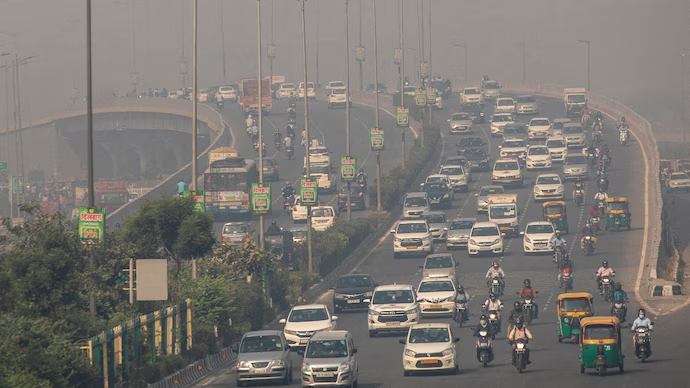
Winter is Delhi’s worst air season because weather and human activity combine in a nasty way. Cold air slows the spread of pollutants. Wind often weakens too. Meanwhile, traffic stays heavy, construction continues, and some waste still gets burned.
Delhi also faces pollution from outside its borders. Smoke from crop residue burning can drift in from nearby areas. Crop residue means leftover plant stalks after harvest. That is why the city alone cannot fix everything, but it can still cut the pollution it controls.
The numbers show how serious the problem gets. In bad winter spells, Delhi’s Air Quality Index, or AQI, can cross 400. AQI is a score for how clean or dirty the air is. Anything above 300 is classed as very poor, and above 400 is severe. That’s like turning the city’s air into a thick, dirty soup.
Delhi air quality stagesPoor 201-300Very poor 301-400Severe 401-450Severe+ 450+ WFH, tighter curbs
Children, older people, and those with asthma often feel the harm first. Asthma is a lung illness that makes breathing harder. Doctors have long warned that dirty air can irritate the lungs, eyes, and heart. So even small cuts in pollution can matter.
How will the no-fuel rule work?
The no-fuel part may hit drivers fastest because it touches daily life. If a vehicle lacks a valid PUC, fuel stations may not serve it. That gives owners a direct reason to get the emissions test done. It also targets vehicles that may be releasing more smoke than allowed.
This rule is not just about punishment. It is also about making checks real. Many rules fail because they sound strict but are easy to ignore. A pump-side check changes that, since a car without fuel cannot go far.
There are still practical questions. Officials will need a smooth way to verify PUC papers at fuel stations. They must also stop fake certificates. If that system is weak, drivers could face long lines while polluting vehicles still slip through.
What else could change for schools, offices, and roads?
The Delhi winter pollution plan could reshape city life during peak smog days. Offices may split staff between home and workplace. That can reduce traffic volume, but only if many employers follow it. Government offices may move first, then private firms could be advised or ordered in severe stages.
Road dust control will also matter. Dust is a major part of Delhi’s pollution mix, especially on dry days. Cities often use water sprinkling and vacuum sweeping. Construction sites may need covers, anti-smog guns, and stricter barriers.
Delhi may also tighten rules for old vehicles and diesel generators. Diesel generators are backup machines that make electricity during power cuts. They are handy, but they can add a lot of soot. Meanwhile, limits on truck entry and waste burning can also kick in during worse phases.
| Measure | What it means | Who feels it first |
|---|---|---|
| 50% work from home | Half of staff may stay home in severe smog | Offices and commuters |
| No fuel without PUC | Vehicles need a valid emission test certificate | Drivers and fuel stations |
| Construction curbs | Dust control or site stoppage in bad air | Builders and workers |
| Generator limits | Backup diesel power may be restricted | Businesses and housing sites |
Will the Delhi winter pollution plan be enough?
The honest answer is no, not by itself. The Delhi winter pollution plan can reduce local pollution and help officials act faster. But Delhi shares an air shed with nearby cities and states. An air shed means one big area where the same air moves around. So smoke and dust do not stop at a state border.
Still, a fixed plan is better than last-minute panic. It gives schools, offices, drivers, and builders clear rules. It also helps people prepare before winter starts. That matters because confusion wastes time, and polluted air does not wait.
Delhi has tried emergency steps before under GRAP, which stands for Graded Response Action Plan. That system tightens rules as pollution worsens. The new approach seems aimed at making winter action more routine and less reactive. If it is enforced well, the city could respond faster than in past seasons.
For readers tracking Delhi’s wider economy and infrastructure story, this fits a bigger pattern. Cities need growth, but they also need cleaner systems. You can see that tension in our coverage of India economy growth, energy pressure in petrol and diesel prices, and industrial output in Hindustan Zinc’s record production. Cleaner air rules often collide with how fast a city moves, builds, and burns fuel.
The clearest takeaway is this: the Delhi winter pollution plan gives the city a standing winter rulebook, with measures like 50% work from home and no fuel for vehicles without a valid PUC, so officials can act before smog becomes a full-blown health crisis.
That does not guarantee success. Enforcement will decide a lot. If checks stay patchy, people will ignore the rules. But if the city follows through, the plan could make winter responses quicker, clearer, and a bit less chaotic.
It also sends a message. Delhi no longer treats winter smog as a surprise. It is planning for it in advance, because by now everyone knows it comes back every year.
FAQs
What is the Delhi winter pollution plan?
The Delhi winter pollution plan is a fixed yearly set of anti-smog steps. It includes work from home, stricter dust control, and fuel limits for vehicles without PUC.
Why is PUC important in Delhi?
PUC shows a vehicle passed an emissions test. That means its smoke output stays within legal limits. Without it, some fuel stations may deny petrol or diesel.
How does work from home help pollution?
It cuts some daily travel, so fewer vehicles crowd the roads. As a result, traffic fumes can fall during severe smog days.
When does Delhi’s air usually get worst?
Air often gets worse from October to January. Cold air, weak wind, traffic, dust, and smoke can all pile up during that time.