In what is being described as one of the most severe supply chain security breaches in Apple’s history, highly confidential manufacturing documents, proprietary supplier maps, and prototype images of the unreleased iPhone 18 Pro series have been leaked onto the dark web.
The security failure originates from a massive corporate cyberattack on Tata Electronics, Apple’s premier and fastest-growing manufacturing partner in India. The breach cuts directly at the hyper-protected veil of anonymity Apple forces upon its global supply ecosystem.
1. The Scale of the “World Leaks” Cyberattack
The digital heist was executed by the prominent cyber-extortion group World Leaks (a group that rebranded from Hunters International, dropping active file encryption to focus purely on high-leverage data theft).
- The 630GB Trove: The extortion group published a staggering 204,300 stolen files online after a massive network compromise that Tata Electronics initially detected in early June.
- The Multi-Client Hit: While the iPhone data has captured global headlines, the leaked infrastructure files also include technical engineering drawings, internal communication logs, and manufacturing blueprints belonging to another massive Tata Electronics client: Tesla.
- Collateral Exposure: The files further expose confidential technical documentation tied directly to global semiconductor behemoths TSMC and Qualcomm.
2. What Exactly Was Exposed?
Unlike generic corporate data leaks involving payroll or emails, this breach directly targets the secret physical architecture of Apple’s unreleased flagship hardware:
- The Component-to-Supplier Mapping: Security researchers and journalists identified at least six highly granular files that explicitly link individual iPhone 18 Pro parts to the exact third-party factories that produce them. This covers critical mainboard circuit chips, highly specific internal battery parts, and complex camera module components.
- Leverage and Vulnerabilities: The documents lay bare Apple’s hidden bargaining strategies—identifying exactly where Apple intentionally dual-sources parts to squeeze vendors on price, and exposing the structural “bottlenecks” where Cupertino relies on just a single, vulnerable supplier.
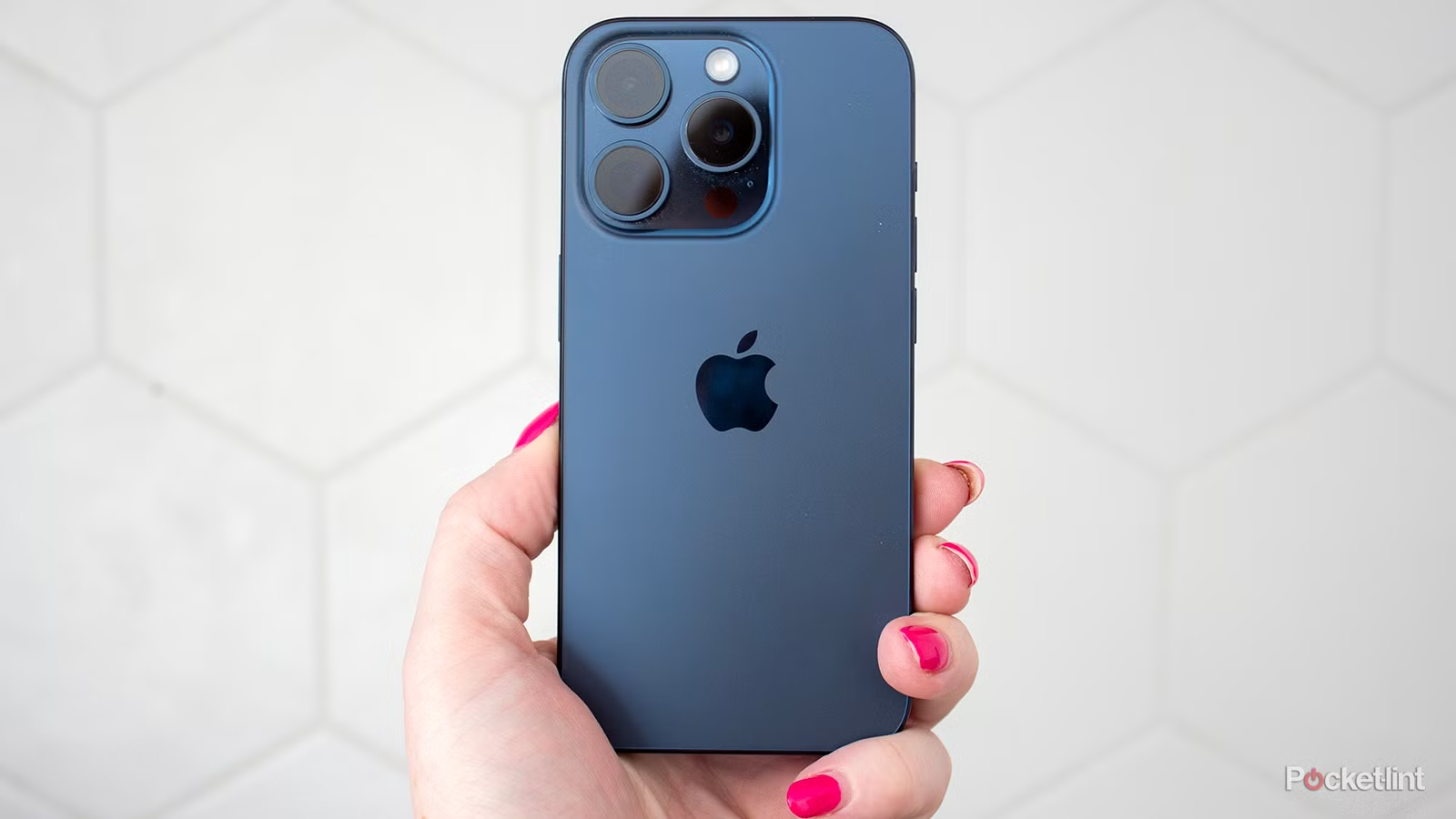
- The Drop-Test Photographs: Tucked inside the stolen cache are authentic, internal laboratory photographs dated early 2026 showing prototype iPhone 18 Pro units undergoing rigorous structural drop-testing at a Tata plant. The images depict a conventional grey slab-shaped handset carrying the signature three-rear-camera module layout and the Apple logo.
                  [ THE TATA ELECTRONICS LEAK Trove ]

  [ 630GB Stolen Data ] ──► Published on the Dark Web by "World Leaks"
                                       │
      ┌────────────────────────────────┴────────────────────────────────┐
      ▼ (Product Blueprints)                                            ▼ (Client Logistics)
 [ iPhone 18 Pro Core Trove ]                                      [ Global Giant Operations ]
   ├── 6 High-Sensitivity Supplier Maps                              ├── Tesla Vehicle Assembly Logs
   ├── Circuit, Battery & Lens Specs                                 ├── TSMC Micro-Architecture
   └── Prototype Drop-Test Photos (Early 2026)                       └── Qualcomm Silicon Specs
3. Why This Stings Apple and Threatens the India Expansion
Apple maintains a notoriously aggressive corporate database where it strictly hides which vendors make specific parts. Exposing this map creates major real-world business risks:
| Operational Risk Factor | Why It Damages Apple’s Strategy |
| Counterfeit and Cloning Triggers | Gives counterfeiters and rival smartphone manufacturers an explicit, step-by-step blueprint of the hardware supply loop months before the phone hits shelves. |
| Supply Chain Vulnerability Exploits | Exposing single-source components gives geopolitical actors or predatory market short-sellers the exact targets needed to disrupt Apple’s manufacturing pipeline. |
| Surging Market Cost Pressures | Lands at a terrible time for Apple, which was already forced to raise global MacBook and iPad prices due to a brutal crunch in memory and storage chip costs. |
The Trust Factor
Beyond the immediate hardware exposure, the breach heavily tests the strategic trust between Cupertino and New Delhi. India has positioned Tata Electronics as the ultimate cornerstone of its national push to become a global electronics manufacturing superpower. With India projected to handle a massive 26% of total global iPhone production in 2026 (up from a meager 6% four years ago), Apple’s entire decoupling strategy away from China rests heavily on Tata’s shoulders.
Tata Electronics has issued statements confirming the cyber incident but maintains that its real-world physical manufacturing loops and factories remain completely unaffected. As a protective buffer, Tata has immediately clamped down on internal access to its core IT systems, reported the breach to the Indian government, and brought in a premier global consulting firm to execute a comprehensive, top-to-bottom forensic audit.