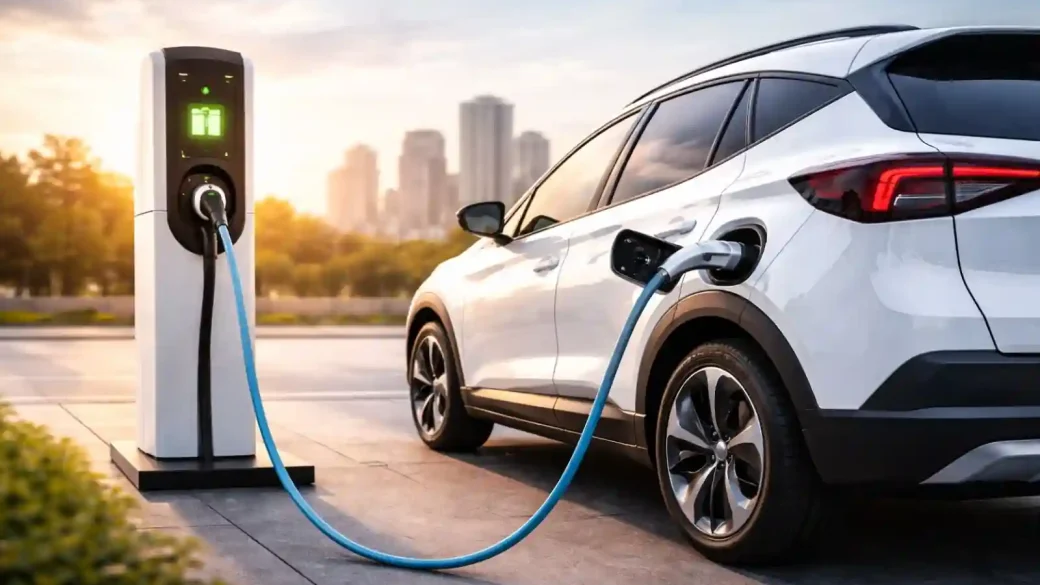
In a major push to clean up the capital’s air, the Delhi Cabinet has officially approved the comprehensive Delhi Electric Vehicle Policy 2026 (colloquially dubbed EV Policy 2.0).
Announced by Chief Minister Rekha Gupta, the landmark policy will take effect on July 1, 2026, and run until March 31, 2030. Backed by an estimated investment blueprint of ₹15,000 crore, the policy implements aggressive tax exemptions, direct purchase subsidies, and sets firm, historic deadlines to completely phase out new fossil-fuel registrations in key vehicle segments.
1. The Headliner: 100% Tax Waiver for Mass-Market Cars
The most significant relief for private buyers is a targeted cost reduction on four-wheelers:
- The Multi-Lakh Ceiling: Pure electric passenger cars with an ex-showroom price of ₹30 lakh or less will receive a 100% exemption on road tax and registration fees.
- Mass-Market Focus: By capping the tax waiver at ₹30 lakh, the government is explicitly subsidizing the mass-market tier (e.g., Tata, Mahindra, and MG models) while avoiding tax breaks for high-end luxury electric imports.
- The Hybrid Exclusion: Shaking up automotive retail expectations, the final policy completely excludes strong hybrid vehicles from any tax breaks or incentives, reversing earlier draft proposals. Only 100% pure battery electric vehicles (BEVs) qualify.
2. Multi-Category Purchase & Scrappage Subsidies
To ease the upfront premium of buying an EV, the policy maps out a sliding-scale subsidy structure transferred directly through the Direct Benefit Transfer (DBT) mechanism. These upfront purchase incentives will gradually reduce annually over the next three years to systematically nudge early adoption.
| Vehicle Category | Upfront Purchase Subsidies (Year 1) | Target Use / Vehicle Scope |
| Electric Two-Wheelers | Up to ₹30,000 | Drops to ₹20,000 in Year 2, and ₹10,000 in Year 3. |
| Electric Three-Wheelers | Up to ₹50,000 | Scales down to ₹40,000 (Year 2) and ₹30,000 (Year 3). |
| N1 Commercial Trucks | Up to ₹1,000,000 | Targets light goods commercial carriers under 3.5 tonnes. |
The ₹1 Lakh Old-Vehicle Premium: To pull old, high-emission inventory off the tarmac, a dedicated scrappage incentive is limited to the first 100,000 eligible applicants. Owners who voluntarily scrap old BS-IV standard or below four-wheelers will receive an additional ₹1 lakh scrappage benefit if they replace it with a qualifying EV priced under the ₹30 lakh threshold within six months. Smaller vehicle scrappage benefits scale down to ₹10,000 for two-wheelers.
3. The Structural Roadblocks: Phasing Out ICE Registrations
The policy is not just a bundle of carrots; it introduces an unprecedented regulatory stick to aggressively target the city’s worst-offending vehicular emission sources (commercial vehicles account for roughly 33% of Delhi’s vehicular pollution, with two- and three-wheelers contributing 46%).
The government has established firm, non-negotiable cut-off dates for new Internal Combustion Engine (ICE) registrations:
 [ Jan 1, 2027: Commercial First ] ──► Only 100% Electric auto-rickshaws and N1 goods
                                       carriers will be legally eligible for new registration
                                                 │
                                                 ▼
 [ Apr 1, 2028: The Two-Wheeler Wall] ──► Registration of *all* new petrol and CNG scooters/motorcycles
                                       is frozen; only pure Electric two-wheelers permitted
- The School Fleet Mandate: Educational operators are also structurally locked into the transition. School operators must convert at least 10% of their bus fleets to electric within two years, escalating to 20% within three years, and hitting a hard 30% mandate by the March 2030 finish line.
- The Inter-State Lock-In: To stop users from gaming the system, a strict three-year lock-in period applies to all subsidy beneficiaries. If you accept a Delhi EV subsidy, you are legally prohibited from re-registering or selling that vehicle into neighboring states (like Haryana or Uttar Pradesh) for 36 months.
Supporting Infrastructure
To alleviate the inevitable grid and range anxiety that comes with an ICE phase-out of this scale, the government will deploy incentives for local real estate developers to install over 30,000 public charging points across Delhi’s municipal limits before the conclusion of the decade.