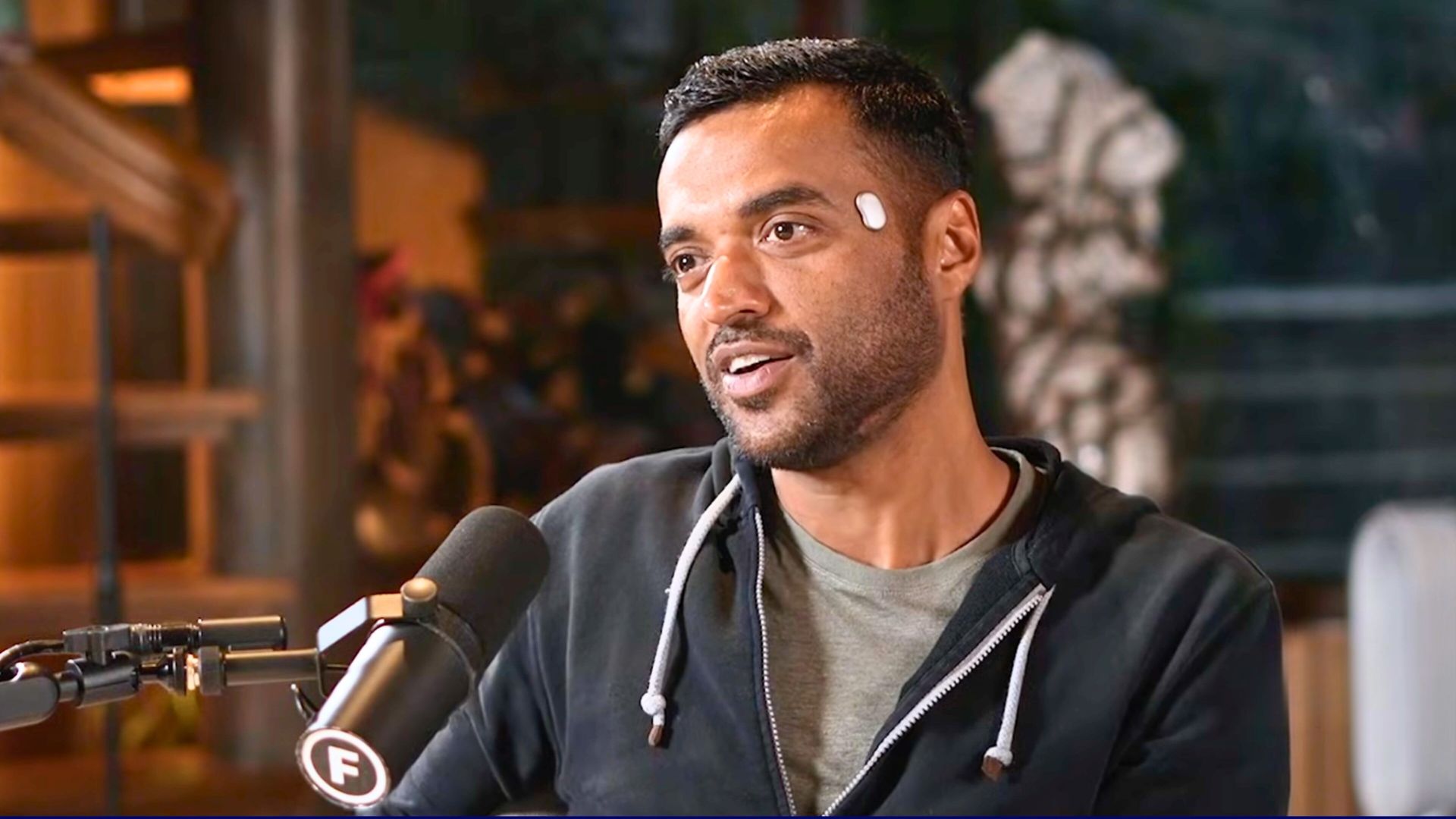
Deepinder Goyal’s Temple, his neurotechnology and longevity startup, has announced a new biometric measurement named “Entropy” — a metric the company says quantifies the real-time metabolic “cost of being alive.”
The Zomato (now Eternal) founder unveiled the metric as the centrepiece of Temple’s wearable platform. However, the announcement has immediately drawn skepticism and sharp pushback from the medical community regarding its scientific validity.
The “Entropy” Metric Architecture
The metric is built around a continuous, real-time data stream meant to quantify energy expenditure:
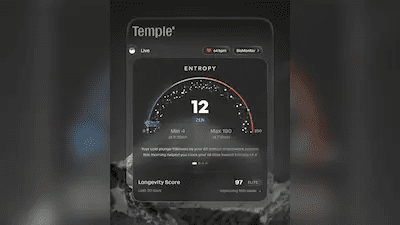
- The Scoring Scale: Entropy is displayed on the platform’s home screen as a live, shifting score ranging from 1 to 250 that updates every single second.
- Reading Placement: Goyal stated that the metric can only be read from the temple region of the head via the startup’s experimental forehead-mounted wearable device.
- The Physiological Fluctuations: The score responds directly to daily metabolic changes. The company claims it moves in reaction to sleep, stress, physical exercise, cold exposure, caffeine intake, and meals.
- The Scale Extremes: According to company data, the lowest Entropy scores ever recorded on the platform were observed in experienced meditators during states of deep meditation. Conversely, the highest scores were logged by elite athletes during high-intensity physical output.
The Longevity Methodology: Maxima vs. Minima
Temple’s health tracking framework introduces two baseline targets for users:
- Entropy Maxima: This represents the absolute highest metabolic output a person’s body can reach during physical exertion. The startup claims a higher peak signifies a more capable body that can effectively manage heavy physical effort and recover rapidly.
- Entropy Minima: This measures the body’s lowest possible metabolic energy expenditure while at complete rest. Temple’s longevity thesis asserts that across the animal kingdom, a lower resting metabolic cost correlates with a longer lifespan. The platform instructs users to train to drive this minimum score downward over time.
Heart Rate Comparison Claims
To position Entropy as a superior biometric marker, Temple compared its readings against traditional heart-rate tracking using a laboratory metabolic cart (an instrument used to measure physical oxygen consumption and carbon dioxide elimination).
According to internal figures shared by Goyal across more than 100 cardio tracking sessions, Entropy achieved a correlation coefficient of r = 0.93 relative to actual metabolic cart readings, while traditional heart rate tracking only registered a correlation coefficient of r = 0.55. The company argues this data indicates that Entropy tracks true underlying metabolic strain far more accurately than heart rate alone. These figures are company-reported and have not been independently verified.
Medical Backing and Scientific Pushback
Despite the statistical correlation claims, Temple has not released any peer-reviewed scientific studies, clinical validation data, or technical documentation explaining how the sensor actually calculates the score.
Medical experts and clinical specialists have raised immediate concerns:
- Lack of Diagnostics Status: Neurologists have noted that the wearable relies on Near-Infrared Spectroscopy (NIRS) to check changes in brain oxygenation. Experts point out that while NIRS is used in controlled anesthesia and ICU settings, real-world consumer readings are heavily distorted by physical head movement and surface scalp blood flow, making them highly unreliable for diagnostics.
- Zero Clinical Standing: Independent radiologist and AI researchers from institutions like AIIMS Delhi have publicly criticized the device’s rollout. Medical practitioners have categorized the wearable as an unverified wellness gadget with no current scientific standing as a legitimate medical instrument, warning consumers that monitoring routine cerebral blood flow carries no proven medical benefit for healthy individuals.
Frequently Asked Questions
What is Deepinder Goyal’s Temple device?
Temple is Deepinder Goyal’s neurotechnology and longevity startup. Its forehead-mounted wearable is read from the temple region of the head and uses Near-Infrared Spectroscopy (NIRS) to track changes in brain oxygenation and generate its “Entropy” score.
What is the Entropy biomarker?
Entropy is a live score from 1 to 250, updated every second, that Temple says reflects the real-time metabolic “cost of being alive.” It is claimed to respond to sleep, stress, exercise, cold exposure, caffeine, and meals.
Is the Temple Entropy device scientifically proven?
Not yet. Temple has not published peer-reviewed studies or clinical validation, and doctors—including researchers linked to AIIMS Delhi—have called it an unverified wellness gadget with no current standing as a medical instrument. Its accuracy claims remain company-reported.