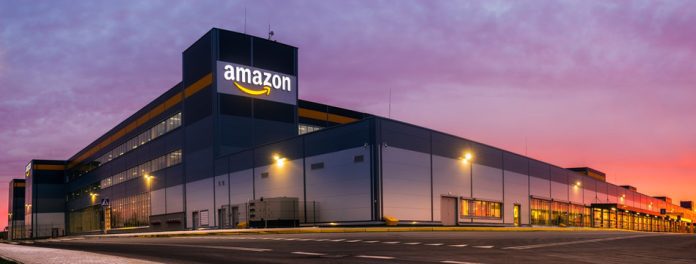


For the first time, Amazon has publicly disclosed the absolute volume of its global data center water footprint. In a sustainability update, the company revealed that its global fleet of data centers withdrew 2.5 billion gallons (approximately 9.46 billion liters) of water throughout 2025.
The disclosure comes amid intense public and regulatory scrutiny over the staggering environmental resources required to cool heavy generative AI workloads.
The key takeaways from Amazon’s official disclosure and how it compares to the broader tech industry include:
1. Industry-Leading Efficiency Claims
While 9.46 billion liters is a massive footprint, Amazon Web Services (AWS) positioned itself as the most water-efficient major cloud provider in the world. The company reported a Water Usage Effectiveness (WUE) of 0.12 liters per kilowatt-hour (L/kWh) for 2025.
To provide context, Amazon notes that its system is significantly more efficient than its closest cloud rivals:
| Metrics (2025) | Amazon AWS | Tech Industry Average |
| Water Usage Effectiveness | 0.12 L/kWh | 0.84 L/kWh |
| Footprint vs. Benchmark | ~7x more efficient | Standard baseline |
Amazon also bucked the broader industry trend by reporting a 2% year-over-year decrease in total water withdrawals at its directly owned and operated facilities compared to 2024, despite aggressively expanding its server capacity.
2. The Cooling Blueprint: Relying on Free Air
Amazon credits its low numbers to a strict “free air cooling” design framework. The company’s engineering team revealed that its data centers are designed to run hotter (tolerating ambient temperatures up to 85°F / 29°C), allowing them to open up ventilation and use natural outside airflow to cool servers 90% of the hours each year without touching a drop of water.
Water-based evaporative cooling (using a giant, automated sponge-like medium) is only switched on during the hottest days of the year when ambient temperatures breach the 85°F threshold. For heavy AI workloads, Amazon is actively pivoting to completely closed-loop liquid cooling systems that endlessly recirculate fluid rather than evaporating it.
3. The 2030 “Water Positive” Target
Amazon claims it is currently 75% of the way toward its goal of becoming water positive by 2030, promising to return more water to local communities than its operations consume. In 2025, the company returned roughly three gallons of water for every four it withdrew by funding over 50 regional water infrastructure, aquifer replenishment, and recycled-water projects globally.
The Scope Caveats and Criticism
Despite the historic transparency, environmental groups and tech analysts have pointed out a few major blind spots in Amazon’s figures:
- No Construction Data: The 9.46 billion liter figure strictly tracks operational cooling; it excludes the millions of liters utilized during the physical construction of new data center sites.
- Excludes Indirect Power Consumption: The total does not factor in the “indirect” water footprints of the third-party electricity grids and power plants supplying energy to AWS.
- Localized Stress: While Amazon compared its total footprint to standard U.S. lawn watering (~3.3 trillion gallons annually) to show its minimal global impact, local communities in dense data center hubs like Northern Virginia and Oregon argue that hyperscalers still put immense, concentrated strain on localized municipal water pools.