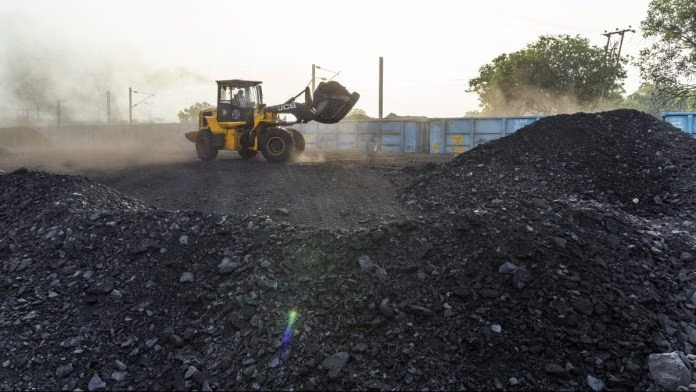
Coal imports fall even though India is using more electricity. Coal imports fall means the country bought less coal from other nations. That happened while power demand kept rising, because local mines supplied more fuel and some buyers held back on costly overseas purchases.
Key takeaways
- India used more power, but coal bought from abroad went down.
- Higher local coal output helped power plants rely less on imports.
- Imported coal stayed costly, so some buyers chose domestic supply.
- The shift could help India save foreign exchange, but risks remain if demand spikes.
Why did coal imports fall when power demand rose?
At first glance, this sounds odd. If homes, shops, and factories use more power, you might expect more coal imports. But India got more coal from local mines, so utilities did not need to buy as much from overseas.
Coal still makes most of India’s electricity. Thermal power means power made by burning fuel, mostly coal. So even a small change in coal supply can affect millions of homes, especially in summer when air conditioners run hard.
According to government data and industry reports, India’s coal-based power generation stayed strong while imports eased. That matters because imported coal is paid for in foreign currency, usually US dollars. As a result, lower imports can reduce pressure on India’s import bill.
The broad story is simple. Local production rose, transport improved in some areas, and imported cargoes remained expensive. So buyers looked inward first.
How big was the shift in coal imports fall?
The drop was not just a tiny blip. Reports said coal imports fell by about 8% in the April to May period from a year earlier. During the same time, power demand still grew, which shows the gap was filled mainly by domestic coal.
One key number stood out. India’s power demand rose by roughly 4% in the same period. That means the country needed more electricity, but still managed to cut overseas coal buying.
Coal India, the state-run mining giant, plays a huge role here. State-run means the government owns it. It produces most of the coal used in India, and stronger output from companies like Coal India helped keep plants supplied.
India: power demand up, coal imports downCoal imports-8%Power demand+4%
Here is the picture in a simple way. One bar goes down by 8. The other goes up by 4. That gap tells you domestic supply did more of the heavy lifting.
| Measure | Direction | Approx change |
|---|---|---|
| Coal imports | Down | 8% |
| Power demand | Up | 4% |
| Impact | Less overseas buying | More local coal use |
What pushed buyers toward local coal?
Price was a big reason. Imported coal often costs more than domestic coal, especially when global shipping rates or fuel prices rise. So power producers and industrial users try to avoid imports when local supply is enough.
There is also a policy angle. India has spent years trying to cut dependence on imported coal, because energy imports can be risky. If global prices jump or a trade route gets blocked, power costs can rise fast.
That is why domestic output matters so much. Higher production gives utilities more room to plan. It also helps the government avoid emergency buying during heat waves.
You can see the wider energy squeeze in our report on why petrol and diesel prices may not fall yet. Energy markets connect in messy ways, because higher global fuel costs can spill into shipping, power, and factory bills.
Does this mean India has solved its coal problem?
Not quite. This is good news, but it is not a full fix. India still imports some coal for power plants and also for industries like steel and cement, because not all coal is the same.
Some factories need a certain grade of coal. Grade means quality level. For example, steelmakers often need coking coal, which is different from the thermal coal burned in power stations.
Weather can also change the picture fast. A very hot summer can send power demand soaring. Then plants may rush to secure every tonne they can get, from local mines or foreign sellers.
Rail movement is another weak spot. Even if mines produce more coal, it must reach power plants on time. If wagons are short or routes get clogged, stockpiles can shrink quickly.
India’s latest coal trend shows that higher electricity use does not always mean higher imports. If local mines raise output and plants manage stocks well, coal imports can fall even while power demand rises.
What does coal imports fall mean for India’s economy?
Lower imports can help the trade balance. Trade balance means the gap between what a country buys and sells globally. If India buys less coal from abroad, it may spend fewer dollars on energy.
That matters for inflation too. Inflation means prices rising over time. Costlier imported fuel can push up electricity, transport, and factory costs, so any relief on imports is useful.
Still, coal is only one piece of the puzzle. India’s growth story needs steady power for factories, trains, data centres, and homes. You can read more in our piece on why the government sees 7.7% growth for India’s economy.
The shift also fits a larger push for energy security. Energy security means having enough fuel at a stable price. That goal shapes decisions on coal, gas, solar, and even ties with other countries, as seen in our report on India-Japan cooperation in energy and defence.
Where did the numbers come from?
The figures were based on official power and coal data cited in market coverage. For primary data, readers can check the Ministry of Coal and the Ministry of Power. These are the main government sources for output, demand, and fuel supply trends.
Those sources help explain the bigger story. India did not suddenly stop using coal. It simply met more of its need at home, at least in this period.
What should readers watch next?
Three things matter now. First, watch summer and monsoon demand, because heat and rain can swing electricity use. Second, track domestic coal output and railway deliveries. Third, keep an eye on global coal prices.
If local output keeps rising, this trend may continue. But if demand spikes sharply, imports could bounce back. That is why this story is less about one month and more about whether India can keep power plants fed without paying more overseas.
FAQs
Why did coal imports fall?
Coal imports fell because India produced more coal at home and some buyers avoided costly overseas cargoes.
What does this mean for electricity supply?
It suggests domestic supply was strong enough to support rising power demand, at least during this period.
Will India stop importing coal now?
No. India will still import some coal, especially special grades needed by industries like steel.