Key takeaways
- New city unemployment rate data puts Prayagraj at the top for joblessness among million-plus cities.
- Ahmedabad had the lowest rate in the same big-city group.
- The gap matters because it shows how uneven local job markets can be.
- Unemployment rate means the share of people seeking work but not finding it.
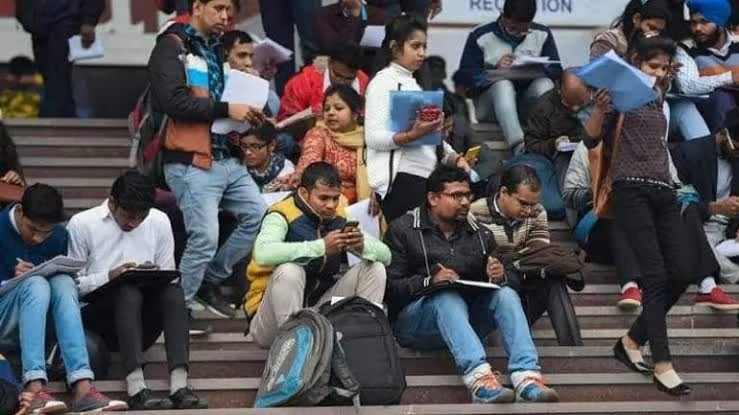
The latest city unemployment rate data shows a sharp split between two big Indian cities. City unemployment rate means the share of people who want a job, are looking for one, but still do not have work. Prayagraj had the highest rate among cities with over 10 lakh people. Ahmedabad had the lowest.
That finding comes from official survey data and gives a rare city-by-city look at jobs. Most people hear state or national numbers. But jobs are local, so a worker in Prayagraj can face a very different reality from a worker in Ahmedabad.
Why does the city unemployment rate differ so much?
The biggest reason is that cities do not grow the same way. Some cities build more factories, offices, shops, and transport links. Others add people faster than they add jobs.
Ahmedabad has a broad business base, including manufacturing, trade, and services. Services means work like retail, transport, finance, and office support. That mix can help because if one sector slows, another may still hire.
Prayagraj has a different economic shape. It has education, government activity, and small businesses, but private job creation may not keep up with the number of people entering the workforce. Workforce means people who are working or actively trying to work.
Migration also changes the picture. Migration means people moving to a city for study, work, or family. A city can look weaker if many new job seekers arrive at once, even before local employers can absorb them.
What do the numbers say about the city unemployment rate?
The source report highlighted the top and bottom ends among million-plus cities. Prayagraj recorded the highest unemployment rate in that group. Ahmedabad recorded the lowest.
That does not mean everyone in Prayagraj is out of work. It means the share of active job seekers without work was the highest among large cities in the survey. In the same way, Ahmedabad still has unemployed people, but its rate was the lowest in the group.
Here is a simple snapshot of the comparison.
| City | Status among million-plus cities | What it means |
|---|---|---|
| Prayagraj | Highest | Largest share of job seekers without work |
| Ahmedabad | Lowest | Smallest share of job seekers without work |
The survey covers cities with populations above 10 lakh, or 1 million. That matters because large cities often attract students and workers from nearby towns. So the city unemployment rate is not just a city story. It can reflect pressure from a wider region too.
City unemployment rate: relative rankingPrayagrajAhmedabadHighestLowestIllustrative chart of ranking status, not scale values.
How is the city unemployment rate measured?
India usually tracks urban jobs through household surveys such as the Periodic Labour Force Survey, or PLFS. A household survey means officials ask families about work, income, and job searches. The survey then turns those answers into estimates.
One key idea is the unemployment rate itself. If 100 people are in the labour force and 8 are jobless but looking, the unemployment rate is 8%. Labour force means people who are working or trying to find work.
Another key term is labour force participation rate. That means how many people are even in the job market. A city can show a low unemployment rate, but if many adults have stopped looking for work, the full picture may be less rosy.
That’s why smart readers should not treat one number like a final report card. The city unemployment rate is useful, but it works best with other clues, like wages, new business activity, and women’s participation in work.
Why should families and students care?
This matters in very practical ways. A higher city unemployment rate can mean tougher competition for each vacancy, slower wage growth, and longer job hunts after college. It can also push more people toward exam prep, gig work, or moving away.
A lower city unemployment rate can signal more openings and better demand for workers. But it does not guarantee high pay. A city may offer many jobs, yet some may be informal, which means they lack strong contracts or benefits.
For a 21-year-old graduate, the difference can feel huge. In one city, ten people may chase one office job. In another, firms may struggle to fill roles in factories, sales teams, or logistics.
Families also use these signals while making choices about college and migration. If one city keeps adding work, parents may support a move despite higher rent. If a city slows, they may prefer a cheaper home base and remote work if possible.
What does this mean for policy makers?
For governments, the message is simple. One national jobs number cannot solve every local problem. A city with high unemployment may need faster business approvals, better roads, stronger training, or support for small firms.
Training matters because employers often want specific skills. Skill mismatch means workers are available, but their training does not match the jobs on offer. That can leave both firms and job seekers frustrated.
City leaders may also need better data, more often. A fresh city unemployment rate can help them spot stress early. Then they can target transport, industrial land, startup support, or apprenticeship plans where they are needed most.
India is already pushing large investment plans in some sectors. For example, our report on JSW Group’s investment in Andhra Pradesh shows how big projects can create direct and indirect jobs. Our coverage of Tata Steel’s FY27 expansion spending also points to how capex can support local employment. Capex means money spent to build long-term assets like plants and machines.
Trade and industry trends matter too. You can see that in our story on South Korea’s export record, because strong exports often support factory jobs. And our report on India’s copper refining gap shows how supply chains can shape future hiring.
Where can readers check the source?
The underlying labour data comes from official statistical releases and survey tables. Readers can track labour updates at the Ministry of Statistics and Programme Implementation and survey publications from the Periodic Labour Force Survey.
Here’s the clearest way to read this story: the city unemployment rate shows how hard it is to find work in a place right now. In this set of big cities, Prayagraj looked the toughest, while Ahmedabad looked the easiest. That’s a useful signal, but not the whole map.
FAQs
What is city unemployment rate?
City unemployment rate is the share of people in a city who want work, are searching for it, and still do not have a job.
Why is Prayagraj’s number important?
It matters because Prayagraj ranked highest among India’s million-plus cities in this dataset, which suggests a tougher local job market.
How can Ahmedabad have the lowest rate?
Ahmedabad has a wide mix of businesses and industries, so it may create more job openings than some other large cities.
Who uses this data?
Students, families, employers, and governments all use it. It helps them decide where to study, hire, invest, or look for work.
Get the day’s top stories in your inbox
One concise email. No spam, unsubscribe anytime.