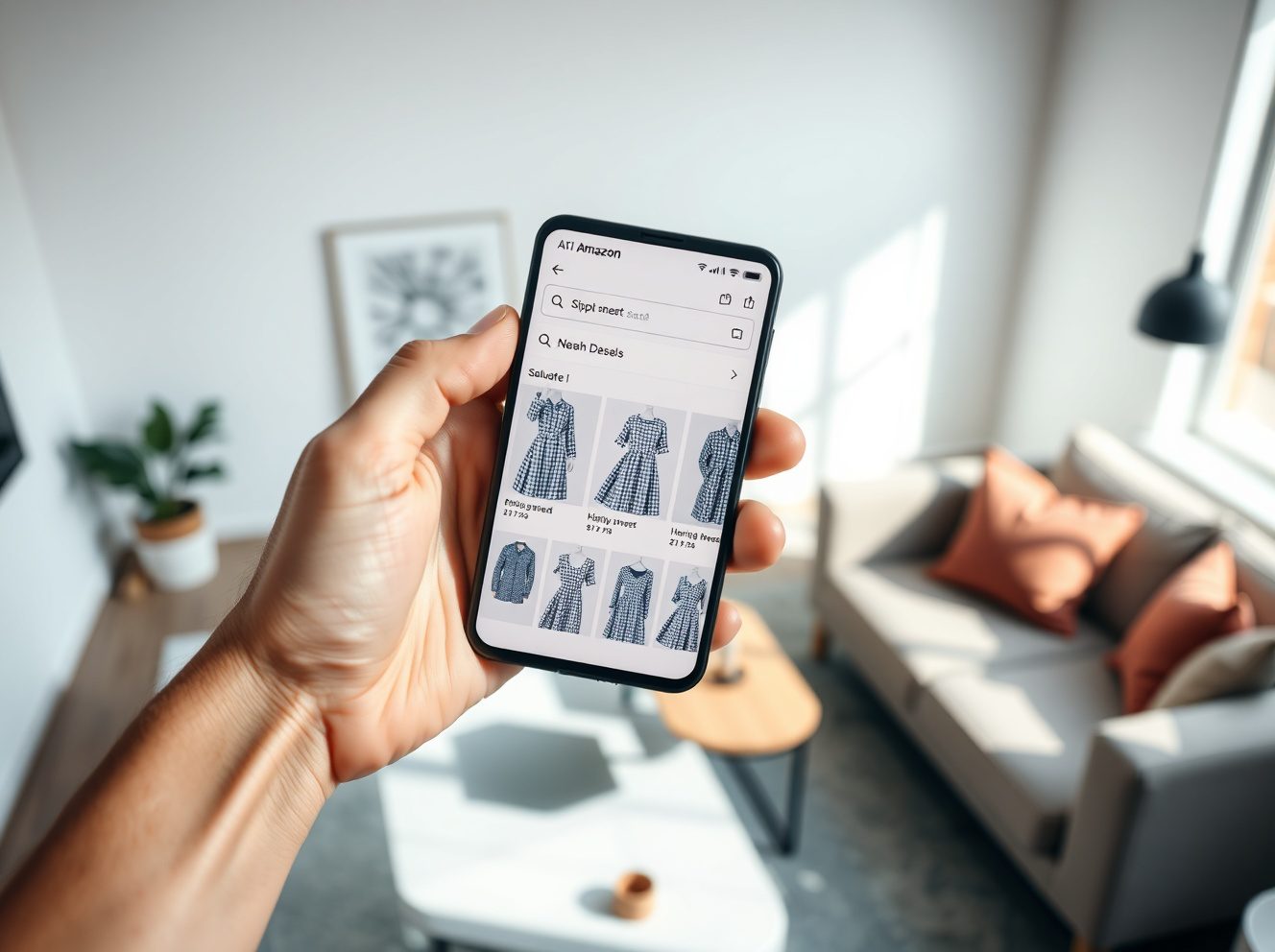
In one of the most unexpected uses of generative AI by a major retailer to date, Amazon has officially launched an in-app feature that creates fake, real-time AI product images directly inside your search bar.
Announced via an official company blog post, the retail giant is rolling out the “Visual Search” upgrade to its iOS and Android shopping apps in the US. The feature is designed to act as a visual guessing game for consumers who know exactly what an item looks like but don’t know the industry jargon to describe it.
1. How It Works: Bridging Imagination and Catalog Realities
The feature moves generative AI from behind-the-scenes text summaries straight into the top of Amazon’s purchase funnel. It functions as an interactive visual autocomplete layer:
- Real-Time Generation: As you type descriptive keywords (focusing heavily on color, texture, shape, or pattern), synthetic thumbnails instantly shape and change below the search bar with each word you add.
- The Style Translation: Amazon uses the example of a shopper who wants a shirt with a draped collar but completely forgets the fashion term “cowl neck,” or someone looking for a couch with woven side panels who doesn’t know the word “rattan”. The AI builds dynamic mockups matching that descriptive visual logic.
- The Visual Hand-Off: Once you add enough words to generate an image that perfectly matches your mental blueprint, you tap the fake thumbnail. This triggers Amazon’s lens technology to run a visual search, instantly redirecting you to a page of real, sellable products that most closely look like the AI phantom.
The visual tool is rolling out first exclusively for the apparel and home goods categories, where aesthetic details matter most to buyers.
2. A “Bananas” Solution? The Tech Backlash
While Amazon frames the feature as a highly intuitive assistant designed to cure the friction of keyword retail, the tech and e-commerce industries have met the news with immediate skepticism and eyebrow-raising.
Critics, including TechCrunch, have labeled the overhaul as a “somewhat bananas idea,” questioning why a storefront with a database of billions of actual, high-resolution product photographs would choose to manufacture fabricated objects instead of just showing items it actually has in stock.
The fundamental risk is user frustration. Online shopping relies heavily on consumer trust—the unwritten rule that if you see a picture on a store shelf, you can buy that exact item. By creating the perfect “imagined object” first, Amazon risks setting users up for disappointment if the closest real-world inventory matches fail to live up to the AI-generated preview.
3. Part of a Massive AI Search Overhaul
The real-time image bar is just one piece of a broader visual-first AI offensive Amazon is deploying across its marketplace to defend its search dominance against emerging external AI assistants like Google’s AI Overviews, OpenAI, and Meta:
- “Shop by Style” Collages: When searching for broad fashion phrases like “women’s silk shirt,” the app will now insert shoppable AI-curated collages directly into search results, organizing outfits into aesthetic themes like “Urban luxe”.
- Amazon Lens Live: The app’s camera scanning feature has been supercharged with real-time tracking carousels and a direct integration of Alexa for Shopping (Amazon’s newly rebranded AI assistant, formerly known as Rufus). Shoppers scanning a messy rug can now tap the screen and ask Alexa live questions, such as “How do I remove this coffee stain?”
- Multimodal Search Modifications: Users can now snap or upload a photo to Amazon Lens and add hyper-specific text overrides—like uploading a picture of a brown couch and typing “like this, but in white and smaller”—to instantly narrow down listings.
Amazon’s aggressive deployment proves that Big Tech is perfectly willing to take a calculated gamble on consumer trust and interface confusion if it means keeping buyers searching entirely within their own ecosystems.