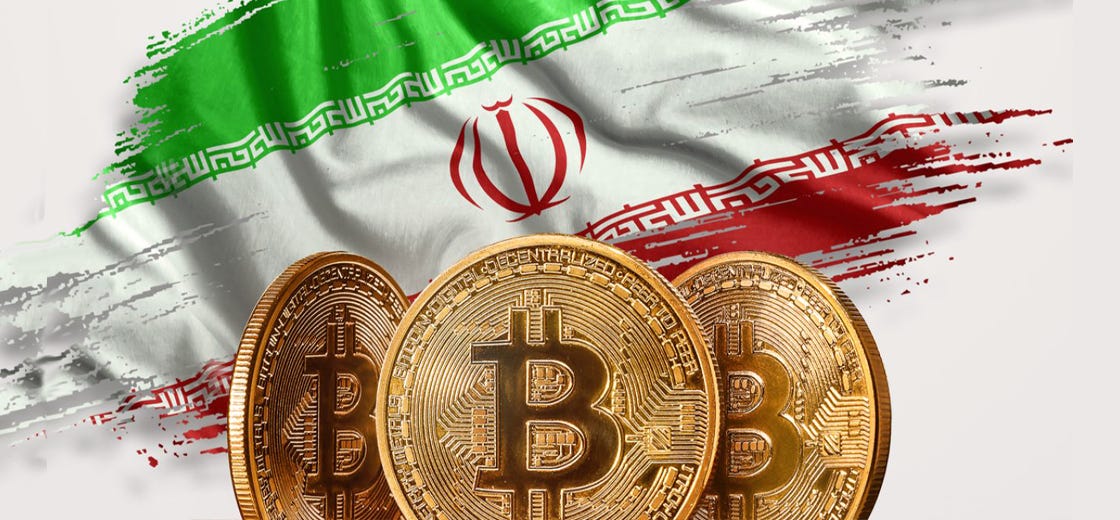
In a massive escalation of the digital financial war mirroring recent physical conflicts in the Middle East, the United States Government has successfully seized nearly $1 billion in cryptocurrency assets linked to the Iranian regime.
The blockbuster disclosure was made by US Treasury Secretary Scott Bessent during an interview on Fox Business’ Kudlow at the Reagan National Economic Forum. Bessent revealed that federal cyber units, acting under the mandate of a multi-agency sanctions blitz codenamed “Operation Economic Fury,” have actively targeted and taken control of sovereign and military digital wallets tied to Tehran.
“We have seized about a billion dollars of their crypto,” Bessent stated. “Just outright grabbed the wallets. Some of them may be typing in right now and might not realize their wallet had been grabbed.”
1. The Anatomy of an On-Chain “Grab”
The newly disclosed $1 billion threshold represents a rapid scale-up from prior enforcement actions. In late April, the Treasury Department’s Office of Foreign Assets Control (OFAC), working in tandem with blockchain intelligence firm Chainalysis, successfully triggered a freeze on $344 million in USDT (Tether) housed across two Tron blockchain addresses. Those specific wallets were actively linked to the Islamic Revolutionary Guard Corps (IRGC).
According to security analysts, the enforcement pipeline relies heavily on a mix of advanced public ledger forensic tracing and centralized stablecoin issuer compliance:
- Forensic Pattern Matching: Federal units map out structural flow clusters across public blockchains, identifying multi-turn transactions that mirror known state-run oil smuggling front companies or covert drone-procurement networks.
- Private Sector Cooperation: Once illicit destination wallets are identified, the Treasury issues emergency orders to stablecoin operators and digital asset exchanges, compelling them to blacklist the specific cryptographic keys and redirect the underlying value pools into government-controlled custody vaults.
Bessent emphasized that before the Treasury intervened, the upper echelon of the Iranian leadership had been routinely siphoning between $400 million and $500 million per month through alternative digital channels to line private pockets and fund regional proxy activities.
2. Pushing the Regime to a Financial Breaking Point
The aggressive crypto asset interdictions are running parallel to severe physical and maritime pressures. Following weeks of intense regional military confrontations earlier this year—including the joint US-Israeli Operation Epic Fury airstrikes—the White House has deployed an active naval blockade across the region. Bessent confirmed that the naval perimeter has successfully choked off crude oil distributions out of Iran’s vital Kharg Island export hub.
The combined weight of physical trade blockades and aggressive digital asset asset-stripping has reportedly driven the domestic Iranian economy into severe distress:
- Military Salary Disruptions: The Treasury estimates that 40% to 50% of active Iranian troops and domestic police forces are no longer receiving regular fiat salary allocations.
- Hyperinflation and Rationing: Driven by a collapsing domestic currency, local inflation has spiked past estimated baselines of 200%, forcing municipal authorities to roll out emergency food vouchers.
- Digital Isolation: To disrupt domestic coordination and mask mounting internal economic panic, authorities inside Tehran have resorted to wide-scale localized internet shutdowns.
3. The Geopolitical Backfire of Gulf Interventions
The Treasury Secretary noted that Tehran severely degraded its own financial resilience by launching retaliatory missile strikes against commercial shipping targets and infrastructure within the Gulf Cooperation Council (GCC) bloc earlier in the conflict cycle.
Historically, several regional banking networks maintained a highly opaque stance regarding shadow Iranian oil transactions flowing through their internal accounts. However, the direct security threats posed by Iran’s regional escalations permanently broken that financial shield.
Bessent stated that GCC nations have transformed into proactive partners, freely opening up their internal ledger systems, sharing banking data, and actively freezing local Iranian bank accounts in close coordination with Washington.
Concurrently, the US is coordinating with European law enforcement agencies to track down and seize high-value real estate, luxury villas, and shell-company bank holdings across the continent. The ultimate goal of Operation Economic Fury is to starve the regime of alternative financing buffers, forcing a highly fractured, third-tier Iranian leadership to accept strict, long-term non-aggression and denuclearization parameters at the negotiating table.
Get the day’s top stories in your inbox
One concise email. No spam, unsubscribe anytime.