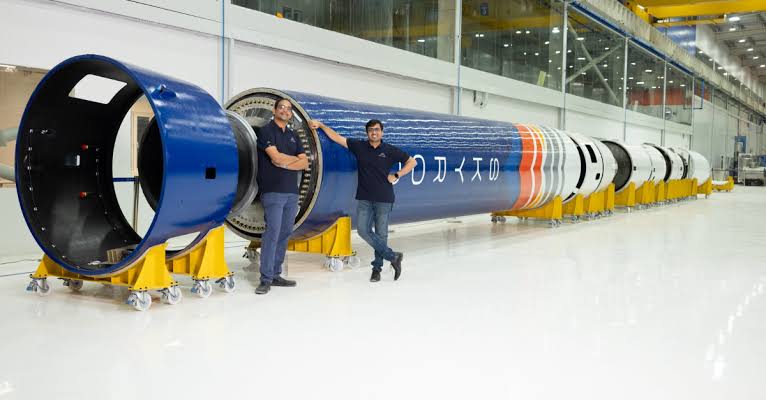
Skyroot Aerospace is targeting July 18 for the maiden launch of Vikram-1, which, if successful, will become India’s first privately developed orbital rocket to place satellites into orbit. The mission, named “Mission Aagaman”, is scheduled to lift off from the Satish Dhawan Space Centre (SDSC), Sriharikota, marking a historic milestone for India’s rapidly growing private space sector.
The launch follows Skyroot’s successful Vikram-S suborbital mission in 2022 and represents the company’s first attempt at an orbital launch vehicle. Vikram-1 is designed to deploy multiple commercial payloads into low Earth orbit (LEO), showcasing India’s expanding capabilities in commercial satellite launch services.
Skyroot Targets Historic Orbital Launch
The mission is expected to be a landmark for India’s private space industry.
| Key Highlights | Details |
|---|---|
| Company | Skyroot Aerospace |
| Rocket | Vikram-1 |
| Mission | Mission Aagaman |
| Target launch date | July 18 |
| Launch site | Satish Dhawan Space Centre, Sriharikota |
| Significance | India’s first private orbital rocket |
The launch is scheduled for 11:30 a.m. IST, subject to weather and technical readiness.
What Makes Vikram-1 Special?
Vikram-1 is Skyroot’s first orbital-class launch vehicle.
Key features include:
- Multi-stage launch vehicle.
- Designed for small satellite launches.
- Payload capacity of up to 350 kg to low Earth orbit.
- Carbon composite structure for reduced weight.
- Restartable liquid-fuel upper stage.
- Developed primarily by former ISRO engineers.
The rocket is intended to offer affordable and responsive launch services for the growing global small satellite market.
Mission Aagaman
| Mission Objective | Details |
|---|---|
| Primary goal | Demonstrate orbital launch capability |
| Payloads | Multiple commercial satellites |
| Orbit | Approximately 450 km Low Earth Orbit |
| Flight type | Maiden developmental orbital mission |
The mission will carry payloads from Indian and international customers while validating key technologies, including propulsion, navigation, stage separation, and satellite deployment systems.
Why This Launch Matters
The mission represents several milestones.
These include:
- India’s first privately built orbital launch vehicle.
- Expansion of the country’s commercial launch capabilities.
- Validation of private-sector rocket manufacturing.
- Greater participation of startups in the space economy.
- Increased competition in the global small satellite launch market.
A successful mission would significantly strengthen India’s position in the rapidly growing commercial space industry.
Skyroot’s Journey
Founded in 2018, Skyroot has achieved several milestones.
These include:
- Launch of Vikram-S, India’s first privately developed rocket to reach space, in 2022.
- Development of indigenous propulsion systems.
- Construction of advanced rocket manufacturing facilities.
- Achieving unicorn status after recent funding.
- Preparing for regular commercial orbital launches.
The company aims to eventually increase launch frequency and support growing demand for satellite deployment services.
Challenges Ahead
As with any maiden orbital mission, several risks remain.
These include:
- First-flight validation of launch systems.
- Stage separation performance.
- Orbital insertion accuracy.
- Weather conditions.
- Payload deployment success.
Even if all objectives are not fully achieved, the mission is expected to provide valuable engineering data for future launches.
Outlook
Vikram-1’s maiden flight represents one of the most significant milestones in India’s private space journey since the sector was opened to private participation. A successful orbital launch would demonstrate that Indian startups can independently develop and operate sophisticated launch vehicles capable of serving commercial satellite customers worldwide.
Beyond the immediate mission, Skyroot aims to establish regular commercial launch services and expand its Vikram rocket family. As global demand for small satellite launches continues to grow, the company is positioning itself to compete with international launch providers by offering cost-effective and responsive access to space.
What It Means for India’s Space Industry
The Vikram-1 mission marks a turning point for India’s commercial space ecosystem. Until recently, orbital launches were exclusively carried out by ISRO. A successful private orbital launch would validate the country’s space sector reforms and demonstrate the growing capabilities of Indian startups.
For investors and industry participants, the mission highlights the emergence of India’s private space economy as a new growth engine. Success could accelerate investment in launch services, satellite manufacturing, space technologies, and downstream applications, strengthening India’s ambition to become a major player in the global space economy.
Get the day’s top stories in your inbox
One concise email. No spam, unsubscribe anytime.