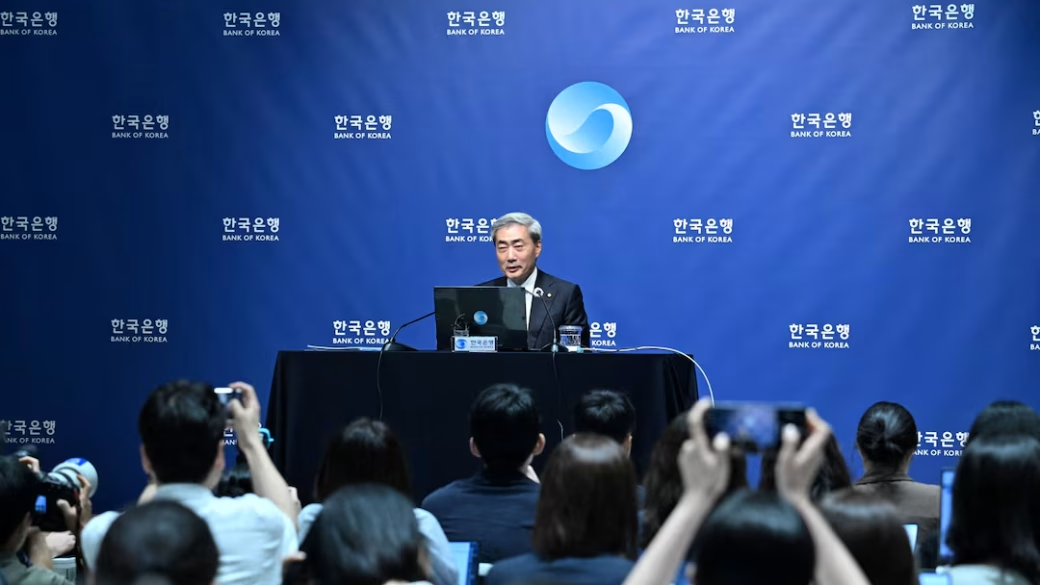
The Bank of Korea (BOK) has raised its benchmark interest rate by 25 basis points to 2.75%, marking its first rate hike since January 2023. The move comes as policymakers respond to persistent inflation, a weakening Korean won, rising household debt, and stronger-than-expected economic growth fueled by an AI-driven semiconductor export boom.
The decision signals the start of a new monetary tightening cycle after the central bank had kept rates unchanged for several meetings following earlier rate cuts. Governor Shin Hyun Song indicated that additional rate increases remain possible if inflation and financial stability risks persist.
Bank of Korea Raises Rates for First Time Since 2023
The central bank unanimously approved the rate increase.
| Key Highlights | Details |
|---|---|
| Central bank | Bank of Korea (BOK) |
| New benchmark rate | 2.75% |
| Rate increase | 25 basis points |
| Previous rate | 2.50% |
| First hike since | January 2023 |
The decision reflects growing concerns over inflation and financial stability despite a stronger economic outlook.
Why the BOK Raised Interest Rates
Several economic factors influenced the decision.
Key reasons include:
- Consumer inflation remaining above the central bank’s 2% target.
- A weaker Korean won increasing import costs.
- Rising household debt.
- Strong housing prices.
- Robust semiconductor exports driven by AI demand.
- Faster-than-expected economic growth.
AI Chip Boom Boosts the Economy
South Korea’s semiconductor industry has become a major growth driver.
| Growth Driver | Impact |
|---|---|
| AI chip demand | Higher semiconductor exports |
| Export growth | Stronger economic activity |
| GDP outlook | Upgraded to 3.0% for 2026 |
| Domestic demand | Improving alongside exports |
The AI-driven semiconductor boom has strengthened the economy enough for policymakers to shift their focus toward controlling inflation.
Inflation Remains a Concern
The BOK cited several inflationary pressures.
These include:
- Higher energy prices.
- Geopolitical tensions affecting oil markets.
- Strong domestic demand.
- Wage growth.
- Currency weakness.
Consumer inflation exceeded 3% in both May and June, remaining well above the central bank’s target.
What the Rate Hike Means
Higher interest rates are expected to:
- Slow inflation.
- Support the Korean won.
- Moderate household borrowing.
- Cool housing market speculation.
- Increase borrowing costs for consumers and businesses.
While the move may weigh on credit growth, policymakers believe it is necessary to preserve long-term financial stability.
Market Reaction
Financial markets showed a mixed response.
- The Korean won strengthened modestly.
- Government bond yields moved slightly.
- The KOSPI declined, largely due to weakness in semiconductor stocks rather than the rate decision itself.
Analysts expect at least one additional rate hike if inflation remains elevated.
Challenges Ahead
Despite stronger growth, South Korea continues to face several risks.
These include:
- Persistent inflation.
- Geopolitical uncertainty.
- High household debt.
- Currency volatility.
- Potential slowdown in global demand.
The BOK said future policy decisions will remain data-dependent and focused on balancing economic growth with price stability.
Outlook
The Bank of Korea’s first interest rate increase in more than three years marks a significant shift in the country’s monetary policy. After a prolonged period of accommodative settings, policymakers are now prioritizing inflation control and financial stability as strong semiconductor exports and AI-related investment strengthen the economy.
While the outlook for growth has improved, the central bank remains cautious about inflation, currency weakness, and rising debt levels. Additional rate hikes remain possible if economic conditions continue to support tighter monetary policy.
What It Means for Global Markets
South Korea’s move reflects a broader trend among central banks reassessing monetary policy as AI-driven investment boosts economic activity while inflationary pressures persist. The decision underscores how the global semiconductor boom is influencing macroeconomic policy, particularly in economies heavily dependent on technology exports.
For investors, higher Korean interest rates could support the won and banking sector but may increase borrowing costs for households and businesses. The move also signals that central banks remain prepared to tighten policy even amid geopolitical uncertainty when inflation and growth exceed expectations.
Get the day’s top stories in your inbox
One concise email. No spam, unsubscribe anytime.