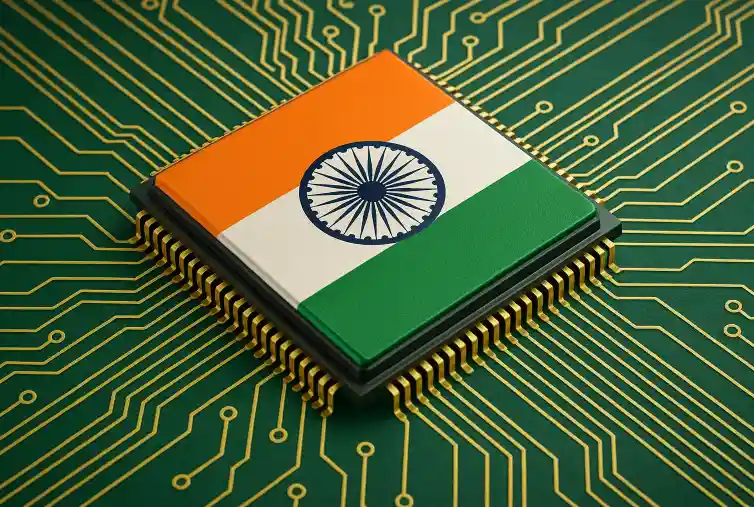
The Union Cabinet has approved Semicon 2.0, the second phase of the India Semiconductor Mission (ISM), with a ₹1,27,500 crore outlay to strengthen India’s semiconductor ecosystem. The five-year programme aims to move beyond attracting chip fabrication plants by building a comprehensive domestic ecosystem spanning chip design, fabrication, advanced packaging, semiconductor equipment, materials, research, and talent development.
The approval represents a significant increase over the ₹76,000 crore allocated under the original India Semiconductor Mission launched in 2021. Alongside Semicon 2.0, the Cabinet also approved a ₹62,500 crore Mobile Phone Manufacturing Scheme (MPMS), taking the combined investment in electronics manufacturing initiatives to nearly ₹1.9 lakh crore.
Cabinet Approves ₹1.27 Lakh Crore Semicon 2.0
The new programme seeks to deepen India’s role in the global semiconductor supply chain.
| Key Highlights | Details |
|---|---|
| Scheme | Semicon 2.0 (India Semiconductor Mission 2.0) |
| Cabinet-approved outlay | ₹1,27,500 crore |
| Duration | Five years |
| Objective | Build a complete semiconductor ecosystem |
| Focus | Design, fabs, packaging, R&D, equipment and talent |
The mission aims to reduce India’s dependence on imported chips while positioning the country as a major semiconductor manufacturing hub.
What Semicon 2.0 Will Focus On
Unlike the first phase, which primarily incentivized semiconductor manufacturing projects, Semicon 2.0 expands support across the value chain.
The programme includes:
- Semiconductor chip design.
- Wafer fabrication facilities.
- Advanced packaging and testing.
- Semiconductor equipment manufacturing.
- Materials and chemicals ecosystem.
- Research and development.
- Talent and skill development.
The broader scope is intended to create a self-sustaining semiconductor industry in India.
Six-Pillar Strategy
| Focus Area | Objective |
|---|---|
| Chip design | Strengthen domestic IP and fabless startups |
| Manufacturing | Expand semiconductor fabrication capacity |
| Advanced packaging | Build ATMP/OSAT capabilities |
| Equipment & materials | Localize critical supply chains |
| Research & innovation | Support next-generation semiconductor technologies |
| Talent development | Create a skilled semiconductor workforce |
The strategy seeks to address gaps across the semiconductor value chain rather than focusing solely on manufacturing.
Why the Government Is Expanding the Mission
The semiconductor industry has become strategically important due to:
- Rising AI chip demand.
- Growth in electronics manufacturing.
- Supply chain diversification.
- National technology security.
- Expanding EV and automotive electronics markets.
- Increasing domestic electronics consumption.
India aims to become a larger participant in the global semiconductor supply chain amid continued worldwide investment in chip manufacturing.
Building on Semicon 1.0
The government says the second phase builds on progress made under the original mission.
Key developments include:
- Approval of multiple semiconductor projects.
- Growth in assembly and testing facilities.
- Expansion of the chip design ecosystem.
- Increased global investor interest.
- Strengthened electronics manufacturing base.
Semicon 2.0 seeks to deepen these gains by developing upstream capabilities alongside manufacturing.
Challenges Ahead
Successful implementation will depend on:
- Attracting large global semiconductor investments.
- Developing advanced manufacturing capabilities.
- Building a domestic supplier ecosystem.
- Training highly skilled engineers.
- Maintaining policy consistency.
- Competing with established semiconductor hubs.
Given the capital-intensive nature of chip manufacturing, execution will be critical over the coming years.
Outlook
Semicon 2.0 marks India’s most ambitious semiconductor policy to date, significantly expanding government support beyond chip fabrication to encompass the full semiconductor value chain. By investing in design, manufacturing, advanced packaging, equipment, materials, R&D, and talent, the government aims to create a globally competitive semiconductor ecosystem capable of supporting the country’s growing electronics and AI industries.
If implemented successfully, the programme could reduce India’s dependence on imported semiconductors, attract additional global investment, and strengthen the country’s position as a key player in electronics manufacturing. While the sector will require sustained investment and long-term execution, Semicon 2.0 represents a major step toward India’s ambition of becoming a global semiconductor hub.
What It Means for India’s Electronics Industry
The approval is expected to benefit semiconductor manufacturers, electronics companies, AI infrastructure providers, automotive firms, telecom equipment makers, and chip design startups. A stronger domestic semiconductor ecosystem could improve supply chain resilience, support innovation, and create high-skilled employment while reinforcing India’s broader manufacturing and digital economy ambitions.
Get the day’s top stories in your inbox
One concise email. No spam, unsubscribe anytime.