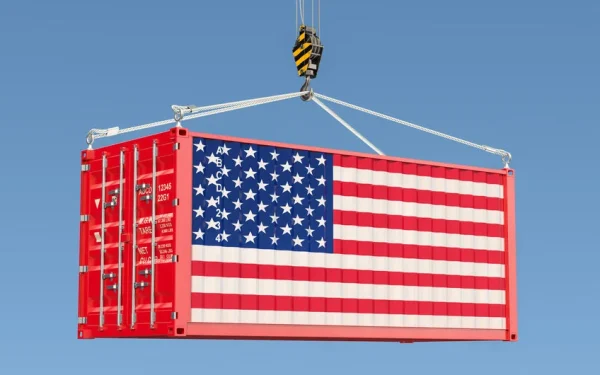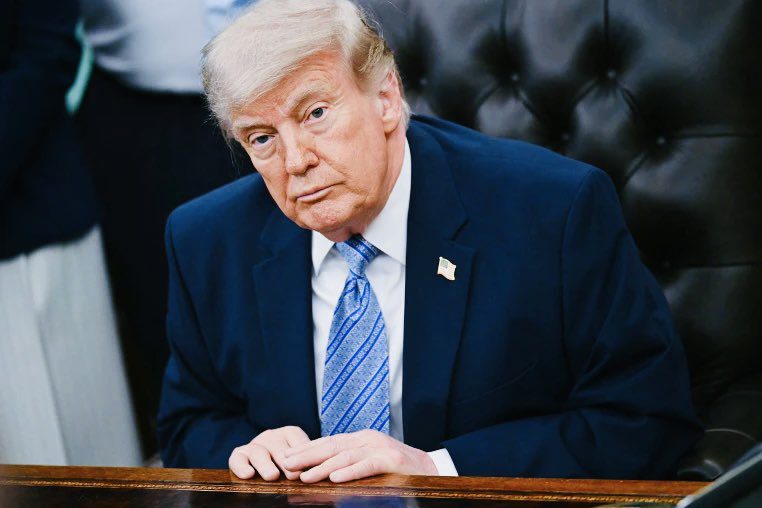
In a drastic escalation of transatlantic trade friction, U.S. President Donald Trump has issued a fierce economic ultimatum: any country that implements a Digital Services Tax (DST) on American technology firms will instantly face a blanket 100% tariff on all exports to the United States.
The warning, delivered via Truth Social on Friday, June 26, 2026, explicitly states that this punitive measure will forcefully override any existing or pending bilateral trade agreements.
1. The Ultimatum: “Superseding All Trade Deals”
The president’s latest trade offensive is aimed squarely at blocking foreign nations from taxing the local revenues of dominant, U.S.-headquartered tech conglomerates like Alphabet (Google), Meta, and Amazon.
Unlike standard corporate taxes calculated on local profits, a Digital Services Tax levies a percentage on gross digital revenue (such as online advertising, data routing, and marketplace sales) generated within a country’s borders—even if the company lacks a physical presence or reports zero local profit.
 [ Foreign Government ] ──► Imposes Digital Services Tax (DST) on Gross Tech Revenue
                                             │
                                             ▼ (Immediate 2026 Retaliation Command)
 [ United States White House ] ──► Blasts a 100% Blanket Tariff on ALL Inbound Country Goods
                               ──► Explicitly overrides existing bilateral trade treaties
“Numerous European Countries have been discussing the imminent implementation of a Digital Services Tax on American Companies. Some of these Countries are close to actually doing this. Please let this statement serve to represent that any Country that imposes such a Tax will immediately be met with a 100% TARIFF on any and all Goods sent to the United States of America.”
— Donald Trump, via Truth Social
2. Timing Blindsides the European Union
The timing of the threat has sent shockwaves through Brussels, landing less than 24 hours after EU member states scrambled to avoid a separate tariff disaster:
- The July 4 Deadline: The U.S. and the EU have been operating under a strict July 4, 2026, deadline to formalize a sweeping trade agreement that caps standard tariffs on most European exports at 15%.
- The Thursday Rush: To prevent Washington from tearing up the deal and slapping an immediate 25% duty on luxury goods and automobiles, EU lawmakers hurried through a complex legislative session on Thursday to formally adopt their side of the bargain (reducing European tariffs on U.S. industrial goods to zero).
- The Unresolved Sticking Point: Because digital services taxes were intentionally carved out of the original framework, the Trump administration is using the omission to apply maximum pressure before the ink on the broader treaty dries.
3. France and the UK in the Crosshairs
While the warning applies globally, Washington’s trade hostility is concentrated primarily on European nations that have aggressively pioneered independent digital taxes to bolster their state treasuries:
| Country | Active or Proposed DST Framework | Primary Targets of Retaliation |
| France | Holds a steady 3% tax on digital revenue since 2019. French lawmakers recently proposed doubling that rate to 6%. French President Emmanuel Macron has remained defiant, stating Paris will not bow to U.S. pressure. | Trump warned that the U.S. has “no choice” but to slap immediate 100% tariffs on French wine and champagne if Paris proceeds. |
| United Kingdom | Operates a 2% levy on digital businesses to align corporate tax burdens with localized digital value creation. | Faced previous threats from the U.S. Trade Representative, with Trump warning he would “probably put a big tariff on the UK” to shield Silicon Valley tech giants. |
4. The Supreme Court Friction & The Legal Hurdles
While the aggressive posturing has rattled global markets, trade lawyers point out that executing a blanket, country-specific 100% tariff faces massive domestic legal challenges.
A recent U.S. Supreme Court decision invalidated the administration’s attempt to map out broad, country-by-country tariff regimes under the International Emergency Economic Powers Act, ruling that the executive branch has no such unilateral authority. While the White House briefly pivoted to using Section 122 of the Trade Act of 1974 to preserve a worldwide 10% baseline, that statute enforces a strict 150-day hard ceiling unless explicitly prolonged by an act of Congress.
Unless the administration can weaponize a Section 301 investigation to claim explicit foreign trade discrimination, the 100% digital tax tariff remains a highly volatile, legally contested weapon heading into the high-stakes trade deadlines of July 2026.