In what marks a historic turning point for India’s 315 billion dollar technology services sector, Tata Consultancy Services (TCS) Chairman N. Chandrasekaran announced a bold structural pivot: within the next three years, the IT heavyweight plans to deploy as many AI agents as it has human employees.
Speaking directly to shareholders at the company’s 31st Annual General Meeting (AGM), Chandrasekaran mapped out an operating future where half a million digital “AI workers” will operate alongside TCS’s physical workforce of over 5.8 lakh associates.
The declaration signals an aggressive stance against Wall Street anxieties that generative AI represents a mortal threat to the traditional, labor-intensive Indian IT business model. Instead, TCS is positioning the technology as its single largest growth engine.
The Structural Realities: Slowing Headcount and Shifting Demographics
While Chandrasekaran strongly rejected the premise of mass AI-driven downsizing, he delivered a candid reality check regarding the future of tech recruitment in India. The era of massive, entry-level campus recruitment drives that defined the past two decades is fundamentally drawing to a close.
- Slowing Hiring Pipelines: TCS confirmed that while it does not intend to execute proactive layoffs, it will heavily slow down hiring for traditional, repetitive roles. The company’s total headcount declined by more than 23,000 during the financial year ending March 2026 due to voluntary and involuntary attrition.
- The Skill Overhaul: To prepare its workforce for an agent-heavy ecosystem, TCS invested a massive 69 million learning hours in FY26 alone. More than 217,000 of its associates are now certified in advanced AI skills, transforming traditional software testers and application maintenance engineers into AI supervisors and context managers.
Five Pillars of the New Enterprise IT Opportunity
Addressing investor concerns that have dragged down the Nifty IT index over the past few quarters, Chandrasekaran outlined five primary operational arenas where TCS is deploying its new fleet of AI agents:
1. Modernizing Legacy Codebases
AI agents will be used to systematically map, unpack, and rewrite decades-old legacy code environments and fragmented corporate data repositories into modern cloud-native architectures.
2. End-to-End Process Redesign
Instead of automating isolated tasks, autonomous agents will orchestrate complete enterprise workflows, managing everything from complex global supply chain logistics to real-time, personalized customer journeys.
3. Agent Governance and Compliance
As companies deploy thousands of virtual workers, a massive market is emerging for the auditing, security monitoring, cost-optimization, and legal compliance of AI agents. TCS intends to be the primary auditor for these systems.
4. Sovereign AI Deployments
Driven by strict data privacy and regional regulations, governments and highly regulated financial entities are demanding localized AI infrastructure. TCS has already initiated major sovereign AI projects across India and Europe.
5. Physical AI Integration
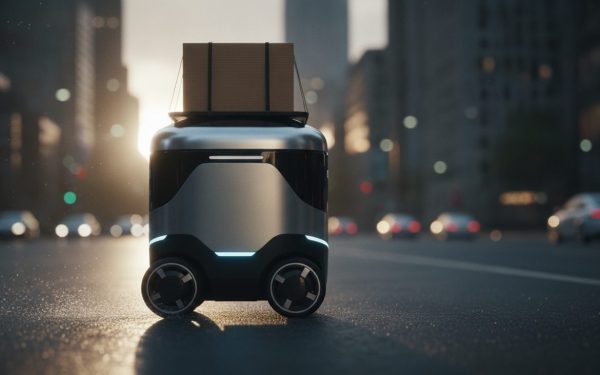
Extending software intelligence out into tangible assets, TCS is pairing AI systems with physical automation. The company highlighted a recent deployment for a global agribusiness using four-legged robotics to safely audit hazardous warehouse environments.
“Context and Trust” as the Ultimate Moat
As raw underlying LLMs from OpenAI, Anthropic, and Google rapidly become cheap commodities, TCS leadership believes the real value is moving away from the creators of the models and toward the integrators who understand enterprise data.
TCS CEO K. Krithivasan reinforced this direction, stating the firm’s explicit aspiration to become the world’s largest full-stack, AI-led technology services provider.
By building deep ecosystem partnerships across AMD, AWS, Google, and OpenAI, while training half a million internal digital agents, TCS is betting its future on the idea that the winning factor in enterprise AI will not be the model itself—it will be the domain context, data security, and long-term client trust required to let AI agents run businesses safely.