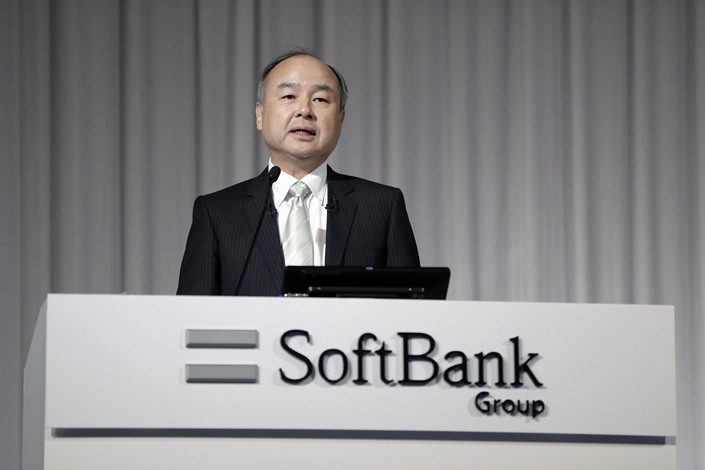
In a sharp reality check delivered directly to Wall Street’s latest tech obsession, SoftBank Group founder and CEO Masayoshi Son has dismissed Elon Musk’s plans to launch massive, solar-powered “orbital data centers” into space.
Speaking at a SoftBank mobile unit shareholder meeting, Son argued that the space-bound infrastructure play is an economic misfire that does nothing to solve the immediate computational constraints of the global artificial intelligence race.
1. The Math Critique: Chips Outweigh Electricity
Musk’s core argument for shooting data centers into orbit—a vision he claims could eventually scale up to 100 gigawatts of space-based compute power via SpaceX—is that tapping near-constant, unshielded solar energy will bypass the growing power, grid, and land restrictions crippling terrestrial builds on Earth.
Son systematically dismantled this thesis with a blunt economic breakdown:
- The 7% Cost Reality: Electricity costs actually account for only about 7% of the total operational expense of running high-end AI infrastructure.
- The 93% Chip Burden: The remaining 93% of the budget is swallowed entirely by hyper-expensive hardware, primarily specialized silicon like Nvidia chips, alongside severe physical maintenance and custom liquid cooling systems.
- The Operational Trade-off: Son noted that any nominal savings gained from free orbital sunlight would instantly be wiped out by the staggering, continuous capital expenditure required to transport hardware into space, maintain it remotely, and manage heavy communications latency.
 [ Musk's Space Pitch ] ──► Tap endless solar energy in orbit ──► Evade Earth's grid & land caps
                                                                        │
                                                                        ▼ (Masayoshi Son's Math Check)
 [ The Cost Reality  ] ──► Electricity is only 7% of AI costs ──► 93% is hardware, chips, & logistics
                                                                        │
                                                                        ▼ (The Downstream Trade-Off)
 [ The Final Verdict ] ──► Space delivery & short satellite lifespans completely erase energy savings
2. “He Who Strikes First Wins”
Beyond the math, Son emphasized that space-based constellations operate on an entirely wrong timeline for the competitive pressures facing AI labs today.
“In the battle for AI, the next few years will be far more important than what might happen a decade or so from now. He who strikes first wins.”
— Masayoshi Son, Founder and CEO, SoftBank Group
While calling Musk a “remarkable agent of change,” Son clarified that SoftBank will strictly focus on a “near-sighted perspective”—pouring its war chest into building “formidable” data center capacity right on the ground. SoftBank has already committed roughly $65 billion to OpenAI and pledged hundreds of billions more globally to secure terrestrial real estate, energy access, and massive battery backup infrastructure to dominate the immediate computing boom.
3. The SpaceX Self-Serving Incentive
A growing chorus of industry insiders and financial analysts share Son’s skepticism, pointing out that the orbital data center narrative aligns perfectly with SpaceX’s financial motivations following its recent mega-IPO.
| Tech Titan Position | Strategic & Operational View | Undercurrent Corporate Motive |
| Elon Musk (SpaceX) | Claims Earth-based power scaling will become impossibly expensive; envisions mass AI constellations. | A network of data satellites that must be completely replaced every few years guarantees a permanent, massive internal customer for SpaceX’s heavy-lift Starship launch business. |
| Sam Altman (OpenAI) | Explicitly labeled the orbital data center idea as “ridiculous” during recent industry interviews. | OpenAI remains tightly tethered to terrestrial infrastructure partnerships (Microsoft, Oracle) to survive the immediate pre-training compute squeeze. |
| Masayoshi Son (SoftBank) | Sticking firmly to physical land; building out localized, high-speed “neocloud” frameworks on Earth. | SoftBank needs massive, immediate token processing capabilities to maximize its equity stakes in operational AI architectures before the market consolidates. |
While secondary space players like Jeff Bezos’ Blue Origin are also evaluating the logistics of space-based server frames to avoid local environmental pushback, the broader consensus among AI’s biggest spenders mirrors Son’s view: the existential war for artificial intelligence dominance will be won or lost on the ground over the next 24 to 36 months, long before the first heavy server racks ever clear the upper atmosphere.