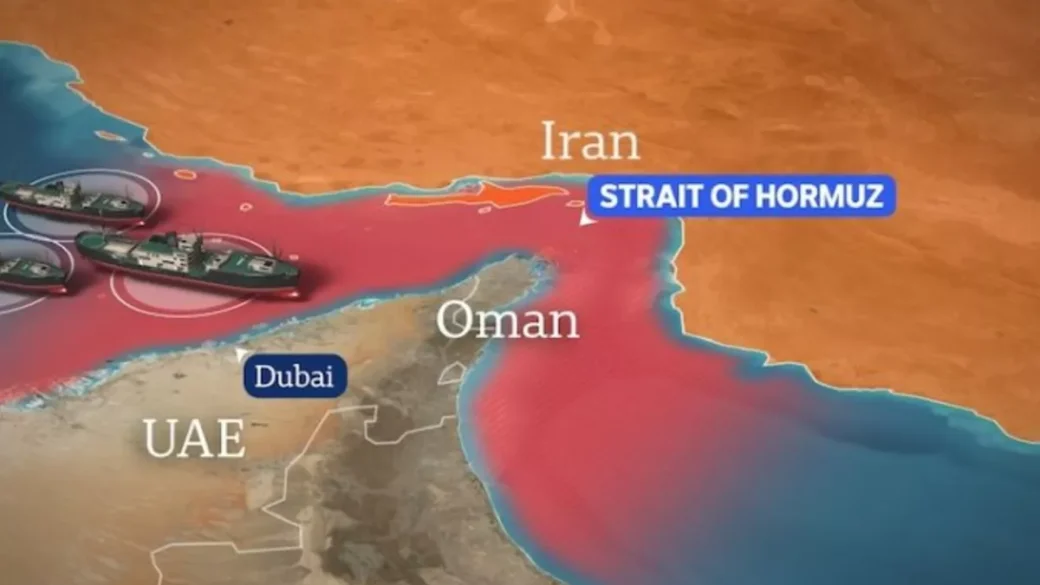
Commercial shipping through the Strait of Hormuz has slowed to near standstill following fresh U.S. military strikes on Iranian targets, raising concerns over global energy supplies and maritime security. The latest escalation has prompted shipping companies, insurers, and energy traders to reassess operations in one of the world’s most strategically important waterways.
The disruption comes as tensions between the United States and Iran intensify, increasing the risk of further attacks on commercial vessels and critical energy infrastructure. Given that a significant share of the world’s crude oil and liquefied natural gas (LNG) passes through the Strait of Hormuz, prolonged disruption could have far-reaching consequences for global trade and energy markets.
Shipping Activity Slows Sharply
Following the latest U.S. strikes, commercial vessel traffic through the Strait of Hormuz has dropped significantly as shipping companies adopt a more cautious approach.
Several operators have reportedly delayed sailings, rerouted vessels, or instructed ships to remain outside high-risk areas until the security situation becomes clearer.
Maritime insurers are also reassessing risk levels, leading to higher insurance premiums for vessels operating in the region.
Why the Strait of Hormuz Matters
The Strait of Hormuz is one of the world’s most important maritime chokepoints, connecting the Persian Gulf to international markets.
The route is critical for transporting:
- Crude oil.
- Liquefied natural gas (LNG).
- Refined petroleum products.
- Petrochemicals.
- Bulk commodities.
- Container cargo.
Any disruption to shipping through the strait can quickly affect global energy prices and supply chains.
Fresh US Strikes Escalate Regional Tensions
The slowdown in maritime traffic follows renewed U.S. military strikes targeting Iranian assets, triggering fears of additional retaliation in the Gulf region.
Security analysts warn that continued military escalation could increase risks for commercial vessels operating near strategic shipping lanes.
Several governments have advised shipping companies to remain vigilant and closely monitor developments before entering the region.
Oil Prices React to Supply Concerns
Global crude oil prices rose after reports of reduced shipping activity through the Strait of Hormuz.
Investors are concerned that prolonged disruption could:
- Reduce oil exports.
- Tighten global energy supplies.
- Increase transportation costs.
- Raise inflationary pressures.
- Disrupt LNG shipments.
- Impact industrial production.
Energy markets remain highly sensitive to developments affecting one of the world’s busiest oil transit routes.
Impact on Global Trade
A sustained slowdown in shipping through the Strait of Hormuz could have broader implications beyond the energy sector.
Potential consequences include:
- Supply chain disruptions.
- Higher freight costs.
- Delivery delays.
- Increased insurance expenses.
- Pressure on global trade.
- Greater volatility in commodity markets.
Countries heavily dependent on Middle Eastern energy imports could face higher import costs if disruptions continue.
Industry Monitors Security Situation
Shipping companies, oil producers, and governments are closely monitoring maritime security in the Gulf.
Future vessel movements will likely depend on:
- Military developments.
- Safety assessments.
- Naval security operations.
- Insurance availability.
- Port operations.
- Diplomatic efforts to reduce tensions.
Industry participants are preparing contingency plans should the security environment deteriorate further.
Outlook
The near standstill in shipping through the Strait of Hormuz underscores the growing impact of renewed U.S.-Iran tensions on global trade and energy markets. As one of the world’s most vital energy corridors, any prolonged disruption could lead to higher oil prices, increased freight costs, and renewed pressure on global supply chains.
With geopolitical uncertainty remaining elevated, governments, energy companies, and shipping operators will continue to closely monitor developments as they assess the risks to one of the world’s most strategically important maritime routes.
Get the day’s top stories in your inbox
One concise email. No spam, unsubscribe anytime.