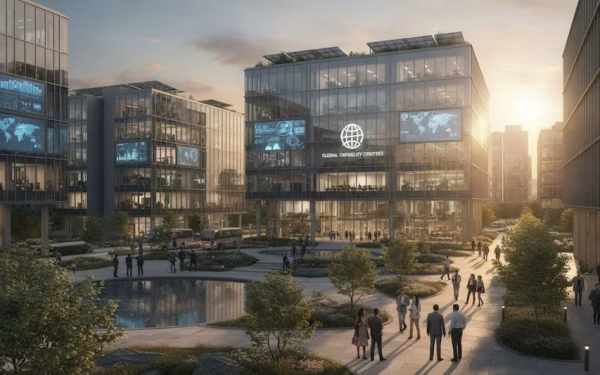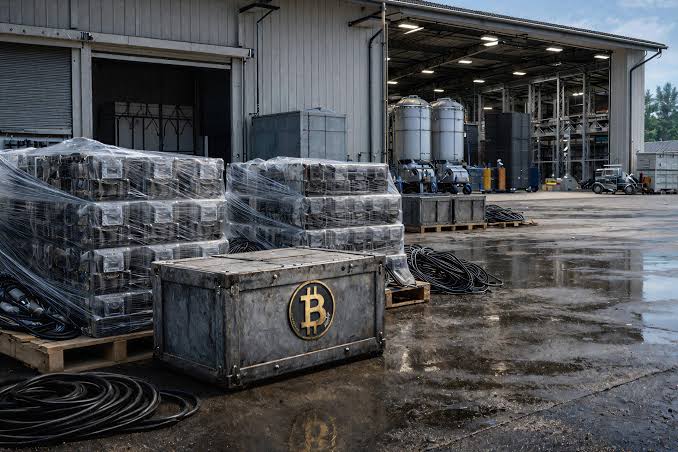
AI data centers are huge buildings packed with computers that train and run artificial intelligence. A bitcoin miner has now bet against AI data centers, saying some of this building rush may go too far. That means he thinks parts of the market could fall, not rise, if investors got too excited.
Key takeaways
- A bitcoin mining executive has taken a negative market bet on AI-linked data center companies.
- He argues the current buildout may be too big and too fast for real demand.
- Short selling means betting a stock price will drop. It’s a risky move.
- The call goes against the wider AI boom, which has pushed chip and infrastructure stocks sharply higher.
Why is someone betting against AI data centers?
The new angle here is simple. While most investors cheer the AI boom, one bitcoin miner is doing the opposite. He is warning that some AI data centers may become a crowded trade, because money is flooding in faster than anyone can prove long-term profits.
A crowded trade means too many people make the same bet. That can turn ugly fast if the story changes. In the Forbes report, the executive argued that giant server campuses could face pressure later, especially if supply grows faster than customers can use it.
That matters because AI data centers sit at the heart of the current tech race. Companies are spending billions on land, power, cooling systems, and advanced chips. Those chips often come from Nvidia, while cloud firms then rent out the computing power to others.
Short selling is the key idea in this story. Short selling means borrowing shares, selling them, and hoping to buy them back later at a lower price. If the price rises instead, losses can keep growing, so this is one of Wall Street’s riskiest moves.
What are AI data centers, really?
AI data centers are not normal office buildings with a few computers. They are giant digital factories. Inside, thousands of chips work together, often using huge amounts of electricity and water to stay cool.
Think of them like power-hungry brains in a warehouse. One campus can cost billions of dollars. Some projects now involve tens of thousands of graphics processing units, or GPUs. GPUs are chips built to handle many calculations at once.
Demand has looked massive so far. Big tech firms like Microsoft, Amazon, Google, and Meta have all lifted capital spending. Capital spending means money a company uses on big long-term things, like buildings and equipment.
That spending has helped fuel related stories across markets. For example, AI chip startup SambaNova raising $1 billion showed how investors still back AI infrastructure hard. But not every bet in a boom ends well.
What is the bitcoin miner actually worried about?
The concern is not that AI disappears. It is that the market may be pricing perfection. Pricing perfection means investors assume everything will go right, with little room for delays, weak demand, or lower profits.
Here is the basic fear. If too many firms build at once, rental prices for computing power could drop. If power costs stay high at the same time, margins could get squeezed. Margins are the money left after paying costs.
There is also the question of timing. A giant campus can take years to plan and build. But AI tools can change much faster, so today’s hot setup may not be tomorrow’s best setup.
Power is another bottleneck. Data centers need reliable electricity every second. In many regions, that power is limited, expensive, or stuck behind approval delays. So some shiny projects may take longer to launch than investors expect.
AI buildout: big spending, real risksDemandSpendingRisk6011085
The chart shows the story in plain terms. Spending is running ahead of everything else. That does not prove a crash is coming, but it helps explain why one investor wants to bet against parts of the sector.
How big is the AI boom now?
The numbers are huge. Microsoft has said it plans to spend tens of billions of dollars on AI infrastructure. Meta has also guided for very high capital spending, while Amazon and Google continue to expand cloud and AI capacity.
Even a small pricing miss can matter when projects are this large. A 5% gap on a $10 billion build plan equals $500 million. That’s why investors watch utilization closely. Utilization means how much of the equipment is actually being used.
Bitcoin miners know a lot about this cycle. Their own industry has seen fast booms, sudden gluts, and brutal crashes. So a miner warning about overbuilding is not random. He has lived through markets where everyone expanded, then profits vanished.
| Issue | Why it matters | Simple view |
|---|---|---|
| Power demand | Electricity can be scarce and costly | No power, no AI output |
| Build speed | Too many projects may launch together | Supply can outrun demand |
| High valuations | Stocks already reflect big hopes | Bad news can hit hard |
| Tech shifts | New chips can change project economics | Today’s plan may age fast |
Does this mean the AI boom is in trouble?
Not necessarily. A bearish bet against AI data centers does not mean AI itself is fake. It means some investors think the market may have moved too far, too fast.
That difference is important. Railroads changed history, but many railroad stocks still crashed. The internet changed the world, but many dot-com firms still failed. New technology can be real, while bad investments still happen around it.
Right now, markets still show strong faith in AI infrastructure. Chip demand remains high, and cloud firms keep signing customers. In fact, some investors may see any pullback in AI data centers as a buying chance rather than a warning sign.
Still, caution is part of the story. Readers have already seen how fast market mood can shift in our coverage of a sharp Sensex and Nifty sell-off. Markets often sprint first, then ask harder questions later.
What should readers watch next?
Watch earnings, not just headlines. Earnings are the profits companies report. If AI-related firms keep showing strong sales and signed contracts, the case for AI data centers stays strong.
Also watch power deals, occupancy rates, and customer growth. Occupancy means how much space or capacity is filled. These details show whether giant campuses are becoming useful businesses or just expensive promises.
Policy could matter too, especially where energy, land, and permits are involved. Readers tracking digital infrastructure may also want to see how funding trends are changing in stories like record FPI flows into Indian government bonds and the wider macro backdrop in the IMF’s latest India growth forecast cut.
For primary source context, readers can review the original Forbes report and broader data center market material from the International Energy Agency.
Here is the core answer in one line: the bet against AI data centers is not a bet against AI itself, but a warning that investors may be building too much expensive capacity before demand fully catches up.
FAQs
What does betting against AI data centers mean?
It means an investor expects some related stocks or assets to fall. Often, that happens through short selling.
Why would a bitcoin miner make this bet?
Bitcoin miners understand energy-heavy computing businesses well. They have seen how fast overbuilding can crush profits.
How can readers tell if this warning is right?
Watch revenue, power access, occupancy, and customer demand. If those stay strong, the sector may hold up well.
Get the day’s top stories in your inbox
One concise email. No spam, unsubscribe anytime.