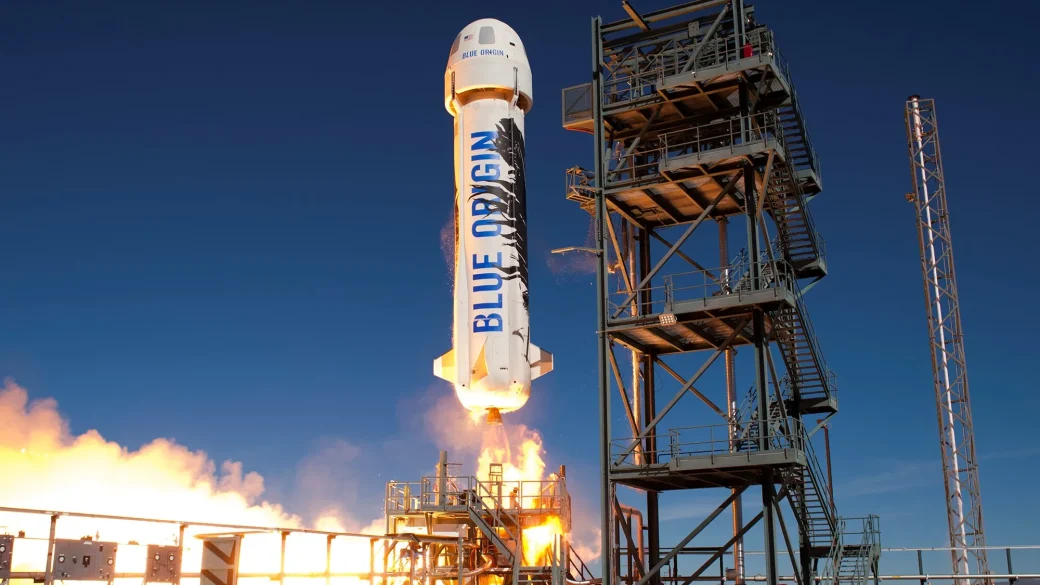
Jeff Bezos-founded space company Blue Origin is reportedly preparing to raise $10 billion in a new funding round at a valuation of approximately $130 billion, according to reports. If completed, the fundraising would rank among the largest private capital raises in the aerospace industry and provide the company with significant resources to accelerate spacecraft development, expand launch capabilities, and strengthen its position in the rapidly growing commercial space market.
The reported financing comes as competition intensifies in the global space sector, with private companies investing heavily in reusable rockets, satellite deployment, lunar exploration, and space infrastructure.
Blue Origin Eyes $10 Billion Fundraise
Blue Origin is reportedly in discussions with investors to raise around $10 billion at a valuation of $130 billion.
While the company has not officially confirmed the fundraising, the reported round would substantially increase its financial resources and rank among the largest private funding deals in the aerospace sector.
The fresh capital is expected to support Blue Origin’s long-term ambitions in commercial space transportation and exploration.
Funding to Accelerate Space Programs
The proceeds from the reported fundraising could be used across several strategic initiatives, including:
- Expanding launch operations.
- Developing next-generation reusable rockets.
- Advancing lunar exploration technologies.
- Scaling satellite launch capabilities.
- Investing in research and development.
- Increasing manufacturing capacity.
These investments would help Blue Origin compete more aggressively in the global commercial space industry.
Growing Competition in the Space Industry
The private space sector has become increasingly competitive as companies race to secure government and commercial launch contracts.
Key areas of competition include:
- Reusable launch vehicles.
- Satellite deployment.
- Space tourism.
- Lunar missions.
- National security launches.
- Deep-space exploration.
Strong investor interest reflects expectations that demand for commercial space services will continue to grow over the coming decade.
Commercial Space Market Continues to Expand
The global space economy is witnessing rapid growth, driven by increasing demand for satellite communications, Earth observation, scientific missions, and space-based infrastructure.
Private aerospace companies are investing heavily in technologies that can reduce launch costs while increasing mission frequency and reliability.
As governments and private enterprises expand their space programs, commercial launch providers are expected to play an increasingly important role.
Investor Confidence in Space Technology
Large funding rounds have become more common among advanced technology companies operating in sectors with significant long-term growth potential.
Investors are increasingly backing businesses involved in:
- Aerospace technology.
- Satellite infrastructure.
- Space transportation.
- Defense technology.
- Advanced manufacturing.
- Artificial intelligence for space applications.
The reported valuation highlights confidence in the future commercial opportunities within the global space industry.
Challenges Ahead
Despite growing investment, the commercial space sector remains capital intensive and technologically complex.
Companies must continue addressing challenges such as:
- High development costs.
- Launch reliability.
- Regulatory approvals.
- Infrastructure expansion.
- Competition for government contracts.
- Long commercialization timelines.
Successfully executing large-scale space programs will remain critical to achieving sustainable growth.
Outlook
Blue Origin’s reported plans to raise $10 billion at a $130 billion valuation underscore the increasing scale of private investment flowing into the commercial space industry. If completed, the funding would strengthen the company’s ability to invest in advanced launch systems, expand its operational capabilities, and compete in a market experiencing rapid technological innovation.
As demand for commercial space services continues to rise, access to significant long-term capital is expected to remain a key competitive advantage for companies building the next generation of space infrastructure.
Get the day’s top stories in your inbox
One concise email. No spam, unsubscribe anytime.