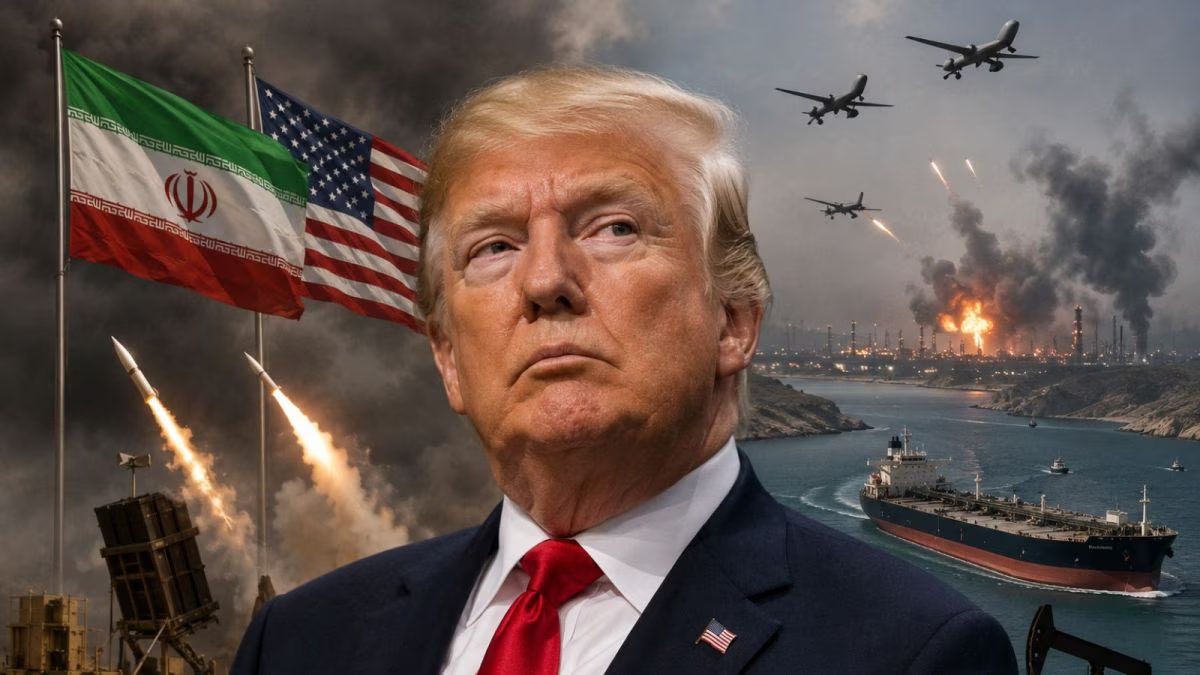
U.S. President Donald Trump has declared that the ceasefire framework with Iran is “over,” signaling a sharp escalation in tensions after renewed military exchanges between the two countries. The announcement follows fresh U.S. strikes on Iranian targets and retaliatory attacks by Iran on American military facilities in the Gulf, effectively ending hopes for continued negotiations under the interim agreement.
Trump made the remarks during the NATO summit, stating that he no longer considers the memorandum of understanding (MoU) that formed the basis of the ceasefire to be in effect. He also indicated that further negotiations with Tehran would be “a waste of time,” adopting a significantly tougher stance toward Iran’s leadership.
Trump Declares Iran Ceasefire ‘Over’
Speaking to reporters, Trump said the ceasefire arrangement had effectively collapsed following recent hostilities between Washington and Tehran.
The U.S. president argued that the agreement could no longer be sustained after Iran’s actions and suggested that diplomacy had reached its limit. His comments mark a significant shift from earlier efforts to maintain indirect negotiations aimed at reducing regional tensions.
Fresh Military Escalation Ends Truce
The ceasefire unraveled after the United States carried out fresh strikes on Iranian military assets in response to attacks on commercial vessels and shipping routes linked to the Strait of Hormuz.
Iran subsequently launched missile and drone attacks targeting U.S. military facilities in Bahrain and Kuwait, further escalating the conflict and prompting Washington to declare the ceasefire framework defunct.
Negotiations Break Down
The interim memorandum of understanding had created a limited window for indirect talks over Iran’s nuclear program and broader regional security issues.
However, negotiations failed to produce meaningful progress, and Trump said there was little value in continuing discussions under the existing framework. The administration has also reinstated sanctions targeting Iranian oil exports, increasing economic pressure on Tehran.
Oil Markets React
The collapse of the ceasefire has renewed concerns about stability in the Middle East, particularly around the Strait of Hormuz, one of the world’s most important energy shipping routes.
Oil prices rose sharply after Trump’s announcement as traders priced in the possibility of prolonged geopolitical tensions and potential disruptions to global crude supplies.
What Happens Next?
With the ceasefire now declared over, attention is shifting toward the possibility of further military escalation and additional economic sanctions.
Analysts say future developments will depend on whether either side seeks renewed diplomatic engagement or continues retaliatory military actions. Regional allies, global energy markets, and international policymakers are expected to closely monitor the evolving situation.
Outlook
Trump’s declaration that the Iran ceasefire is “over” marks a major turning point in U.S.-Iran relations. The breakdown of the interim agreement, combined with renewed military action and tighter sanctions, has heightened uncertainty across the Middle East and increased concerns over global energy security.
Investors and governments will now be watching for Iran’s response, any further U.S. military or economic measures, and whether diplomatic channels can eventually be reopened to prevent a broader regional conflict.
Get the day’s top stories in your inbox
One concise email. No spam, unsubscribe anytime.