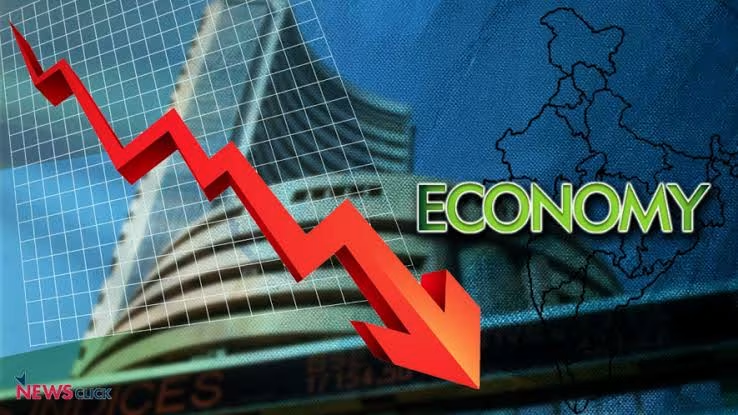
The International Monetary Fund (IMF) has slightly lowered its growth forecast for India for FY2026-27 (FY27), projecting the economy to expand by 6.4%, down from its 6.5% estimate released in April. The modest downgrade reflects increasing global economic uncertainty, including rising geopolitical tensions, trade disruptions, and softer external demand, even as India is expected to remain one of the world’s fastest-growing major economies.
Despite the revision, the IMF maintained that India’s growth outlook remains resilient, supported by strong domestic consumption, public investment, and ongoing structural reforms.
IMF Cuts India’s FY27 Growth Forecast
In its latest economic outlook, the IMF revised India’s FY27 GDP growth forecast to 6.4%, trimming it by 0.1 percentage point from its April projection.
The downward revision is relatively small and reflects external headwinds rather than a significant deterioration in India’s domestic economic fundamentals.
Even after the downgrade, India’s projected growth rate remains well above that of most advanced and emerging economies.
Why the IMF Lowered Its Forecast
The IMF cited a combination of global factors behind the revised outlook, including:
- Rising geopolitical tensions.
- Slower global trade growth.
- Uncertainty in financial markets.
- Higher energy prices.
- Weak external demand.
- Ongoing global policy uncertainties.
These factors are expected to moderately affect exports and investment, leading to a slight reduction in India’s projected economic expansion.
Domestic Economy Remains Resilient
The IMF noted that India’s economic growth continues to be supported by strong domestic demand.
Key growth drivers include:
- Robust private consumption.
- Government infrastructure spending.
- Expanding manufacturing activity.
- Growth in the services sector.
- Digital economy expansion.
- Rising formal employment.
These structural strengths are expected to help offset part of the weakness stemming from global economic conditions.
India Still Among the Fastest-Growing Major Economies
Despite the revised forecast, India continues to stand out as one of the fastest-growing large economies globally.
Compared with many advanced economies experiencing slower growth, India’s economic momentum remains supported by favorable demographics, increasing investment, and ongoing reforms aimed at improving productivity and business competitiveness.
The IMF believes these factors will continue to provide a solid foundation for medium-term economic growth.
Challenges to Watch
While the overall outlook remains positive, the IMF highlighted several risks that could influence India’s growth trajectory:
- Escalating geopolitical conflicts.
- Volatile crude oil prices.
- Global financial market instability.
- Slowing international demand.
- Inflationary pressures.
- Climate-related disruptions.
Managing these risks will be important to sustaining strong economic growth over the coming years.
Outlook for Policymakers
Economists expect policymakers to continue focusing on balancing growth with macroeconomic stability.
Key priorities are likely to include:
- Maintaining fiscal discipline.
- Supporting private investment.
- Boosting manufacturing competitiveness.
- Expanding infrastructure.
- Controlling inflation.
- Strengthening financial sector resilience.
Continued reforms and prudent economic management could help India navigate external challenges while sustaining long-term growth.
Outlook
The IMF’s decision to trim India’s FY27 GDP growth forecast from 6.5% to 6.4% reflects growing uncertainty in the global economy rather than weakening domestic fundamentals. With strong consumption, public investment, and structural reforms continuing to support activity, India is expected to remain one of the world’s fastest-growing major economies.
Going forward, the country’s growth performance will largely depend on how it navigates global risks such as geopolitical tensions, energy price volatility, and slowing international demand while continuing to strengthen its domestic economic foundations.
Get the day’s top stories in your inbox
One concise email. No spam, unsubscribe anytime.