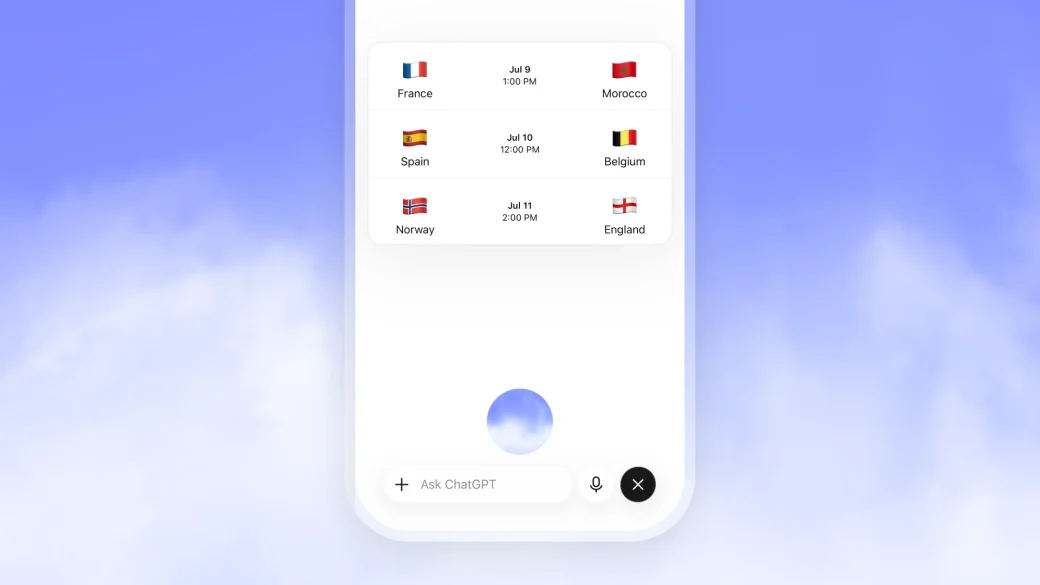
OpenAI has launched GPT-Live Voice Models for ChatGPT, introducing a new generation of speech AI designed to deliver more natural, real-time, and expressive voice conversations. The new models significantly improve voice interactions by enabling faster response times, better conversational flow, interruption handling, and more human-like speech generation.
The launch marks another major step in OpenAI’s efforts to make AI assistants feel more conversational and responsive, expanding the capabilities of ChatGPT’s voice mode for developers, businesses, and everyday users.
OpenAI Introduces GPT-Live Voice Models
OpenAI’s new GPT-Live Voice Models are built specifically for real-time speech interactions, allowing users to have fluid conversations with ChatGPT without relying on the traditional speech-to-text and text-to-speech pipeline.
Instead, the models process spoken language directly, reducing latency and enabling more natural back-and-forth conversations.
The upgrade aims to make AI voice assistants feel closer to speaking with another person.
Key Features of GPT-Live Voice Models
The latest voice models introduce several enhancements, including:
- Real-time conversational responses.
- Lower latency.
- More natural speech generation.
- Better interruption handling.
- Improved contextual understanding.
- Expressive voice delivery.
- More accurate recognition of spoken language.
- Smoother multi-turn conversations.
These improvements enable ChatGPT to respond more quickly while maintaining context throughout extended voice interactions.
Designed for Natural Conversations
One of the biggest improvements is the ability to support continuous, dynamic conversations.
The models can better:
- Understand pauses.
- Respond mid-conversation.
- Handle overlapping speech.
- Adjust tone naturally.
- Maintain conversational context.
- Deliver more human-like dialogue.
This makes interactions feel less scripted and more similar to everyday conversations.
Enterprise and Developer Applications
Beyond consumer use, GPT-Live Voice Models can support a wide range of enterprise applications.
Potential use cases include:
- AI customer support.
- Virtual assistants.
- Education and tutoring.
- Healthcare assistance.
- Sales and customer engagement.
- Smart devices.
- Voice-enabled productivity tools.
Businesses can leverage the technology to build more responsive and interactive voice experiences.
AI Voice Competition Intensifies
The launch comes as competition in AI voice technology continues to accelerate.
Technology companies are investing heavily in conversational AI capable of delivering:
- Faster speech recognition.
- Real-time translation.
- Emotion-aware responses.
- Natural voice synthesis.
- Multilingual conversations.
- Human-like interaction.
Voice AI is increasingly becoming a key differentiator in next-generation AI assistants.
Expanding ChatGPT’s Capabilities
The introduction of GPT-Live Voice Models builds on OpenAI’s broader strategy of making ChatGPT a multimodal AI assistant capable of understanding and generating text, images, audio, and other forms of content.
By improving speech capabilities, OpenAI aims to make voice interactions more useful across personal, professional, and enterprise workflows.
The company continues to invest in models that reduce latency while increasing the quality and realism of AI-generated conversations.
Outlook
OpenAI’s launch of GPT-Live Voice Models represents a significant advancement in conversational AI. With faster response times, more natural speech, and improved interruption handling, the new models move ChatGPT closer to real-time, human-like voice interactions.
As demand for AI-powered voice assistants continues to grow, GPT-Live Voice Models are expected to play a key role in expanding the use of conversational AI across consumer applications, enterprise software, customer service, and smart devices.
Get the day’s top stories in your inbox
One concise email. No spam, unsubscribe anytime.