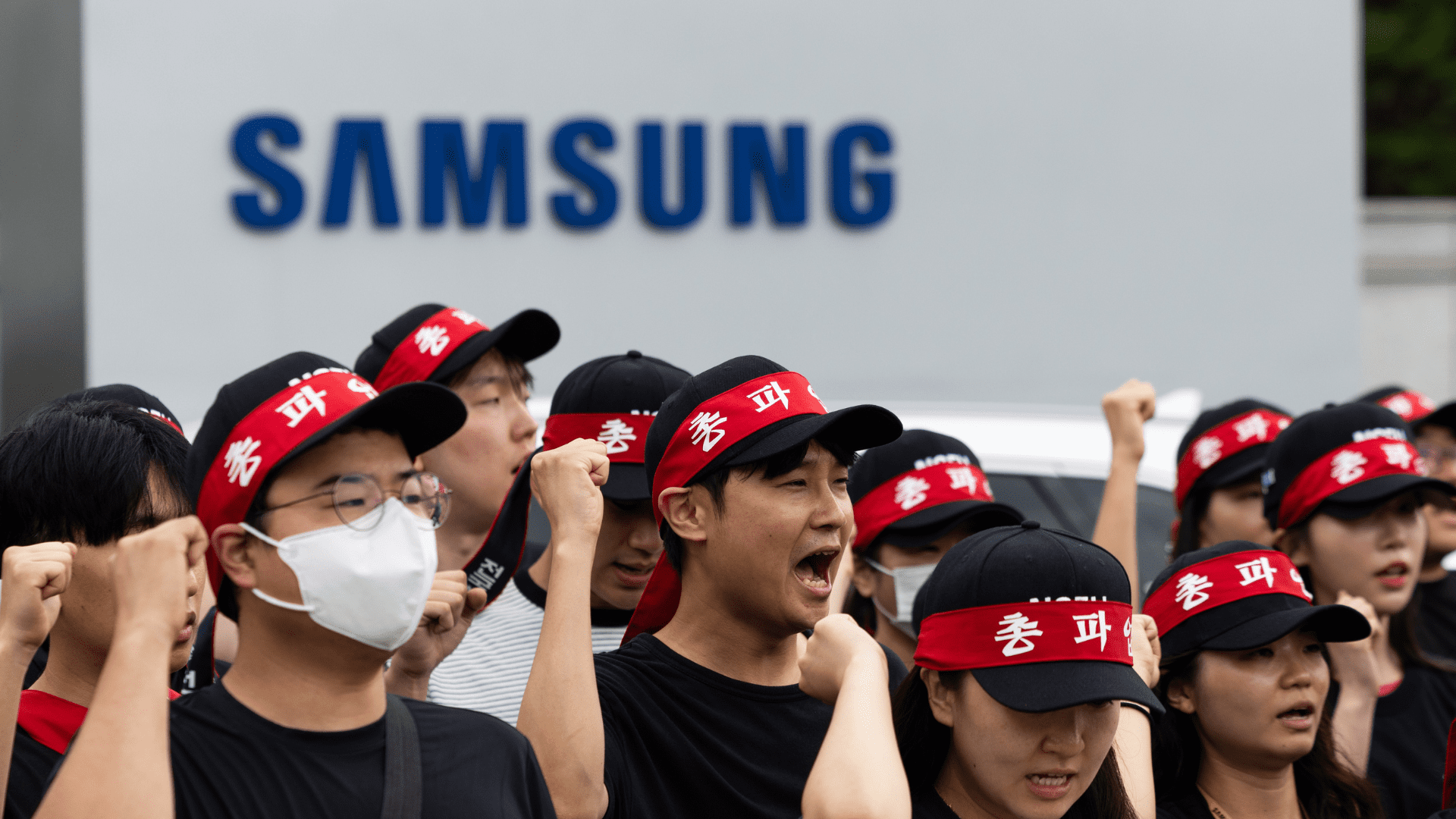
Samsung Electronics has successfully averted a potentially catastrophic labor disruption. In an electronic vote concluding today, union members overwhelmingly voted to ratify a landmark 10-year wage and bonus agreement that ties worker compensation directly to the explosive financial recovery of the global semiconductor sector.
According to the National Samsung Electronics Union (NSEU), the historic pact received an approval rating of 73.7% from the 62,616 members who cast ballots, boasting a massive 95.5% voter turnout. The ratification officially suspends the threat of an imminent, indefinite walkout that market analysts feared could have cost the South Korean economy up to 100 trillion won and paralyzed global artificial intelligence hardware pipelines.
Decoding the 10.5% “AI Bonus” Structure
The core of the hard-fought compromise is a structurally unprecedented 10-year profit-sharing framework designed to distribute the massive windfalls of the current artificial intelligence hardware supercycle.
Unlike traditional fixed wage increases, the new contract establishes a variable compensation pool tied strictly to the performance of Samsung’s Device Solutions (DS) division, which oversees the company’s memory, chip manufacturing, and design units:
- The Share Allocation: Samsung will distribute 10.5% of the semiconductor division’s annual operating profit (excluding one-off adjustments like currency fluctuations) directly to employees in the form of company stock.
- The Cash Top-Up: An additional 1.5% of the division’s operating profit will be disbursed as a liquid cash bonus, bringing the total profit-sharing pool to 12%.
- Removal of the Cap: The agreement permanently abolishes the previous 50% cap on sector-specific performance bonuses, allowing worker payouts to scale infinitely alongside corporate earnings.
Aggressive Contingency Targets
To safeguard corporate stability, management integrated strict operational milestones into the 10-year timeline. To trigger the full 10.5% payout structure, the semiconductor division must hit specific profitability thresholds:
- 2026–2028: The division must generate an annual operating profit of at least 200 trillion won (~$133 billion).
- 2029–2035: The profitability floor drops to a minimum baseline of 100 trillion won annually.
Eye-Popping Payouts: $340,000 Per Worker
Driven by insatiable global demand for High-Bandwidth Memory (HBM) chips and advanced DRAM architectures required by AI data centers, Samsung’s chip earnings have surged dramatically.
With market analysts projecting Samsung’s semiconductor operating profits to approach 300 trillion won this fiscal year, the financial layout for individual workers is unprecedented. Next year, roughly 78,000 eligible semiconductor employees will receive an average bonus of 513 million won (~$340,000) per person. High-performing staff within the elite Memory Business unit could see total packages max out near 600 million won—an amount equivalent to a lifetime of earnings for an average South Korean household.
Internal Strife and Shareholder Blowback
While the vote effectively eliminates supply chain volatility—sparking an immediate 8% rally in Samsung shares on the Korea Exchange—the unique deal has opened a Pandora’s box of internal and external friction.
1. The “Two-Tier” Worker Divide
The deal has triggered immediate resentment among workers in Samsung’s Device Experience (DX) division, which encompasses the mobile and consumer electronics segments. Workers outside the chip division accuse management of crafting a heavily biased agreement, arguing that the mobile unit kept Samsung afloat during the 2023–2024 chip downturn. A smaller minority union representing non-chip workers went so far as to file an injunction in local courts on Tuesday to block the deal.
2. Shareholder Alliances Prepare Legal Actions
Retail and institutional shareholder groups are expressing fierce opposition to the 10-year layout. Critics argue that by calculating bonuses based on operating profit before corporate taxes, management is effectively transferring wealth and equity from the shareholders—who absorbed the financial downside of the tech downturn—directly to labor unions. Activist investor groups have threatened to sue the board, claiming the deal is legally void without explicit authorization via an extraordinary general meeting (EGM).
Precedent for “Korea Inc.”
Despite the brewing corporate blowback, the resolution is a watershed moment for South Korea’s historically militant labor landscape. Following in the footsteps of rival SK Hynix, Samsung’s pivot to profit-indexed equity bonuses signals a structural shift where tech labor costs will float in tandem with global AI infrastructure spending.
Business federations are already warning that the scale of Samsung’s payout will likely prompt a domino effect of aggressive profit-sharing demands across the nation’s automotive, shipbuilding, and biotechnology sectors over the upcoming quarter.
Get the day’s top stories in your inbox
One concise email. No spam, unsubscribe anytime.