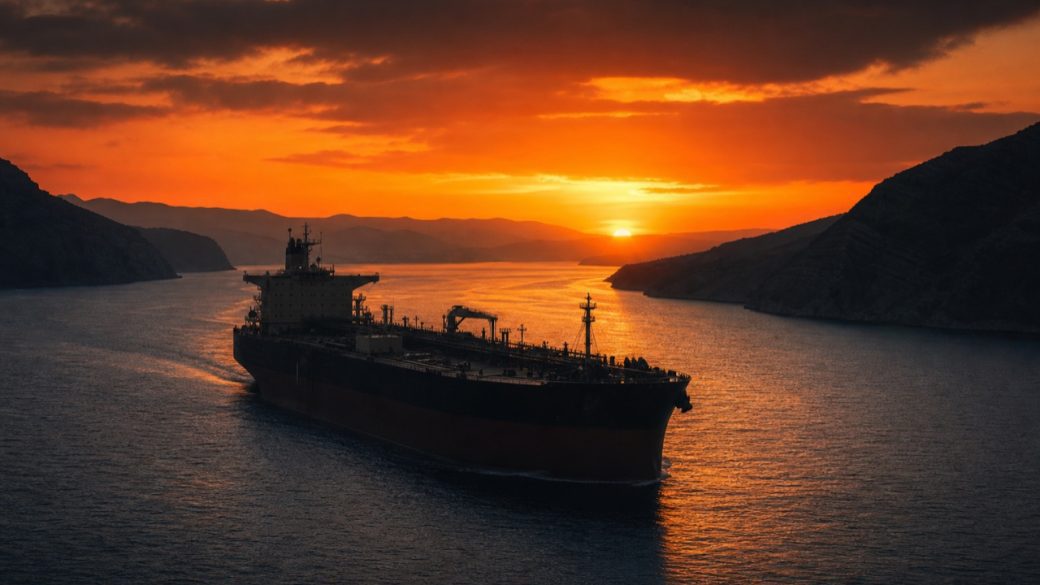
The conflict between Iran and the United States has escalated sharply after Tehran announced the closure of the Strait of Hormuz once again, prompting a fresh round of U.S. retaliatory airstrikes against Iranian military targets. The latest confrontation follows an alleged Iranian attack on a commercial vessel transiting the strategic waterway, reigniting fears of a wider regional conflict and renewed disruption to one of the world’s most important energy corridors.
The Strait of Hormuz handles roughly 20% of global oil trade and a significant share of liquefied natural gas (LNG) shipments. Any disruption to shipping through the narrow passage has immediate implications for global energy markets, inflation, and supply chains. While Iran declared the strait closed “until further notice,” U.S. officials have maintained that commercial traffic continues in parts of the waterway despite heightened security risks.
Iran Reimposes Strait Closure
Iran’s Revolutionary Guard announced that the Strait of Hormuz would again be closed after accusing foreign vessels of violating its navigation rules. The announcement followed reports of an attack on a commercial ship, which Tehran said had ignored its instructions while transiting the strategic waterway.
| Key Development | Details |
|---|---|
| Strait status | Iran declared it closed |
| Trigger | Alleged incident involving a commercial vessel |
| Strategic importance | Around 20% of global oil passes through the strait |
| Regional impact | Higher shipping and security risks |
The closure marks another major escalation in a conflict that has repeatedly disrupted maritime trade in the Persian Gulf.
U.S. Launches Retaliatory Strikes
Following the reported attack on the commercial vessel, the United States carried out a new wave of military strikes targeting Iranian facilities.
According to U.S. officials, the operation focused on:
- Missile launch sites.
- Drone infrastructure.
- Military communication facilities.
- Weapons storage locations.
- Other military assets linked to recent attacks.
Washington said the strikes were intended as a response to attacks on commercial shipping and to protect freedom of navigation through international waters.
Regional Tensions Continue to Rise
The renewed fighting has expanded beyond direct exchanges between Washington and Tehran.
Reports indicate Iran also launched attacks targeting locations in several Gulf countries that host U.S. military forces, increasing concerns about a broader regional conflict.
| Regional Concern | Potential Impact |
|---|---|
| Military escalation | Wider Middle East conflict |
| Shipping security | Increased maritime risk |
| Energy exports | Supply disruptions |
| Diplomatic efforts | Negotiations under pressure |
Several countries in the region have activated air defense systems while urging restraint from both sides.
Oil Markets React
The Strait of Hormuz is one of the world’s most strategically important maritime chokepoints.
Major exports passing through the route include:
- Crude oil.
- Liquefied natural gas (LNG).
- Refined petroleum products.
- Petrochemicals.
Any prolonged disruption could:
- Increase global oil prices.
- Raise shipping insurance costs.
- Delay energy deliveries.
- Increase inflationary pressures worldwide.
Energy traders are closely monitoring developments for signs of further disruption to commercial shipping.
Diplomatic Efforts Face Setback
The latest escalation comes after previous attempts by regional mediators, including Oman, to preserve maritime security and maintain dialogue between the two countries.
While diplomatic contacts have not completely stopped, the renewed military exchanges have significantly reduced expectations of an immediate de-escalation.
Officials continue to call for:
- Safe passage for commercial vessels.
- Protection of civilian shipping.
- Resumption of negotiations.
- Avoidance of further military escalation.
Why the Strait of Hormuz Matters
The Strait of Hormuz connects the Persian Gulf to global shipping routes and remains one of the most critical energy transit corridors in the world.
| Importance | Why It Matters |
|---|---|
| Global oil trade | Around one-fifth of global supply passes through it |
| LNG exports | Key route for Gulf producers |
| International shipping | Vital commercial trade corridor |
| Energy security | Critical for Asia, Europe and global markets |
Any interruption to navigation has immediate consequences for energy-importing economies, including India, China, Japan, and many European countries.
Outlook
The latest confrontation has heightened concerns that the conflict could become more prolonged if attacks on shipping continue.
Analysts are closely watching:
- Additional military responses.
- Commercial shipping activity.
- Oil price movements.
- Diplomatic negotiations.
- Security measures by Gulf nations.
Whether tensions ease or escalate further will largely depend on developments in the coming days and the willingness of both sides to return to negotiations.
What It Means for Global Markets
Iran’s renewed closure of the Strait of Hormuz and the subsequent U.S. retaliatory strikes represent one of the most significant escalations in the region in recent weeks. Beyond the immediate military implications, the developments have renewed concerns over global energy security, maritime trade, and inflation, given the strait’s critical role in transporting oil and natural gas.
For global markets, the situation introduces fresh uncertainty at a time when energy supplies remain highly sensitive to geopolitical risks. Governments, shipping companies, and investors will be closely monitoring whether commercial traffic can continue safely through the Strait of Hormuz or whether the latest military exchanges trigger a prolonged disruption to one of the world’s most important energy corridors.
Get the day’s top stories in your inbox
One concise email. No spam, unsubscribe anytime.