Key takeaways
- The RBI Financial Stability Report says India’s banks are strong right now.
- It also warns that rich stock prices and global shocks could upset markets.
- Nifty had its weakest first half since 2020, which shows investors are getting careful.
- Bad loans may stay under control, but stress tests show banks still need buffers.
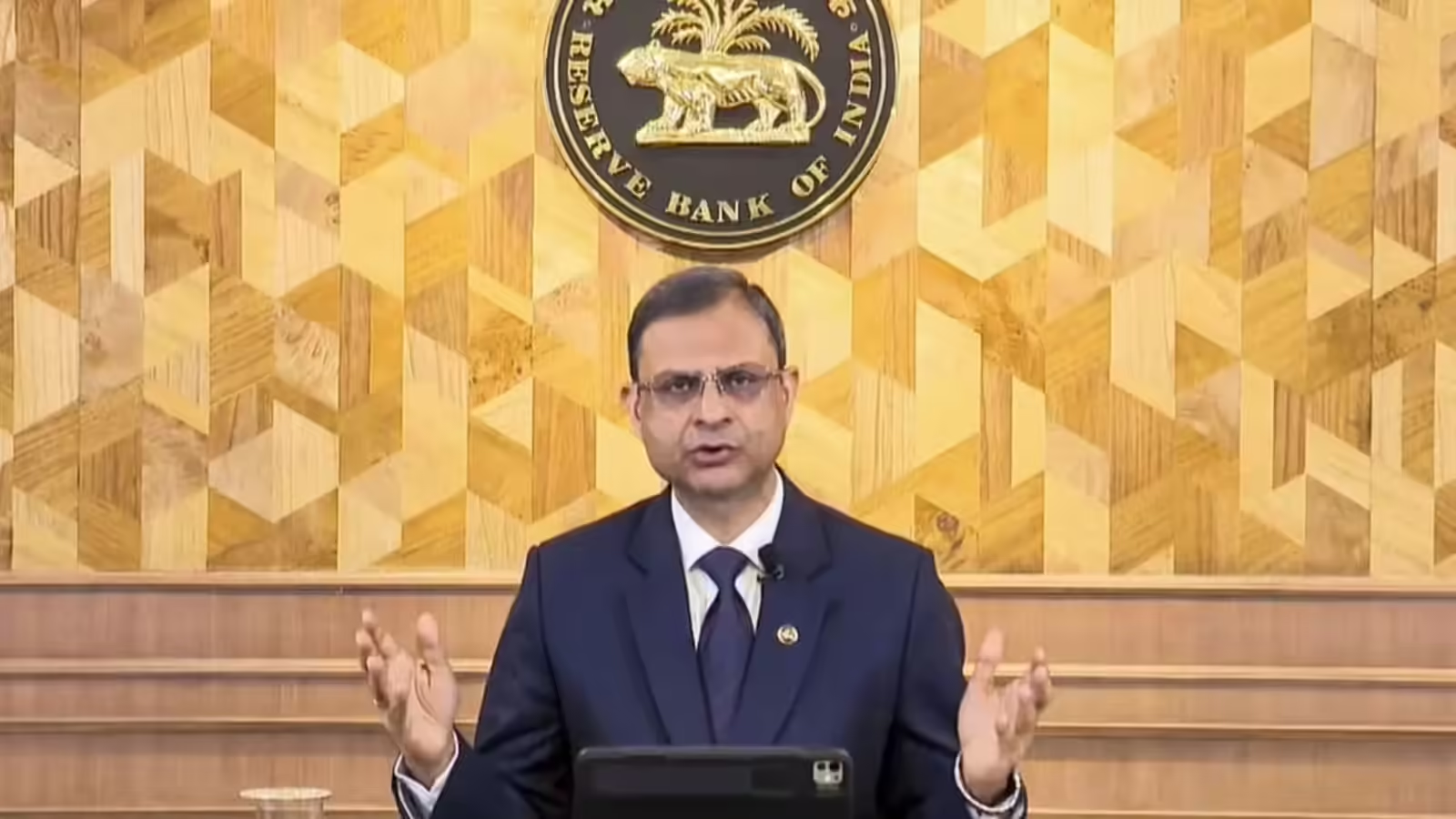
The RBI Financial Stability Report is the Reserve Bank of India’s check-up on the money system. It looks at banks, markets, loans, and risks. This time, the RBI Financial Stability Report says banks look healthy, but it also warns that expensive markets and global trouble could cause bumps.
Why is the RBI Financial Stability Report important?
Think of the financial system like city plumbing. Banks, markets, and lenders move money instead of water. If one pipe cracks, the problem can spread fast, so the RBI checks the whole network every six months.
That is why investors watch this report closely. It does not just describe today. It also tries to spot what could go wrong next, because small cracks can turn into bigger breaks.
In its latest report, the RBI said scheduled commercial banks remain well capitalised. Capital is the safety cushion banks keep for hard times. It also said gross non-performing assets, or bad loans, may improve further even under stress.
But the report did not sound carefree. It warned that global risks remain high. That includes war, trade fights, sticky inflation, and sudden moves in bond yields. Bond yield means the return investors demand to lend money.
What did the RBI Financial Stability Report say about banks?
The report’s big comfort point is bank strength. The RBI said the capital to risk-weighted assets ratio for banks stayed above the rule book need. That ratio shows how much shock a bank can absorb.
It also looked at asset quality. Asset quality is a simple way to say how good or bad a bank’s loans are. If more borrowers repay on time, the bank looks stronger.
Under the RBI’s stress tests, banks as a group still stayed above the minimum capital requirement. Stress tests are practice drills. They ask, “What if growth slows, rates change, or loans go bad?”
That matters for families and firms. Stronger banks can keep lending during rough patches. We saw why this matters in other money stories too, like how RBI funding costs can shape bank margins and why banks are still expanding in GIFT City.
| Area | What the report suggests | Why it matters |
|---|---|---|
| Banks | Capital remains above minimum norms | Banks have a buffer in stress |
| Bad loans | Likely to stay manageable | Less pressure on profits |
| Markets | Valuations look stretched in parts | Prices can fall fast if mood changes |
| Global risks | Still elevated | External shocks can hit India too |
Why did it warn about markets now?
Because prices have run ahead in some pockets. A valuation is the price investors place on a company or market. If that price gets too high versus earnings, even a small scare can cause a sharp drop.
The report came as the Nifty logged its weakest first half since 2020. That does not mean a crash is here. But it does show the market has lost some easy speed.
Investors have also dealt with mixed signals. Oil prices jumped during Middle East tensions. Then they cooled. Rate-cut hopes changed as US inflation and jobs data shifted.
Here is a simple snapshot of the mood:
Key signals around the reportNifty H1Bank buffersGlobal risksWeakStrongHigh
That mix can make markets choppy. Choppy means prices swing up and down quickly. When traders feel unsure, they often pull money from risky bets first.
What does this mean for the Nifty and everyday investors?
For the Nifty, the message is simple. Earnings still matter most. Earnings are the profits companies make. If profits rise, high prices can make more sense. If profits slow, those prices can look too rich.
For everyday investors, the report is not a panic siren. It is more like a yellow light. Slow down, check what you own, and do not chase stocks just because they ran up last month.
That is extra true in sectors where excitement has moved faster than business results. We have seen similar market enthusiasm around new themes, from EV and AI spending at TVS Motor to battery material expansion plans at Himadri. Some stories may work out well, but price still matters.
The clearest message from the RBI Financial Stability Report is this: India’s banks look solid, but strong banks do not make markets risk-free. If stock prices stay too high or global shocks worsen, shares can still fall fast.
Which numbers stand out most?
Three numbers help frame the story. First, the Nifty just posted its weakest first half since 2020. Second, the RBI’s stress tests still kept bank capital above the minimum threshold. Third, the report itself arrives only twice a year, so each edition gets heavy attention.
There are also market signals outside the report. India’s benchmark 10-year bond yield has stayed near the 7% zone in recent months, though it moves with global cues. Meanwhile, Brent crude swung above $85 a barrel during conflict fears before easing back.
Those shifts matter because India imports much of its oil. Higher oil can raise inflation, which means prices in shops may rise faster. If inflation stays high, rate cuts can get delayed.
Readers who want the original documents can check the Reserve Bank of India and the National Stock Exchange. Primary source means the information comes straight from the main institution.
What should readers watch next?
Start with bank earnings. If loan growth stays firm and bad loans stay calm, confidence may hold. Then watch global signals like US rates, oil, and the dollar, because foreign money often reacts to those first.
Also track how broad the market rally is. Broad means many stocks rise together. If only a small group keeps climbing while the rest lag, that can be a warning sign.
Finally, keep an eye on policy. RBI comments on liquidity, inflation, and credit can shift the mood quickly. Liquidity means how easily money moves through the system.
FAQs
What is the RBI Financial Stability Report?
The RBI Financial Stability Report is the central bank’s health check of banks, markets, and major money risks in India.
Why did the report warn about markets?
It warned because some stock prices look expensive, and global shocks could trigger quick falls.
How does this affect ordinary investors?
It suggests investors should stay calm, diversify, and avoid buying just because prices already jumped.