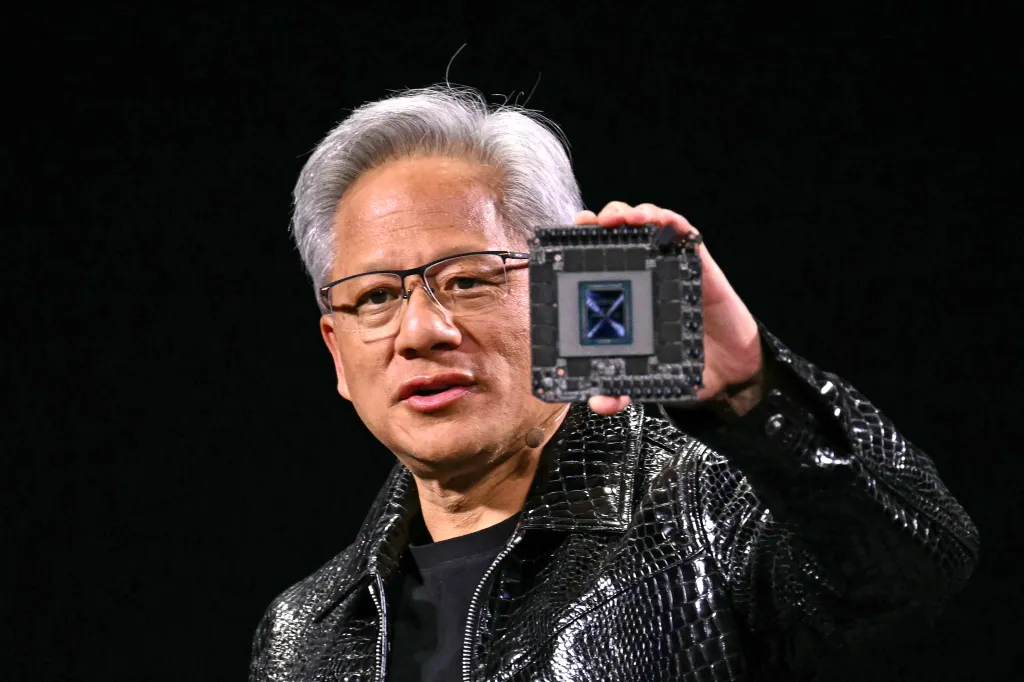
Solidifying its position at the absolute core of the global artificial intelligence boom, NVIDIA CEO Jensen Huang announced a staggering expansion of the company’s localized footprint, outlining plans to scale its annual procurement and development spending in Taiwan to $150 billion.
The landmark announcement was delivered in Taipei ahead of the upcoming COMPUTEX 2026 trade show. Speaking to over 1,000 employees and local officials, Huang referred to Taiwan as the “epicenter of the AI revolution,” underscoring the island’s irreplaceable role in fabricating, packaging, and assembling the hardware infrastructure powering global data centers.
A Tenfold Scaling Matrix
The $150 billion figure reflects a monumental shift in NVIDIA’s balance-sheet focus over the last half-decade, moving completely in tandem with the explosion of frontier LLMs and autonomous agent networks.
- The Historical Baseline: Just four to five years ago, NVIDIA’s total annual procurement and infrastructure allocation in Taiwan sat between $10 billion and $15 billion.
- The Present Runway: Propelled by hyper-scale demand for architecture lines like the Blackwell series and subsequent high-compute hardware nodes, spending escalated to a $100 billion baseline before jumping to the newly announced $150 billion annual run-rate.
The massive multi-billion-dollar commitment represents an ongoing capital ecosystem, including advanced foundry chip fabrication contracts, silicon wafer sourcing, high-bandwidth memory packaging allocations, and final server rack assemblies.
Planting “NVIDIA Constellation” in Taipei
Beyond procurement contracts, NVIDIA is establishing deep physical roots on the island. The company unveiled plans to construct a massive new Asia-Pacific research and development hub in northern Taipei’s Beitou-Shilin Technology Park.
Dubbed NVIDIA Constellation, the planned campus will span nearly four hectares and mirror the architectural design philosophy of NVIDIA’s Santa Clara, California headquarters. The facility is expected to break ground later this year, with an operational launch target set for 2030.
Once fully online, Constellation will house approximately 4,000 hardware and software engineers, functioning as one of the largest specialized AI research, co-engineering, and physical robotics laboratories in the APAC region.
The Consolidated AI Hardware Block
NVIDIA’s announcement does not exist in isolation; it marks the complete consolidation of the AI hardware stack inside a single geographical footprint. Just six days prior, arch-rival Advanced Micro Devices (AMD) announced its own $10 billion investment blitz in Taiwan, targeting advanced packaging expansions for its Helios AI platform.
The dual push underscores a structural reliance on specialized Taiwanese partners that cannot be easily replicated elsewhere:
- The Silicon Layer: Taiwan Semiconductor Manufacturing Co. (TSMC) fabricates the advanced 3nm and 2nm architecture dies designed by NVIDIA. Following the news, TSMC executives confirmed that their forward AI-chip revenues are projected to scale at a 60% compound annual growth rate through 2029.
- The Packaging Component: Interconnect performance relies entirely on advanced packaging ecosystems led by ASE Technology Holding and SPIL.
- The Server Core: Companies like Foxconn, Quanta Computer, and Wiwynn execute the final, complex industrial assembly of raw silicon chips into multi-million-dollar AI supercomputer nodes.
The Resource Equation: Demanding More Power
As the computational demands of “physical AI” and automated manufacturing take over global production, Huang highlighted that resource scarcity is shifting from human capital to electrical grids. Addressing Taipei Mayor Chiang Wan-an at the ceremony, Huang made a direct appeal for infrastructure stability.
“Taiwan is booming. The number of partners we work with here is incredible. But Mayor, we could use more energy in Taiwan,” Huang stated. “Human labor needs rice, but AI labor needs electricity. In the future, Taiwan will unify human labor, robotics labor, and AI labor. In order to do that, we need a lot more electricity. Energy growth is fundamental to the GDP of Taiwan.”
While the extreme concentration of $150 billion in annual capital allocation within a single geographic territory introduces concentrated supply-chain risk—especially against a backdrop of recent maritime and shipping bottlenecks—NVIDIA’s aggressive expansion shows that the world’s leading chip designer views Taiwan as a permanent foundation for the next industrial revolution.
Get the day’s top stories in your inbox
One concise email. No spam, unsubscribe anytime.