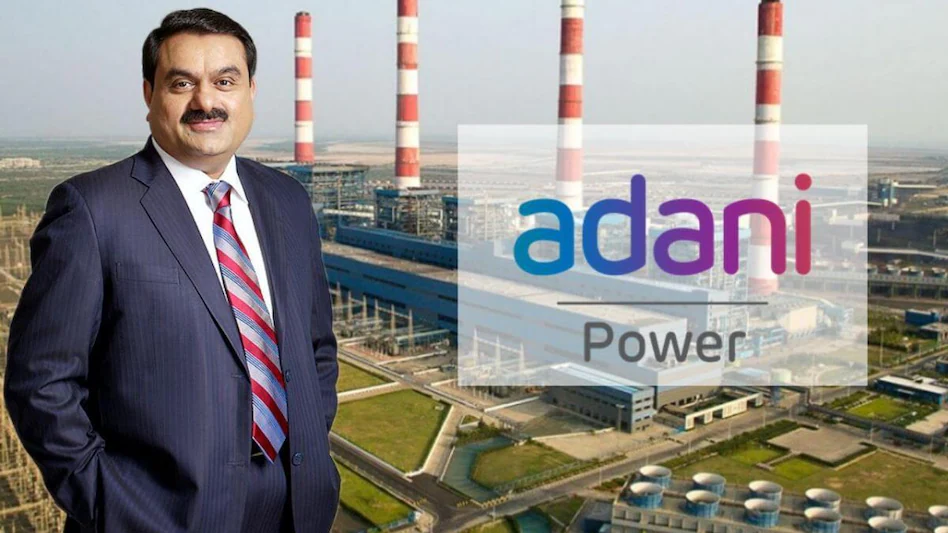
In a symbolic milestone reflecting a massive sector realignment on India’s bourses, Adani Power has officially overtaken IT bellwether Infosys in total market capitalization.
Fueled by a relentless rally on the back of historic power consumption demands, the market capitalization of the Adani Group’s flagship thermal power producer climbed past ₹4.79 lakh crore. Meanwhile, a persistent structural slide in the technology sector pulled Infosys’ total market value down to approximately ₹4.70 lakh crore. With this dramatic cross-over, Adani Power has pushed its way into the 11th spot on India’s most-valued company charts, forcing the IT giant down to the 12th position.
The milestone highlights a clean inversion in investor sentiment: capital is aggressively migrating out of traditional, labor-intensive software exporters exposed to generative AI disruptions and flowing directly into core brick-and-mortar infrastructure plays
The Power Surge: El Niño, Heatwaves, and Record Demand
The fundamental engine driving Adani Power’s extraordinary 68% year-to-date surge is an unprecedented national grid crisis. India is currently grappling with a severe heatwave intensified by an exceptionally strong El Niño year, pushing atmospheric mercury lines past 45°C. The sudden climatic swing has caused an exponential spike in air conditioning load and residential consumption, sending India’s peak electricity demand soaring to a record-breaking 270.82 gigawatts (GW).
As India’s largest private thermal power producer, Adani Power has emerged as a key beneficiary of this merchant power squeeze:
- Strong Operational Sourcing: The firm reported a robust Q4 FY26 performance, with continuing EBITDA jumping 27% to reach ₹6,498 crore, underpinned by higher Power Purchase Agreement (PPA) offtakes.
- Aggressive Capacity Target: To capitalize on structural deficits spanning households and modern AI data centers, the company is actively expanding its generation footprint from an operational 18.2 GW base toward a massive 42 GW target by FY32.
The stock responded on Wednesday by touching a fresh lifetime intraday high of ₹252.60 per share on the National Stock Exchange before finishing the session at ₹248.75.
The “SaaSpocalypse” Headwind Choking Infosys
In contrast to the clear visibility backing the utilities sector, India’s premier software service providers are fighting a complex defensive battle. Shares of Infosys have tumbled 29% in 2026, registering its multi-year low of ₹1,089 per share just weeks prior.
The institutional exodus out of IT has been heavily accelerated by a wave of developer-centric AI automation platforms—most notably Anthropic’s launch of native plug-ins for its autonomous Claude Cowork software agents, which can execute deep legal, data analysis, and marketing tasks independently. The looming threat of technological labor displacement has triggered what Wall Street desks are calling a “SaaSpocalypse,” dampening the premium valuations historically enjoyed by Indian software exporters.
The tech slowdown is already visible in near-term forward accounting boundaries. In its recent earnings statement, Infosys issued a highly conservative revenue growth guidance of just 1.5% to 3.5% for FY27, signaling a deeply subdued global discretionary tech spending environment.
The Disconnect: Valuation Premiums vs. Net Earnings
Despite the massive layout adjustment on the market cap ladder, the financial realities on the ground tell a fundamentally different story regarding actual corporate generation. Infosys remains a vastly more profitable enterprise in terms of raw dollar margins and operational scale:
| Metric (FY26 Year-End) | Adani Power Ltd | Infosys Ltd |
| Annual Operating Revenue | ₹54,240 Crore | ₹1,78,000 Crore |
| Annual Profit After Tax (PAT) | ₹12,834 Crore | ₹29,440 Crore |
| Market Capitalization Rank | 11th Most Valuable | 12th Most Valuable |
| Trailing Price-to-Earnings (P/E) | ~34x (Growth Premium) | ~15.9x (Value Territory) |
As the data reflects, Infosys generated roughly double the bottom-line net profit and more than triple the operating top line of Adani Power for the fiscal year ended March 31, 2026. However, because the public utility is priced for a high-scarcity, long-term expansion phase—with 95% of its capacity locked under lucrative long-term PPA tariffs—the market has aggressively re-rated Adani Power’s forward growth premium to 34x P/E, allowing it to surpass the legacy IT major in sheer public market weight.
Get the day’s top stories in your inbox
One concise email. No spam, unsubscribe anytime.