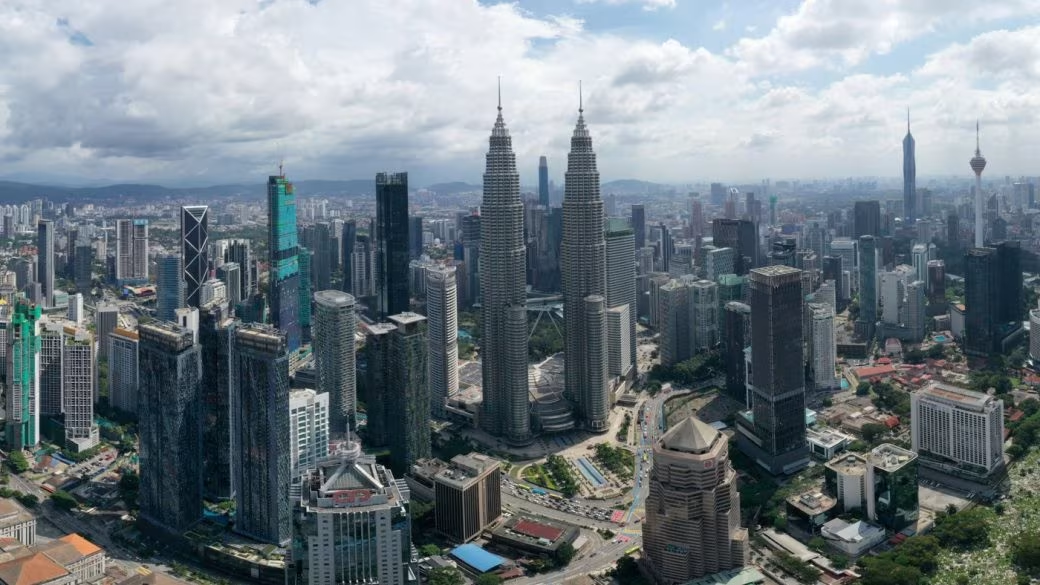
Key takeaways
- Malaysia IPO boom means many companies are listing shares on the stock market.
- Malaysia has become Southeast Asia’s busiest IPO market by deal count this year.
- Small and mid-sized firms drove much of the action, not giant blockbuster listings.
- Investors now want proof that these new stocks can grow after listing.
Malaysia IPO boom is the big rush of companies selling shares to the public in Malaysia. An IPO is an initial public offering. That means a private company starts trading on a stock exchange. Right now, Malaysia IPO boom is making the country Southeast Asia’s busiest market for new listings.
That sounds exciting, and it is. But the harder question comes next. Can these newly listed firms become strong, lasting businesses, or will the buzz fade after the opening bell?
Why is Malaysia IPO boom getting so much attention?
Malaysia has pulled ahead of its regional rivals in the number of IPOs, or first-time share sales. Bursa Malaysia is the country’s stock exchange. A stock exchange is the marketplace where investors buy and sell shares.
In simple terms, more firms are choosing Kuala Lumpur over some other Southeast Asian markets. That matters because IPO activity often shows how confident business owners feel. It also shows whether investors still have cash and courage.
Recent data from exchange filings and market reports show Malaysia hosted dozens of IPOs this year, more than nearby markets by count. Many of these deals were not huge. But together, they created a steady stream of listings.
That is why some bankers have started calling the country an IPO factory. The phrase sounds flashy, but the idea is simple. Malaysia is producing new listed companies faster than most neighbors.
IPO count snapshot in Southeast Asia0MalaysiaThailandSingapore~30+~20~15
The chart above gives a simple visual picture, not a live market feed. It shows the broad pattern reported this year: Malaysia ahead by number of deals, while Thailand and Singapore trail.
What is helping Malaysia IPO boom right now?
Several things seem to be lining up. First, local investor demand has held up better than many expected. Local investors are people and funds inside the country. They often help keep smaller IPOs moving when global money turns cautious.
Second, Malaysia has a large pipeline of smaller and medium companies. A pipeline means the list of firms preparing to launch. These companies may not raise billions, but they can keep the market busy month after month.
Third, regulators and advisers have built a system that many local firms know well. Regulators are the rule-makers. They check that companies meet listing standards before shares go on sale.
Valuation also plays a role. Valuation is the price investors put on a company. If prices look fair, more companies are willing to list, and more buyers are willing to join.
For some firms, Malaysia may feel more reachable than bigger global markets. Listing at home can be simpler, cheaper, and easier to explain to local investors. So the Malaysia IPO boom is partly about access, not just hype.
Does a busy IPO market always mean better companies?
Not at all. A crowded IPO calendar can show energy, but it does not promise quality. Some firms soar after listing. Others slip when early excitement cools off.
This is the key risk inside the Malaysia IPO boom story. Investors are asking whether the market is creating future champions or just pushing many small deals through the gate. That is a very different test.
One way to judge that is aftermarket performance. Aftermarket performance means what a stock does after it starts trading. If many shares fall below their offer price, confidence can weaken fast.
Another test is growth. Can these firms raise money, expand, and improve profits over several years? If they cannot, the IPO count will look less impressive later.
That matters for ordinary savers too. A stock market should not just produce openings. It should help build real businesses that hire people, invest, and last.
How does Malaysia compare with other Southeast Asian markets?
Southeast Asia has had a mixed year for listings. Some markets saw caution because global rates stayed high for longer. Interest rates are the cost of borrowing money. Higher rates can make investors more careful.
Singapore has prestige and global reach, but its IPO pipeline has often looked thin. Thailand has had periods of strength, but sentiment has been uneven. Indonesia still draws attention, especially for large resource and tech-linked deals, though timing can be tricky.
Malaysia stands out because it kept the machine running. Even if average deal size was smaller, the country kept bringing new names to market. In news terms, it won on volume.
| Market | Main strength | Current IPO pattern |
|---|---|---|
| Malaysia | Steady local pipeline | High deal count, many mid-sized listings |
| Singapore | Global investor profile | Lower deal flow |
| Thailand | Established equity market | Mixed momentum |
| Indonesia | Larger headline deals | Selective big listings |
That does not mean Malaysia has already won the long race. It means it is winning this stage. The next stage is proving that listed firms can keep performing.
What should investors watch after the Malaysia IPO boom?
Start with profits and cash flow. Cash flow is the money moving in and out of a business. A company can tell a good story, but weak cash flow often becomes a problem later.
Then watch liquidity. Liquidity means how easily shares can be bought or sold. If a stock barely trades, price moves can get jumpy and hard to trust.
Investors should also check sector mix. If too many IPOs come from the same kind of business, risk can build. For example, a market full of similar small industrial firms may not offer much balance.
There is also the issue of size. A market with 30 IPOs sounds lively. But if most deals are small, total money raised may still trail bigger regional peers.
According to exchange and market data, some Southeast Asian IPO markets have seen proceeds in the hundreds of millions of dollars, while large global IPOs can raise several billion dollars each. That gap matters because bigger deals often attract more research, more funds, and more global interest. You can track official listing updates on Bursa Malaysia and broader capital market guidance from the Securities Commission Malaysia.
Readers who follow regional business trends may also want to see how other sectors are moving, from cooler demand for Shanghai chip IPOs to signs of IT hiring stabilisation in India. Different markets often show the same big truth: money gets pickier when growth slows.
Why this matters beyond stock traders
IPO markets are not just for bankers. They help companies raise fresh money to build factories, open stores, buy equipment, or repay debt. Debt is money a company owes.
So if the Malaysia IPO boom holds up, it could support jobs and business spending. That can ripple into the wider economy. On the other hand, if too many weak firms list and then struggle, trust can fall.
This is why the story matters. It is not really about flashy opening-day gains. It is about whether Malaysia can turn a burst of listings into a stronger market that companies and investors still believe in three years from now.
A quotable way to put it is this: Malaysia is winning the race to list more companies, but the real prize is building companies that still look strong after the IPO excitement ends.
That is the big test ahead for the Malaysia IPO boom. Fast output made headlines. Long-term winners will decide whether those headlines were deserved.
FAQs
What is an IPO?
An IPO is an initial public offering. It is when a private company first sells shares to public investors.
Why is Malaysia leading in IPO count?
Malaysia has had a steady flow of local companies ready to list. It also had enough investor demand to keep deals moving.
Why doesn’t a high IPO count guarantee success?
Because counting listings is only the start. Investors also want strong profits, healthy trading, and growth after the shares begin trading.
Who benefits if the Malaysia IPO boom lasts?
Companies can raise money more easily, investors get more choices, and the wider economy may gain from new spending and jobs.
Get the day’s top stories in your inbox
One concise email. No spam, unsubscribe anytime.