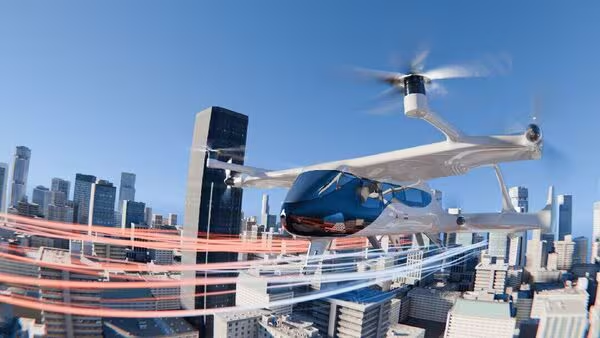
India has unveiled an electric flying taxi prototype built for short city trips. An electric flying taxi prototype is a small aircraft that uses electric power and can take off and land vertically, like a helicopter. The idea is simple: beat road traffic by going over it. But this machine is still a prototype, which means an early test version.
Key takeaways
- India’s first known electric flying taxi prototype has been shown to the public.
- The aircraft is designed to fly up to 110 km on a single charge.
- It aims to carry passengers on short urban routes, where traffic is worst.
- The big next steps are testing, safety checks, and government approval.
What was unveiled in India?
The new electric flying taxi prototype comes from Bengaluru-based Sarla Aviation. The company showed the aircraft as part of its push into eVTOL travel. eVTOL stands for electric vertical take-off and landing. That means it rises straight up, so it does not need a long runway.
The headline number is 110 km per charge. That is about the road distance from Delhi to Agra, or from Bengaluru to Mysuru’s outskirts. In city use, the real trip lengths would likely be much shorter, because air taxis are meant for fast hops, not long holidays.
Sarla Aviation says the aircraft is meant to help with urban mobility. Urban mobility just means how people move around cities. In plain words, the company wants to offer a faster way to cross crowded places where cars crawl.
How does an electric flying taxi prototype work?
This electric flying taxi prototype uses batteries instead of jet fuel. That could cut direct tailpipe emissions to zero, because electric aircraft do not burn petrol or diesel while flying. But the full climate impact still depends on how the electricity is made.
It also takes off vertically, so it can use compact landing spots called vertiports. A vertiport is a small place built for flying taxis to land, charge, and leave again. Think of it like a tiny airport mixed with a helipad.
Most eVTOL aircraft use several rotors for lift and control. That can add backup safety if one system has trouble. Still, real safety depends on design, testing, and certification, so the hard work starts after the public reveal.
Key numbers: electric flying taxi prototype110 kmPrototypeRangeStage
Why does this matter for India now?
Indian cities lose huge amounts of time in traffic. A short airport run can take 90 minutes by road, but a direct air route could be far quicker. That is why startups and big aerospace firms keep chasing this market, even though it is difficult.
This electric flying taxi prototype also matters because India wants a bigger place in advanced manufacturing. Manufacturing means making things at scale in factories. If local firms can build aircraft parts, battery systems, and software here, the project could create new skilled jobs.
There is also a wider clean-tech angle. Clean tech means tools that aim to cut pollution. India is already betting on electric cars, batteries, and new energy systems, so electric aircraft fit that larger story.
We’ve seen a similar push in other future-facing sectors. For example, India is also backing new deep-tech work in aerospace, as seen in private fighter jet engine technology efforts. New transport ideas are moving on many fronts at once.
What are the big hurdles before people can ride one?
The biggest hurdle is certification. Certification is official approval from safety regulators. In India, that means the aircraft must prove it can fly safely in many conditions before paying passengers can board.
Battery limits are another challenge. A 110 km figure sounds strong, but actual range can change with weather, payload, and reserve power. Payload means how much weight the aircraft carries, including people and bags.
Then there is infrastructure. Cities would need vertiports, charging gear, air traffic systems, and emergency plans. Without those pieces, even the best electric flying taxi prototype cannot become a real public service.
Cost matters too. Air taxis may start as a premium service, which means expensive and aimed at wealthier users first. If fares stay too high, the market could remain small for years.
| Topic | What we know | Why it matters |
|---|---|---|
| Range | Up to 110 km per charge | Good for short city and airport trips |
| Type | eVTOL prototype | No runway needed for takeoff |
| Power | Electric battery system | Lower direct flying emissions |
| Status | Prototype stage | Testing and approvals still ahead |
Who else is building aircraft like this?
India is not alone. Companies in the US, Europe, China, and the Middle East are racing to launch eVTOL services. Some firms target airport shuttles. Others aim for medical transport, cargo, or short commuter routes.
That matters because India can learn from both wins and mistakes abroad. Many overseas firms have spent hundreds of millions of dollars, but commercial launches still remain limited. So the path from prototype to real rides is usually longer than early ads suggest.
If you follow future transport and tech, you may also want to read how China is scaling AI infrastructure and how new materials startups are attracting big money. Aircraft progress often depends on advances in software, batteries, and materials science.
What happens next for the electric flying taxi prototype?
Now comes the less flashy part. Engineers will need to test the electric flying taxi prototype on performance, stability, and battery safety. Stability means how well it stays balanced and controlled in the air.
The company will also need to work with regulators and future partners. Those partners could include airports, state governments, charging providers, and emergency services. In fact, without that network, even a smart aircraft stays stuck in demo mode.
A simple way to think about it is this: showing the aircraft is like revealing a new phone model shell. The real test is whether it works every day, in heat, wind, rain, and busy airspace. Airspace means the part of the sky where aircraft fly under rules.
For now, the reveal gives India something it did not have before: a homegrown electric flying taxi prototype with a public range target of 110 km. That does not mean flying taxis are about to fill the skies next month. It does mean the race has become real enough to watch closely.
An electric flying taxi prototype is an early aircraft built to prove that short, battery-powered city flights can be safe, practical, and fast enough to beat road traffic.
Readers looking for the original technical announcement can check reporting around the unveiling and broader eVTOL details from primary and official sources, including India’s civil aviation regulator at DGCA and the company’s own website at Sarla Aviation.
FAQs
What is an electric flying taxi prototype?
It is a test aircraft built for short trips. It uses electric power and can rise and land vertically.
How far can the electric flying taxi prototype fly?
The announced target is up to 110 km on one charge. Real range can change with weight, weather, and safety reserves.
When could people use flying taxis in India?
Not right away. First, the aircraft needs testing, safety approval, and support systems like vertiports and charging points.
Get the day’s top stories in your inbox
One concise email. No spam, unsubscribe anytime.