Key takeaways
- IL&FS debt repayment has reached ₹50,387 crore as of June 2026.
- The group says that equals 82.6% of its overall resolution target.
- IL&FS is trying to sell assets, recover money, and close old cases.
- The long clean-up matters because banks, investors, and public bodies all had money tied up.
IL&FS debt repayment is the effort to pay back money owed by the troubled Infrastructure Leasing & Financial Services group. By June 2026, that effort had returned ₹50,387 crore. That means the group has reached 82.6% of its total target, so the huge clean-up is moving ahead.
What happened in the latest IL&FS debt repayment update?
The latest update shows a big number: ₹50,387 crore recovered or repaid by June 2026. A crore is 10 million rupees. IL&FS said this amount equals 82.6% of its estimated total resolution target.
Resolution target means the total money the group expects to recover, settle, or return through asset sales and other steps. In simple words, it is the finish line for the clean-up. If ₹50,387 crore is 82.6% of the target, the full target works out to about ₹61,000 crore.
That gap matters because it shows how much work still remains. Roughly 17.4% is still left. Using the same math, that is about ₹10,600 crore yet to be resolved.
IL&FS debt repayment progressRecovered by June 2026: ₹50,387 crore82.6%Still left: about ₹10,600 crore17.4%Estimated total target: about ₹61,000 crore
Why does IL&FS debt repayment matter so much?
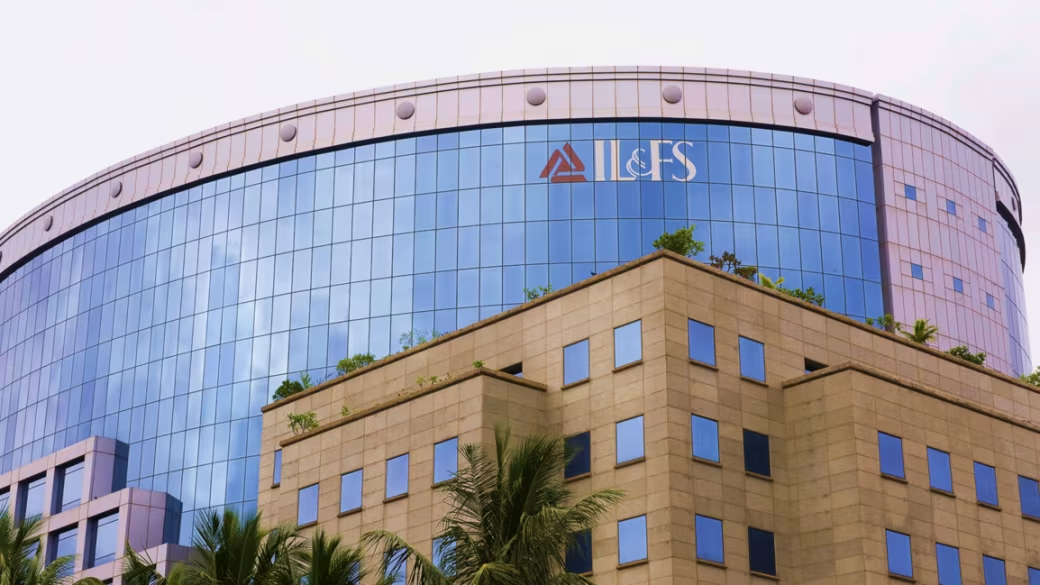
IL&FS was once a giant name in infrastructure finance. Infrastructure means big public projects like roads, power lines, and transport systems. When the group ran into trouble in 2018, it shook banks, mutual funds, and the wider credit market.
Credit market means the system through which companies borrow money. When trust breaks there, lending gets harder. That is why the IL&FS mess became bigger than one company.
The group had a maze of companies under it. Some held roads. Some held financial assets. Some were in court fights. So this was never going to be a quick fix.
India’s government replaced the old board in 2018 to steady the company. A board is the team that directs a company. Since then, the new management has been selling assets, settling claims, and chasing legal approvals.
How did IL&FS get here in the first place?
IL&FS borrowed heavily for long-term projects. Many of those projects did not generate cash fast enough. Cash flow means money coming in from business operations. When cash slowed, debt payments became harder.
Then confidence cracked. Lenders grew nervous, so borrowing got tougher and more costly. As a result, the group’s problems spread across India’s financial system.
That is one reason investors still watch IL&FS debt repayment closely. It tells them how much money can be recovered from a giant corporate failure. It also gives clues about how India handles stressed assets.
Stressed assets are loans or investments that may not be paid back on time. You can think of them as school library books that are overdue and may never return. The longer they stay stuck, the worse the problem gets.
Where is the money coming from?
Most of the recovered amount has come from asset sales, settlements, and completed resolutions at different group companies. An asset sale means selling something valuable, like a road project, land, or a business unit. The buyer pays, and that cash goes toward dues.
Some recoveries also come after court and tribunal approvals. A tribunal is a special legal body that decides business disputes. In the IL&FS case, the National Company Law Appellate Tribunal, or NCLAT, has played a key role.
The process can feel slow, but large deals often take months. Buyers check risks, lenders negotiate terms, and courts may need to sign off. So each chunk of recovery can take a long time to land.
| Measure | Amount / Share | What it means |
|---|---|---|
| Recovered by June 2026 | ₹50,387 crore | Money returned or resolved so far |
| Resolution achieved | 82.6% | Share of the total target completed |
| Estimated total target | About ₹61,000 crore | Expected full recovery goal |
| Still left | About ₹10,600 crore | Work remaining to finish the process |
What does this mean for banks and investors?
For banks and creditors, the update is a sign that more money has been pulled back from a difficult case. Creditors are people or firms that are owed money. The bigger the recovery, the smaller the final loss may be.
For investors, the news is also about confidence. If a broken giant can be unwound in an orderly way, markets feel safer. That does not erase the old damage, but it shows the system can still recover value.
This matters in other parts of finance too. For example, bond markets often react to risk and trust, much like in our report on India 10-year bond yield falls as oil risk heats up. It also fits a wider story about how companies and lenders handle pressure, as seen in Turtlemint shares jump as renewal business lifts outlook.
What still needs to happen next?
IL&FS debt repayment is not finished yet. The remaining 17.4% may depend on more sales, legal clearances, and disputed claims getting settled. A claim is a demand for money from a creditor or other party.
Some assets may be harder to sell because buyers want lower prices. Others may be stuck in court. Meanwhile, any delay can reduce value, so speed still matters.
The company’s progress will likely stay under close watch from lenders, courts, and policymakers. Policymakers are officials who shape rules and responses. They want to show that even a very messy collapse can be handled without chaos.
If you want to track the formal process, the IL&FS website posts official updates, and legal orders can be followed through the NCLAT. Those primary sources matter because they show what has actually been approved, not just what is planned.
So, is this good news?
Yes, mostly. Recovering ₹50,387 crore is a large step, and crossing 80% is a clear milestone. It suggests the IL&FS debt repayment effort is no longer just a promise on paper.
But the job is not done. The last part can be the hardest, because easy sales often happen first. Until the remaining ₹10,600 crore or so is resolved, this story stays unfinished.
IL&FS debt repayment has reached ₹50,387 crore, or 82.6% of its target, which means India has recovered most of the value from one of its biggest corporate failures, but a meaningful final chunk is still stuck in the clean-up process.
FAQs
What is IL&FS debt repayment?
It is the process of selling assets, settling claims, and using that money to repay what the IL&FS group owed.
Why did IL&FS collapse?
The group borrowed a lot for long projects, but cash did not come in fast enough. Then lenders lost confidence, so the crisis grew.
How much is still left in IL&FS debt repayment?
About 17.4% is still left. Based on the latest numbers, that is roughly ₹10,600 crore.
Get the day’s top stories in your inbox
One concise email. No spam, unsubscribe anytime.