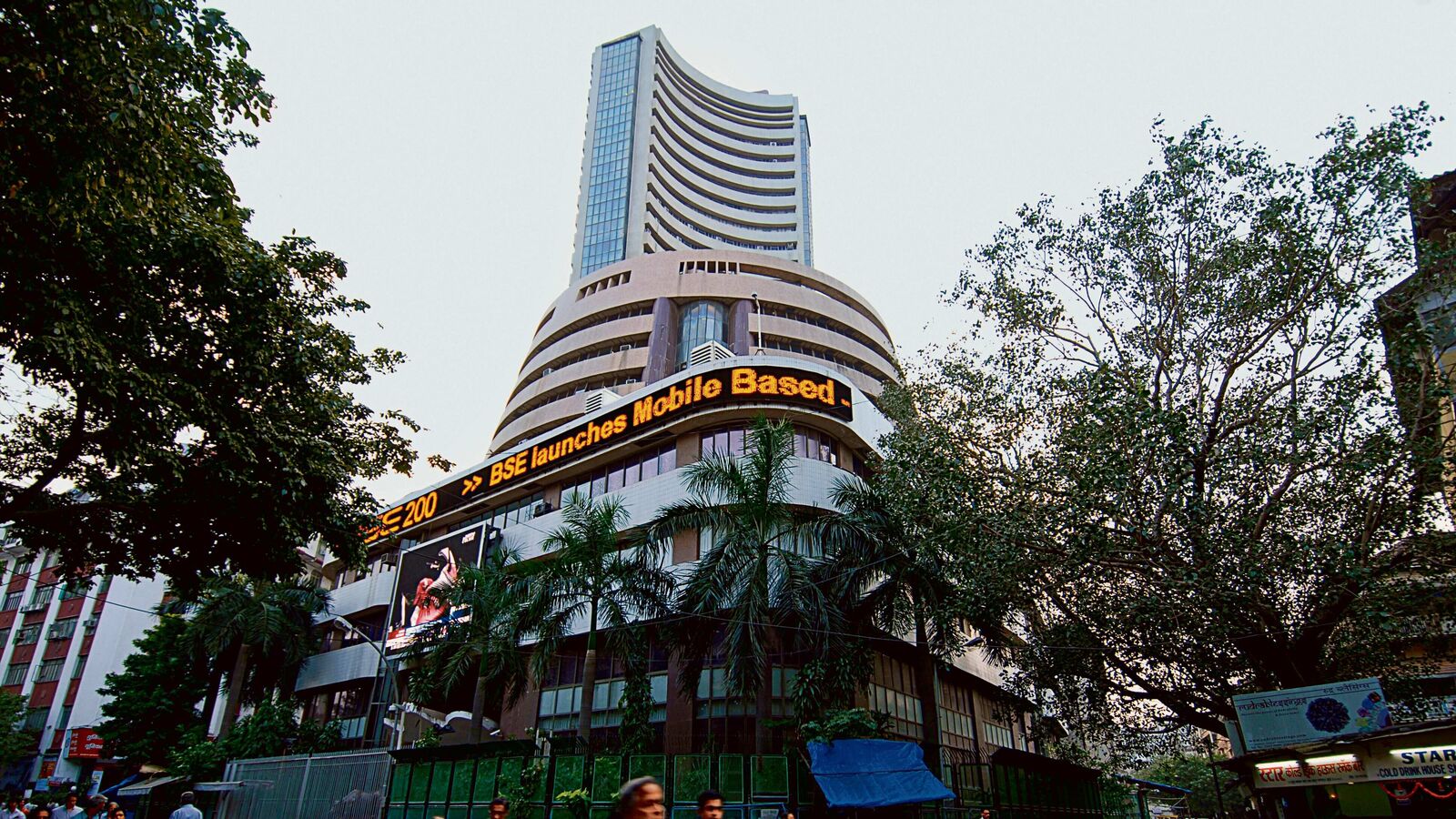
Driven by a combination of domestic market resilience and a severe tech-stock pullback in North Asia, India has officially reclaimed its position as the world’s fifth-largest equity market by market capitalization.
The total market capitalization of all companies listed on Indian exchanges has broken back past the $5 trillion ($5.05 trillion / ~₹422 lakh crore) milestone. This surge has allowed India to surpass both Taiwan ($4.97 trillion) and South Korea ($4.66 trillion), which had temporarily leapfrogged India earlier in the year.
The United States continues to hold the top spot globally, followed by China, Japan, and Hong Kong.
1. The Dynamic: Resiliency vs. The AI Profit-Booking
The primary catalyst for the change in rankings isn’t just an aggressive Indian rally, but a sharp correction in the world’s hottest chip-manufacturing hubs:
- The North Asian Tech Pullback: Earlier in the year, a massive global surge in artificial intelligence infrastructure spending propelled Taiwan (driven heavily by TSMC) and South Korea (driven by Samsung and SK Hynix) past India. However, June 2026 brought intense global profit-booking. Stretched tech valuations and mounting investor skepticism over the long-term durability of enterprise AI spending caused Taiwan’s market cap to drop 2.3% and South Korea’s to tumble 4.7%.
- India’s Counter-Cyclical Rise: While global tech took a hit, Indian equities moved in the opposite direction. During June, India’s total market capitalization grew by 2.75%, allowing it to cleanly slide back into the number five spot as its North Asian peers slipped under the $5 trillion ceiling.
                  [ GLOBAL MARKET CAP RANKINGS (MID-2026) ]

  1. United States  ───────► Uncontested Global Leader
  2. China          ───────► Maintained Stable #2 Spot
  3. Japan          ───────► Strong #3 Anchor
  4. Hong Kong      ───────► Retained #4 Despite Slumping 8.3% in June
  5. INDIA          ───────► RECLAIMED ($5.05 Trillion)
  6. Taiwan         ───────► Slipped to #6 ($4.97 Trillion) after AI selloff
  7. South Korea    ───────► Slipped to #7 ($4.66 Trillion)
2. Under the Hood: What Triggered India’s June Outperformance?
Market analysts point to three key macroeconomic developments that turned the tide back in favor of domestic indices:
A. The Crude Oil Relief Valve
As one of the world’s largest crude oil importers, India’s economic health is tied closely to energy pricing. Tensions in West Asia eased, resulting in the normalization of tanker traffic through the critical Strait of Hormuz. International crude prices subsequently dipped, significantly lowering India’s national import bill, keeping inflation expectations in check, and historically acting as a primary buy signal for the Nifty 50.
B. The Return of Foreign Capital
Foreign Portfolio Investors (FPIs), who had spent the early part of the year paring down their exposure to Indian equities to chase tech hardware plays in Taiwan, returned as net buyers. In recent June sessions alone, foreign institutions pumped roughly $1 billion (~₹8,350 crore) back into domestic shares, injecting critical liquidity into the large-cap banking and industrial sectors.
C. Valuation Moderation
A primary roadblock holding back institutional buyers earlier in the cycle was India’s premium valuation. The Nifty 50’s price-to-earnings (P/E) multiple, which had hovered at an expensive 24x at its peak, moderated to a much more attractive 18x baseline. This structural cooling gave value-driven funds a comfortable entry point.
3. The Performance Matrix
The domestic recovery showed broad participation, indicating a healthy appetite extending far past just a handful of defensive large caps:
| Index / Metric | June 2026 Return (USD Terms) | Market Implications |
| BSE Sensex | +3.8% | Led primarily by heavy banking turnarounds and a domestic credit demand upcycle. |
| Nifty 50 | +2.8% | Supported heavily by energy cost corrections and infrastructure spending. |
| BSE SmallCap 250 | +4.4% | The strongest performer of the month, showcasing massive domestic retail investor confidence. |
| BSE MidCap 150 | +1.3% | Logged stable, positive growth across manufacturing and industrial sectors. |
The Outlook
While global markets faced a turbulent month—with major corrections wiping out value in Germany (-5.6%), the UK (-1.9%), and Japan (-1.06%)—India’s highly diversified market structure acted as an effective hedge against tech-heavy shocks. Moving into the second half of 2026, local brokerages expect this diversified foundation, coupled with rising alternative energy allocations and expanding domestic manufacturing, to help India defend its $5 trillion anchor against future global macroeconomic volatility.