India Moves to Share Rocket Tech to Supercharge Its Private Space Industry
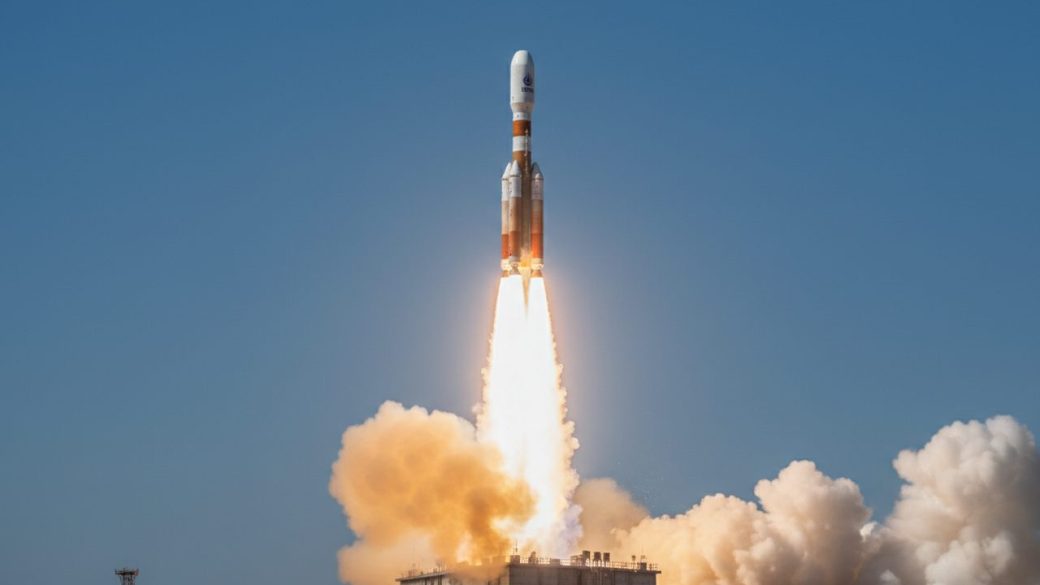
India is taking a big step to grow its private space industry. The government plans to hand over its rocket technology to private companies. The biggest prize is the LVM3, India’s most powerful working rocket. People often call it “Bahubali” because it is so strong. This rocket tech transfer is meant to help local firms build, launch, and sell rocket missions on their own.
This is a major shift. For years, building large rockets in India was mainly the job of ISRO, the country’s space agency. Now private companies will get the chance to take over that work. The goal is to launch more rockets, more often, for customers in India and abroad.
What Exactly Is Being Shared
The plan is run by IN-SPACe. That is the government body that promotes and approves private space activity in India. IN-SPACe has invited companies to take over the LVM3 rocket. A company is chosen through an “expression of interest,” which is simply a formal way for firms to say they want the deal.
The chosen company will not just borrow the design. It will gain the right to do everything end to end:
- Manufacture the LVM3 rocket.
- Run the full production line.
- Operate launch services.
- Sell launch missions to paying customers.
ISRO built and proved this technology over many years. By passing it on, ISRO can focus on its next big missions, like deeper space exploration and new vehicles.
Meet the LVM3 “Bahubali” Rocket
The LVM3 is India’s heaviest operational launch vehicle. It can carry satellites of up to about 4,000 kg into Geosynchronous Transfer Orbit, often shortened to GTO. GTO is a high path around Earth where many communication satellites are placed.
The rocket uses a three-stage design. It has two large solid boosters called S200 and an advanced cryogenic engine. A cryogenic engine burns fuel kept at very cold temperatures, which gives extra power. The LVM3 already has a strong record. It launched the Chandrayaan-3 Moon mission and has carried many Indian and foreign satellites.
Who Could Take It On
Only Indian-controlled firms can apply. That means the company must be majority owned and run by Indians. Several big names have been linked to the opportunity, including Larsen & Toubro, Hindustan Aeronautics Limited, Tata Advanced Systems, and Godrej Enterprises Group.
India is also moving the same way with its smaller workhorse rocket, the PSLV. A separate effort aims to pass PSLV technology to the private sector too. This push to back local industry mirrors what we see in other sectors, from cars like the upcoming Maruti Brezza facelift to fast-growing retail bets such as Flipkart’s quick-commerce expansion.
Key Facts
| Item | Detail |
|---|---|
| Rocket on offer | LVM3 (“Bahubali”), India’s heaviest operational launch vehicle |
| Run by | IN-SPACe (with ISRO transferring the technology) |
| What’s transferred | Manufacturing, production, launch operations, commercialisation |
| Payload to GTO | Up to about 4,000 kg class |
| Rocket design | Three stages, two S200 solid boosters, cryogenic engine |
| Eligibility | Firms majority owned and controlled by Indians |
| Named likely bidders | L&T, HAL, Tata Advanced Systems, Godrej Enterprises Group |
| Notable mission | Launched Chandrayaan-3 |
FAQ
What is IN-SPACe?
IN-SPACe stands for the Indian National Space Promotion and Authorisation Centre. It is the government body that helps private companies take part in space work and gives them approvals to do so.
Why is ISRO giving away its rocket?
ISRO is not giving it away for free. It is transferring proven technology to a chosen private firm. This lets ISRO focus on harder, newer missions while industry handles regular launches and sells them to customers.
What is the LVM3?
The LVM3 is India’s most powerful working rocket. It can lift heavy satellites and famously launched the Chandrayaan-3 Moon mission. Its nickname is “Bahubali” because of its size and strength.
Why it matters (especially for India / founders)
This is a turning point for India’s space economy. When private firms can build and sell rocket launches, the whole industry can grow faster. More launches mean more chances for startups that make satellites, sensors, or space services. It can also bring in money from foreign customers who want cheaper, reliable rides to orbit.
For founders, space is no longer a closed government club. A supply chain is forming, from parts and software to data services. Early movers who build skills now could win big contracts as the sector scales over the next decade.
The takeaway
India is opening its rocket program to private hands. By sharing the LVM3 “Bahubali” technology through IN-SPACe, the country wants more launches, lower costs, and a stronger private space industry. It is a bold bet that could turn India into a major commercial launch hub.
Sources
- Financial Express — India moves to share rocket tech in bid to supercharge private space industry
- Business Standard — Govt to share rocket technology to hasten development of local space firms
- Indian Masterminds — India’s largest rocket may soon be built by private companies