Bajaj Auto and Delhivery Tie Up for a Last-Mile Electric Delivery Fleet
Bajaj Auto and Delhivery have joined hands to build a last-mile electric delivery fleet for India. The Bajaj Auto–Delhivery electric fleet partnership starts with 200 electric three-wheelers and aims to grow to about 1,500 vehicles by 2027. The plan is simple: swap petrol and diesel delivery vehicles for clean, battery-powered ones, cut running costs, and make life easier for the riders who carry your parcels.
“Last-mile” is the final step of a delivery (the short trip from a local hub to your doorstep). It is the most expensive and busiest part of the whole journey. According to reports from Autoguide India and ScanX, the two companies flagged off the first batch of vehicles on June 23, 2026, at Bajaj Auto’s facility in Akurdi, Pune.
What the deal actually includes
Delhivery is one of India’s largest logistics companies (a logistics company moves and delivers goods for other businesses). It will put Bajaj’s electric cargo vehicles to work across its delivery network. Bajaj Auto is one of India’s biggest two- and three-wheeler makers.
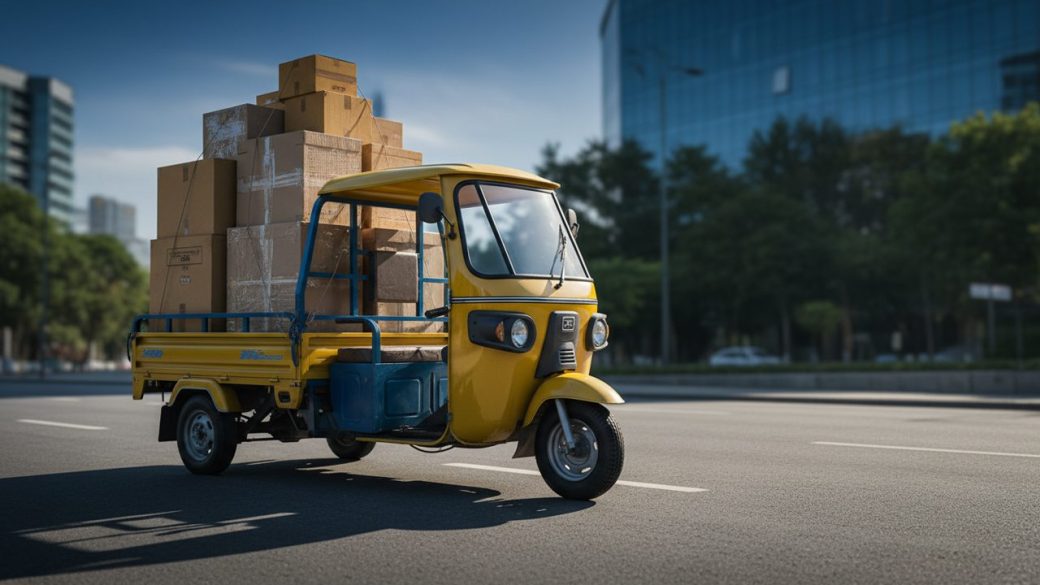
The vehicle at the centre of this deal is the Bajaj RIKI C4005 eCart. It is an electric three-wheeler built to carry parcels, not people. According to the source reports, it offers a range of more than 100 kilometres on a single charge. That means it can run a full delivery shift before needing to plug in again.
The RIKI uses an electric powertrain (the motor and parts that move the vehicle) and a 2-speed automatic transmission, so drivers do not have to shift gears manually. The vehicles fall under the L3 and L5 categories. These are official labels for small three-wheelers: L3 covers lighter ones, while L5 covers heavier goods-carrying ones.
Two phases: 200 now, 1,500 by 2027
The rollout happens in two steps. Phase 1 puts 200 Bajaj RIKI eCarts on the road right away. Phase 2 runs through 2026 and 2027 and aims to take the total fleet to roughly 1,500 electric three-wheelers.
The vehicles will not stay in big cities alone. The companies say the fleet will reach metros plus Tier-2 and Tier-3 cities. These are smaller towns and mid-sized cities where electric delivery vehicles are still rare. Spreading clean delivery beyond the metros is a key goal of this tie-up.
| Key fact | Detail |
|---|---|
| Partners | Bajaj Auto and Delhivery |
| Vehicle model | Bajaj RIKI C4005 eCart (electric three-wheeler) |
| Vehicle range | 100+ km on a single charge |
| Phase 1 | 200 vehicles, flagged off June 23, 2026 |
| Phase 2 | ~1,500 total vehicles by 2026–2027 |
| Vehicle types | L3 and L5 electric three-wheelers |
| Where | Metros plus Tier-2 and Tier-3 cities |
| Flag-off location | Bajaj Auto facility, Akurdi, Pune |
Why riders and the planet both win
Electric vehicles cost less to run than petrol or diesel ones. There is no fuel to buy, and there are fewer parts to repair. According to the source reports, this lowers the operating cost per kilometre and helps delivery partners (the riders who do the deliveries) keep more of what they earn.
Delhivery also plans to pair the new vehicles with its smart routing software. Smart routing plans the best path between drop-offs. Better routes plus larger cargo space mean riders can finish more deliveries per trip.
“By combining our intelligent routing systems with highly efficient cargo EVs, we are creating a more profitable model for our riders,” said Prashant Gazipur, COO of In-City Operations at Delhivery, according to Autoguide India.
The vehicles are also built for comfort. They have ergonomic seating that shields riders from harsh weather and cuts down on tiredness in heavy traffic. The bigger cargo space lets riders carry heavier loads safely, without the physical strain of an overloaded scooter.
On the environment side, electric three-wheelers produce no tailpipe emissions. That means cleaner air in crowded city areas. The partnership also helps cut what businesses call Scope 3 emissions. Scope 3 emissions are the pollution that comes from a company’s wider supply chain, including the delivery vehicles it does not own directly.
“The Bajaj Riki C4005 offers 100+ kms of range on a single charge, excellent reliability and durability,” said Samardeep Subandh, President of the Intra-City Business at Bajaj Auto, per the source reports.
Why it matters (especially for India and founders)
India’s delivery business is booming. Online shopping, quick commerce, and food delivery all depend on a small army of riders doing last-mile drops. Most of those rides still burn fuel. A switch to electric on this scale could change how millions of parcels move every day.
For founders and logistics startups, this deal is a useful signal. It shows that going electric is no longer just a “green” choice; it is becoming a money-saving choice. When a big maker like Bajaj and a big mover like Delhivery team up, smaller players often follow. India’s wider electric vehicle push, including local battery efforts like India’s drive to build its own LFP cells, makes this shift more practical and more affordable each year.
It also matters for jobs. As delivery work spreads into smaller towns, the kind of flexible, scalable setups seen in managed workspaces for enterprises show how India’s growth is no longer limited to the metros. Cleaner, cheaper delivery vehicles can help that growth reach further.
FAQ
How many vehicles are in the Bajaj Auto–Delhivery electric fleet?
The deal starts with 200 Bajaj RIKI eCarts in Phase 1. Phase 2, running through 2026 and 2027, aims to grow the total fleet to about 1,500 electric three-wheelers.
What vehicle is being used?
The fleet uses the Bajaj RIKI C4005 eCart, an electric three-wheeler made for cargo. It offers more than 100 km of range on a single charge and uses a 2-speed automatic transmission.
Where will the electric delivery vehicles run?
According to the source reports, the vehicles will be deployed across metros as well as Tier-2 and Tier-3 cities in India, spreading clean delivery beyond big urban centres.
The takeaway
The Bajaj Auto–Delhivery electric fleet tie-up is a clear step toward cleaner, cheaper last-mile delivery in India. It starts small with 200 vehicles, but the plan to reach 1,500 by 2027 shows real ambition. If it works, riders earn more, cities breathe cleaner air, and electric delivery becomes the new normal far beyond the big metros.