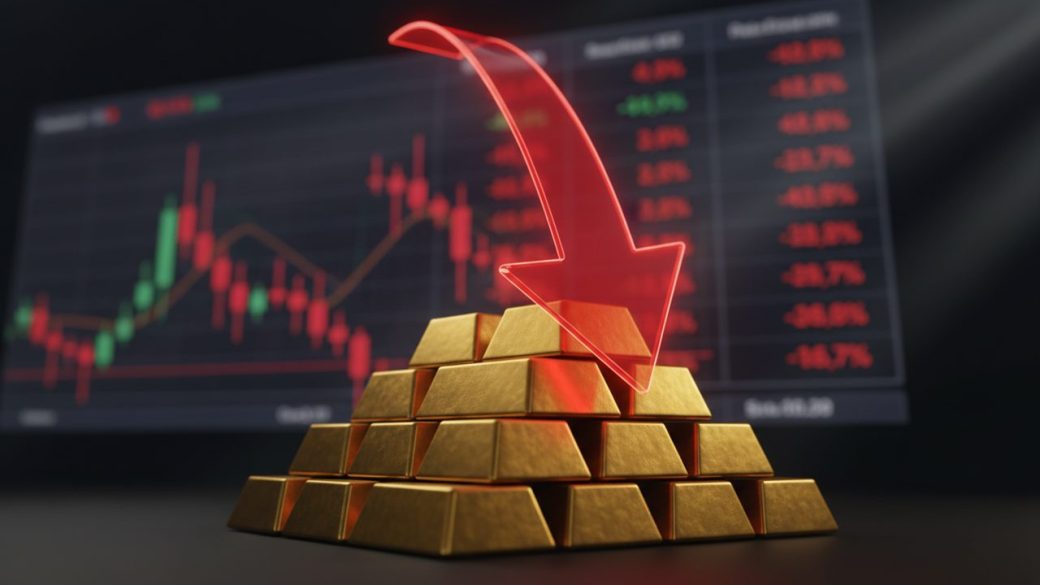
Gold prices have tumbled sharply, breaching the critical psycholgical floor of $4,000 an ounce to trade near a 7-month low.
Spot gold fell to $3,985.89 per ounce, marking its lowest point since November 2025. The rapid descent marks a technical correction for the precious metal, which is now down nearly 20% from the record high it achieved in January before geopolitical tensions in the Middle East began to ease.
1. The Dynamic Driving the Bullion Slide
Gold’s downward trend is being fueled by a combination of a surging greenback, shifting central bank policies, and cooling global friction:
- The 13-Month Dollar Peak: The U.S. Dollar Index (DXY) has surged to a 13-month high. Because gold is globally priced in greenbacks, a stronger dollar makes the precious metal significantly more expensive for overseas buyers holding other currencies, dampening global demand.
- The Hawkish “Warsh” Stance: Under newly appointed Federal Reserve Chair Kevin Warsh, the U.S. central bank has signaled a tighter-for-longer monetary posture. According to the CME FedWatch tool, traders are now aggressively pricing in an active 67% to 68% probability of a Fed interest rate hike in September. Because gold is a non-yielding asset, higher interest rates raise the opportunity cost of holding it, driving capital into Treasury bonds instead.
- The U.S.-Iran Peace Progress: Adding to the downward momentum, unexpected breakthroughs in preliminary peace negotiations between the U.S. and Iran have driven global crude oil prices back down to pre-conflict levels. This cooling of West Asian tensions has sharply dialed back global inflation fears, stripping gold of its premium safe-haven appeal.
[13-Month U.S. Dollar High] ───┐
[68% Bet on a Sept Fed Hike] ──┼──► Opportunity Cost Rises ──► Gold Breaks Below $4,000 / oz (7-Month Low)
[U.S.-Iran Peace Progress] ────┘
2. Impact on Domestic Markets (India MCX)
The international rout triggered a massive ripple effect across Indian commodity markets, causing a multi-thousand-rupee sell-off on the Multi Commodity Exchange (MCX) over a 48-hour window:
| Asset Layer | Domestic MCX Level | Price Movement (2-Day Impact) |
| Gold Futures (August 2026) | ₹1,40,666 per 10 grams | Dropped by ₹5,863 |
| Silver Futures (July 2026) | ₹2,10,308 per kg | Plunged by ₹15,526 (~7% drop) |
Note: Retail jewelry rates for 22K gold across major Indian cities (Delhi, Mumbai, Chennai) have soft-landed to roughly ₹12,845–₹12,890 per gram exclusive of local GST and making charges.
3. Financial Spillover: Gold Stocks Tumble
The structural price correction immediately hurt equity markets, drawing down companies whose business models are inherently tied to precious metal valuations:
- Mining Networks: Shares of industrial mining heavyweights like Hindustan Zinc dropped 3.5% to ₹523.20 in response to the synchronized slump in gold and silver assets.
- Gold Loan NBFCs: Non-Banking Financial Companies (NBFCs) with massive gold-collateral loan books faced an immediate equity squeeze. Manappuram Finance fell 1.5% to ₹313.45, while IIFL Finance shed 1% to trade at ₹519.80 as investors adjusted for lower underlying collateral valuations.
Commodity analysts highlight that while technical indicators show gold has entered an oversold zone—with immediate chart support resting tightly between $3,920 and $3,980—investors are being cautioned against aggressive bottom-fishing ahead of upcoming U.S. GDP data and the Core PCE price index release.