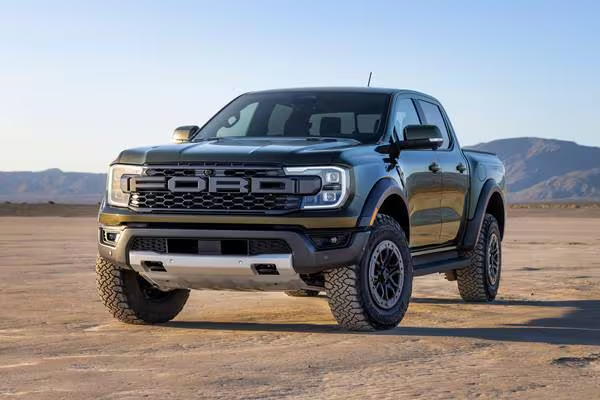
Ford Motor Company reported a 10.3% decline in U.S. vehicle sales for the second quarter, delivering 549,200 units compared to 612,095 vehicles during the same window last year.
The drop reflects a highly turbulent period for the automaker, driven by a dramatic slowdown in electric vehicle (EV) demand, persistent supplier bottlenecks, and a strategic restructuring of its consumer vehicle lineup.
1. The EV Slowdown Post-Tax Credit
The sharpest contraction for the Dearborn automaker hit its all-electric Model e division, where overall EV sales plummeted 40.7% year-over-year to just 9,746 units.
- The Incentive Cliff: The steep freefall across the broader automotive sector intensified following the elimination of the federal $7,500 EV consumer tax credit at the end of last year, heavily depressing mass-market EV appetite.
- The Lineup Shakeup: The Mustang Mach-E carried virtually all of Ford’s EV volume, despite its own 31% sales drop. Meanwhile, the fully electric F-150 Lightning saw its sales tumble 58.6% as Ford officially sunset production of the first-generation electric truck.
- The Financial Toll: Driven by these headwinds, Ford’s EV wing is projecting full-year losses between $4 billion and $4.5 billion, with executive leadership projecting a longer runway to segment profitability.
 [ FORD Q2 VEHICLE DELIVERY PROFILES ]

  TOTAL VOLUME:       ██████████████████████████████ 549,200 Units (-10.3% YoY)

  F-SERIES TRUCKS:    ███████████ 197,900 Units (-11.0% YoY)

  HYBRID VEHICLES:    ███ 53,163 Units (-20.0% YoY)

  BATTERY EVs:        █ 9,746 Units (-40.7% YoY)
2. Supply Chain Fire Destroys Truck Pace
Even Ford’s highly profitable combustion engine portfolio took a hit. Deliveries of its crown jewel, the F-Series pickup line, fell 11% in Q2 to 197,900 units.
The production slowdown was tied to structural supply chain damage rather than weak buyer interest. Late last year, three devastating factory fires struck a hot mill operated by Novelis—Ford’s primary supplier of flat-rolled automotive sheet aluminum. Because the F-150 relies on an aluminum-intensive chassis, the raw material shortage forced a “retiming of commercial production.”
Despite the supply chokehold, the F-Series comfortably maintained its title as America’s top-selling truck, outselling the rival Chevrolet Silverado by more than 80,000 units year-to-date.
3. Bright Spots: Record SUV Defenses
While the headline numbers painted a challenging quarter, Ford’s adjusted calculations argue that the core business is fundamentally sound. The company notes that if you pull out the intentional, phased discontinuation of high-volume legacy models (like the Ford Escape and Lincoln Corsair) alongside a calculated 69% reduction in low-margin daily rental fleet volumes, Ford’s underlying Q2 retail sales actually rose 0.5%.
| Ford Nameplate Segment | Q2 Performance Highlight | Strategic Operational Milestone |
| The Bronco Family | 45,739 units delivered (+15.9%) | Set an all-time quarterly record, successfully outselling the iconic Jeep Wrangler for the period. |
| Maverick Hybrid | 29,457 units delivered (+19.3%) | Achieved a Q2 historic sales record, reinforcing Ford’s dominance in the compact hybrid truck space. |
| Large SUV Portfolio | Combined sales up 10.1% YTD | Collective momentum across the Explorer and Expedition lines locked in Ford’s best large-SUV first half in 25 years. |
The Universal Blueprint Ahead
To reverse the EV segment’s financial drag, CEO Jim Farley is executing a complete pivot toward high-margin commercial services and affordable consumer sizing. Ford Pro’s paid software subscriptions spiked roughly 20% to clear 900,000 users.
Concurrently, the manufacturing team has begun aggressively retooling its Louisville Assembly Plant to abandon legacy gas models and build an entirely new, sub-$30,000 compact electric four-door pickup utilizing Ford’s highly optimized “Universal EV” platform, scheduled for an official rollout next year.
Get the day’s top stories in your inbox
One concise email. No spam, unsubscribe anytime.