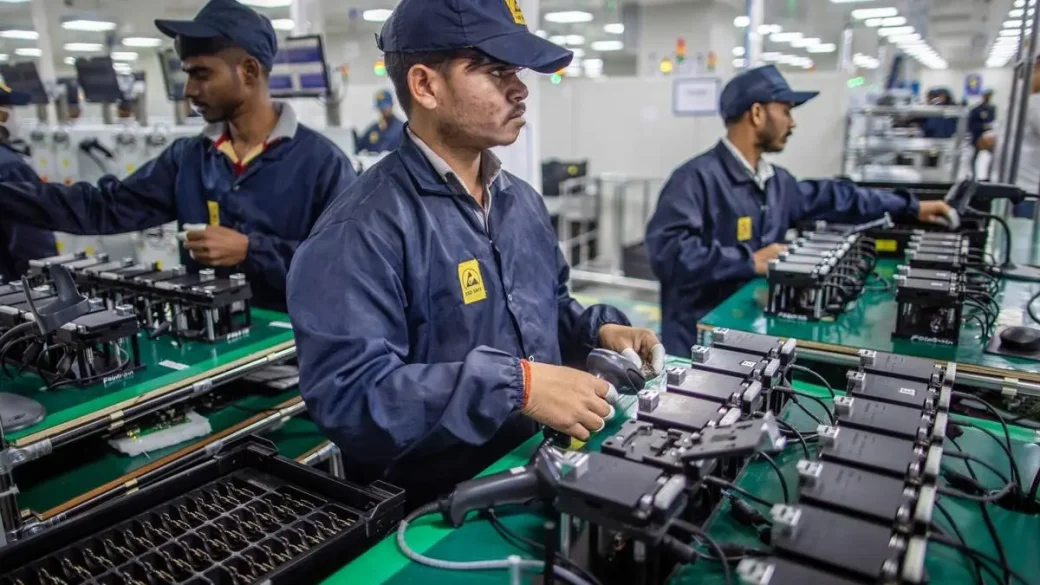
India wants more electronics value addition from the phones, chips, and gadgets made in the country. Electronics value addition is the share of a product made locally, not just assembled here from imported parts. That matters because India earns more, learns more, and creates better jobs when more of the work happens at home.
Key takeaways
- India is shifting from simple assembly to deeper local manufacturing.
- The next policy phase, often called ISM 2.0, aims to make more parts inside India.
- Higher electronics value addition can keep more profit, skills, and supply chains in the country.
- Phones are India’s best-known success, but chips, displays, and components are the harder next step.
The broad message is simple. India doesn’t just want to screw together imported parts anymore. It wants a bigger slice of each product’s real value, because that is where profits, know-how, and long-term jobs usually sit.
That is why officials are talking about a stronger local push under ISM 2.0. ISM means India Semiconductor Mission. It is a government plan to support chip and electronics making with incentives, which are cash or policy support meant to attract factories and investment.
Why is India pushing electronics value addition now?
India has already become a major phone assembly hub. In recent years, brands and contract makers expanded fast, helped by production-linked incentives. A production-linked incentive, or PLI, is a scheme that pays companies for making more goods in India.
But assembly is only the first rung of the ladder. If a phone is built in India but most of its chips, display, camera parts, and battery cells come from abroad, the local share stays limited. So the next goal is deeper electronics value addition.
This matters for trade too. India’s electronics production has grown quickly, yet imports of key components remain high. That means the factory floor may be in India, but a lot of the money still flows out to other countries that make the expensive parts.
A simple way to picture it is a sandwich. If India only wraps it, the job counts, but the bread, cheese, and filling profits go elsewhere. If India also makes the ingredients, electronics value addition rises a lot.
What could change under ISM 2.0?
The likely shift is from headline assembly numbers to what sits inside the product. That means more support for semiconductors, display units, printed circuit boards, sensors, and other components. A semiconductor is a tiny material used to make chips, which act like the brains of modern electronics.
Officials also want a stronger parts ecosystem. An ecosystem here means a cluster of suppliers, factories, designers, logistics firms, and skilled workers that all help one industry grow. Without that network, one big factory often still depends on imports.
India may also focus more on design and packaging. Chip packaging is the step where tiny chips get protected and prepared for use in devices. It is less glamorous than chip design, but it creates value and can be easier to build than the most advanced chip plants.
In fact, even moving local content from 15% to 25% can make a big difference across millions of devices. If a factory ships 50 million phones, each worth ₹20,000, that is ₹1 lakh crore in output. A 10-point rise in local share would shift about ₹10,000 crore of value closer to home.
How higher local share changes the pictureExample: ₹1 lakh crore output15%25%₹15,000 cr₹25,000 crExtra local value₹10,000 crore
Where is India strong already, and where is it still weak?
Phones are the clearest success story. India has become one of the world’s largest mobile manufacturing bases, and exports have surged. But the country is still weaker in high-end chips, advanced displays, memory, and some precision components.
That gap is normal at this stage. Countries usually start with assembly, then move into parts, then into deeper engineering. China, South Korea, Taiwan, and Vietnam all built supply chains over years, not in one jump.
India is trying to speed that journey up. It is using subsidies, trade policy, and state-backed manufacturing plans. A subsidy is public money used to lower a company’s costs so it can invest faster.
| Area | India’s position | Why it matters |
|---|---|---|
| Phone assembly | Strong | Creates scale and export momentum |
| Components | Mixed | More local parts lift electronics value addition |
| Advanced chips | Early stage | High value, but costly and complex |
| Packaging and testing | Growing chance | More practical near-term entry point |
What are the biggest roadblocks?
The hard part is not demand. The hard part is building a full chain that works every day at global quality and speed. One late component can slow an entire production line, so manufacturers need reliable suppliers close by.
Costs also matter. Power, logistics, water, clean rooms, and skilled engineers all affect whether a factory wins orders. A clean room is a highly controlled space that keeps dust away, which is vital for chip and electronics work.
Then there is scale. A component plant often needs huge volumes to make money, because the machines are expensive. If it only serves one small customer base, prices stay high and imports can still look cheaper.
That is why policy alone cannot solve everything. India also needs patient capital, faster approvals, and stronger training. Capital means money used to build factories, buy machines, and hire people.
What does this mean for jobs, exports, and consumers?
If electronics value addition rises, India could gain in three ways. First, more skilled jobs may open in design, testing, tooling, and component making. Second, exports may become more resilient, because India would rely less on imported inputs.
Third, the country could hold on to more profit from each device sold. That helps tax revenue and industrial learning too. Industrial learning means factories and workers get better through repeated production, which can attract even more investment later.
Consumers may not see instant price cuts. In fact, some local parts may cost more at first. But over time, bigger scale can reduce costs, while a stronger supply chain can lower disruption risk.
You can see a similar pattern in other sectors. For example, our report on India’s textile sector and the China+1 shift shows how supply chains matter, not just final output. And in aviation, expansion plans like Air India adding 60 aircraft also depend on long-term capacity, not one quick move.
Why electronics value addition matters beyond one policy
This story is bigger than one scheme. Electronics sit at the center of phones, cars, defence gear, data centers, appliances, and AI hardware. If India improves electronics value addition, it strengthens many industries at once.
It also matters for economic safety. Countries learned during recent global shocks that imported parts can vanish fast. As a result, many governments now want trusted domestic or friendly-country supply chains.
India is not alone in this race. The US, Europe, China, Japan, and South Korea are all spending heavily on chips and strategic tech. You can track India’s semiconductor policy through the India Semiconductor Mission and broader manufacturing data through the Ministry of Electronics and IT.
Here is the cleanest way to say it:
India’s next electronics challenge is not making more boxes. It is making more of what goes inside the box. That is what higher electronics value addition really means.
FAQs
What is electronics value addition?
Electronics value addition is the share of a gadget’s value created inside India. It includes local parts, local processing, and skilled work, not just final assembly.
Why doesn’t assembly alone help enough?
Assembly helps jobs and output, but it captures less money. The costly parts, like chips and displays, often hold much of the profit.
How can India raise electronics value addition?
India can raise it by making more components locally, improving chip packaging and testing, building supplier clusters, and training more skilled workers.
When could the results show up?
Some gains can come in a few years, especially in components and packaging. Advanced chip manufacturing usually takes longer because it needs huge spending and very precise technology.
Get the day’s top stories in your inbox
One concise email. No spam, unsubscribe anytime.